What Makes Cork and Foam Yoga Blocks Different?
When choosing a yoga block, the material directly affects stability, grip, and how the block feels under pressure. Cork blocks are dense and firm, while foam blocks are lightweight and soft. Neither is universally better—your choice depends on the type of support you need and the kind of practice you do.
This comparison focuses on the differences that matter most: stability, texture, eco-friendliness, and how each material performs in poses that require reliable support.
Cork vs Foam: Key Differences at a Glance
Here is how natural cork and foam compare on the factors that affect your practice.
- Stability: Cork blocks are denser than foam, providing a firm, grounded feel that stays stable under pressure. This makes them better for standing poses and balance work where the block must not shift or compress.
- Grip: Natural cork has a lightly textured surface that offers strong grip even when hands are sweaty. Foam blocks can feel slippery when wet, especially smooth or closed-cell types.
- Weight: Foam blocks are lighter and easier to carry to class or store. Cork blocks are heavier, which some practitioners prefer for stability but may find less portable.
- Eco-friendliness: Cork is a renewable material harvested from cork oak bark without harming the tree. Most foam blocks are made from synthetic materials that are not biodegradable.
- Durability: Cork resists wear and compression over time, maintaining its shape. Foam can dent or lose firmness with repeated heavy use.
The Warrior Natural Cork Yoga Block: What the Specs Show
-
Warrior Natural Cork Yoga Block: Made from 100% natural cork, it provides firm support while maintaining a comfortable, textured grip. The natural cork construction gives you a stable surface that does not compress under body weight, which helps maintain proper alignment in poses like Triangle or Half Moon.
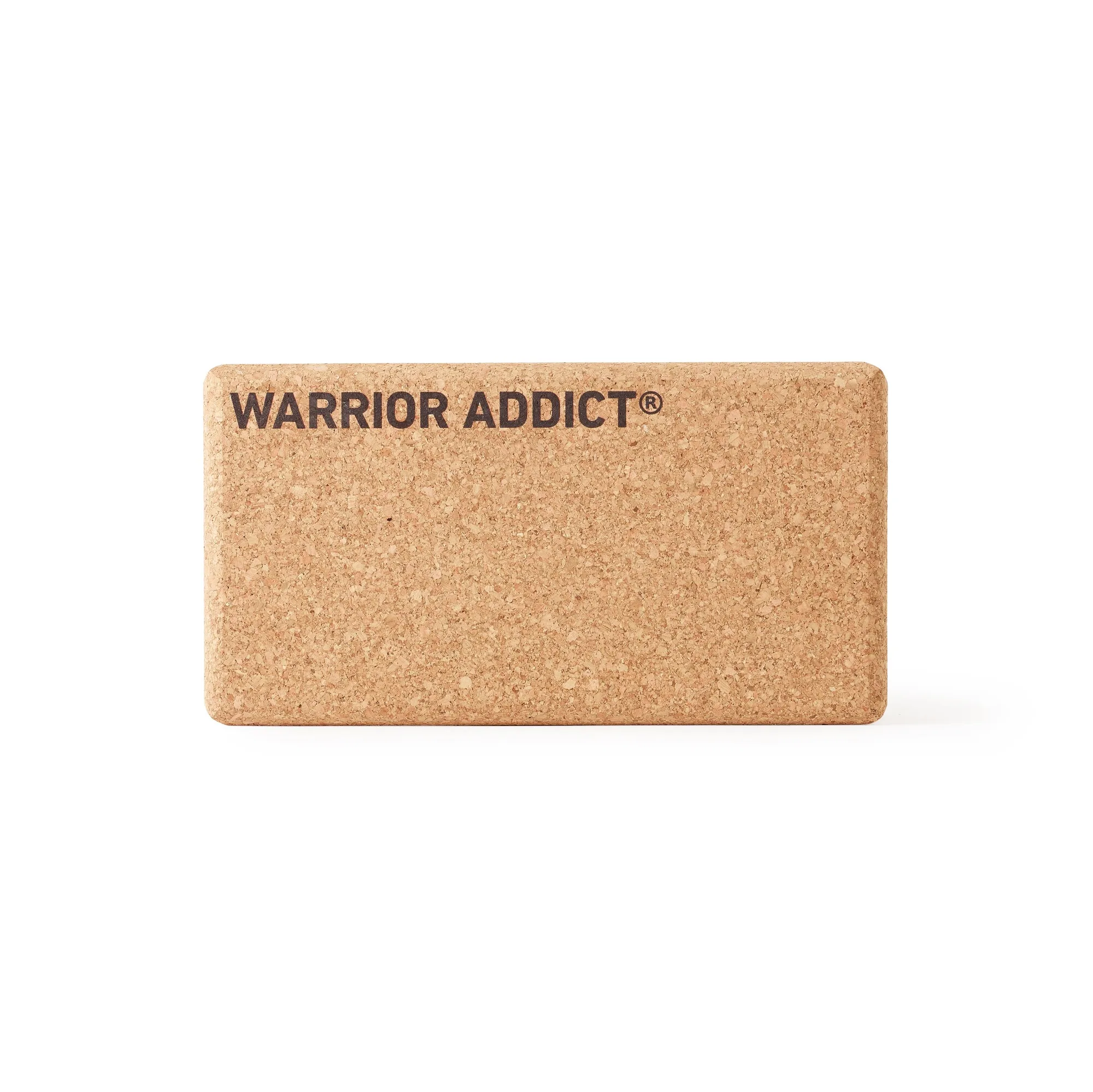
Warrior Natural Cork Yoga Block
-
Warrior Natural Cork Yoga Block: Length: 23 cm (9 in), Width: 12 cm (4.7 in), Height: 7.5 cm (3 in). These dimensions are standard for yoga blocks, so the Warrior block fits the same poses and uses as any foam block you might already own.
-
Warrior Natural Cork Yoga Block: The dense cork construction offers greater stability than foam blocks, helping you maintain balance and proper posture. If you rely on the block to hold you steady in standing balances or to support deeper stretches, the extra stability of cork can make a noticeable difference.
When Cork Is the Better Choice
Cork blocks excel when you need a solid, non-compressible surface. They are ideal for standing poses where the block supports your hand or foot and must not sink. The textured grip also helps if your hands get sweaty during warm yoga sessions.
Because cork is denser, it provides more feedback and stability for alignment work. Beginners building confidence in their practice often benefit from the firm support, as it helps them feel secure in poses. The Warrior Natural Cork Yoga Block, made from 100% natural cork and manufactured in Portugal, is a durable option that resists wear over time.
When Foam Might Suit You Better
Foam blocks are lighter and softer, which can be more comfortable for restorative poses or if you need a gentler surface under sensitive joints. They are also easier to transport if you carry your gear to a studio.
However, the supplied information does not confirm specific foam block products, so this comparison is based on general material properties. If you prioritize portability and softness over stability, foam may be a practical choice.
How to Decide Based on Your Practice
Think about the poses you do most often. If you use blocks mainly for standing balances, alignment, and deep stretches, cork's firm support will help you hold positions longer and with better form. If you use blocks for restorative poses or need something easy to carry, foam's lightness and softness may be more appealing.
Neither material is wrong—they serve different needs. The best choice is the one that supports your current practice goals.
Care Differences Between Cork and Foam
How you clean and store your block affects its lifespan. Here are the care requirements for cork based on the supplied information.
- Cork care: Wipe the block with a damp cloth after use and allow it to air dry completely before storing. Avoid prolonged exposure to moisture or harsh cleaners.
- Foam care: Foam blocks can usually be wiped with mild soap and water, but they may absorb moisture if not sealed. The supplied information does not include specific foam block care instructions.