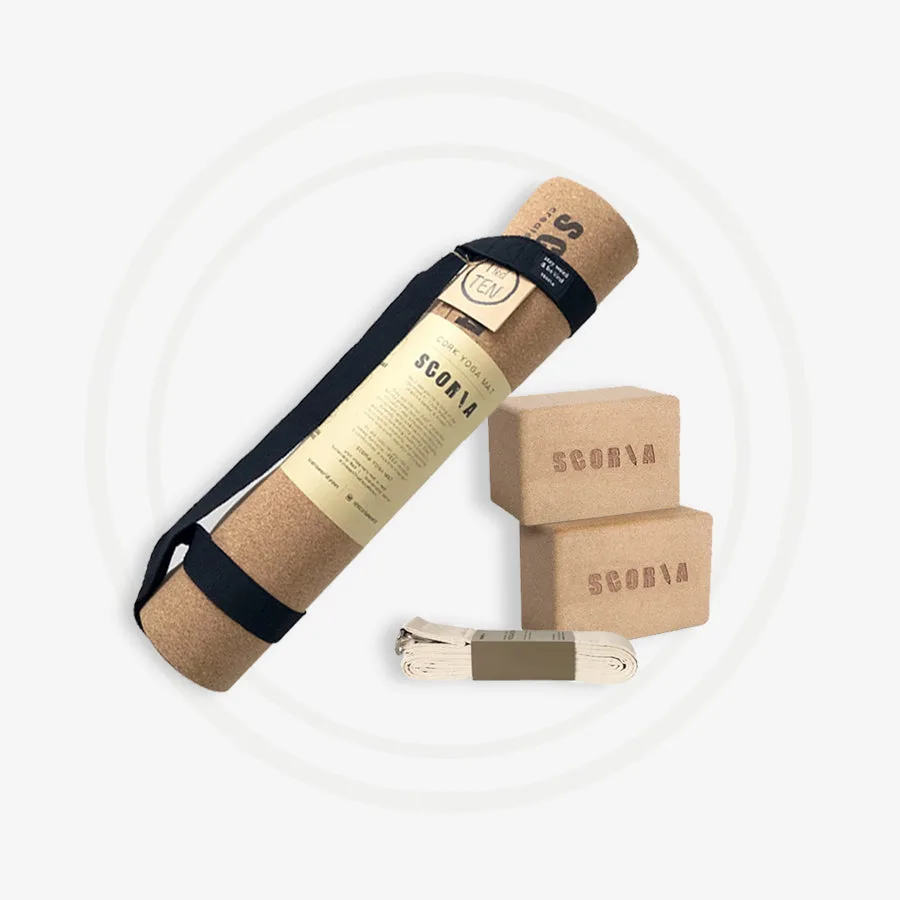
Quick answer
Cork yoga mat weight depends on thickness, backing material, and size, so no single number fits every mat. For commuting, choose a mat with a thin cork surface and a lightweight foam base, and check the listed weight and dimensions before you buy.
Why cork mats vary so much in carry weight
Cork itself is a relatively light natural material, but a finished yoga mat is a layered product. The cork surface sits on a backing, and that backing often contributes more to the total weight than the cork does. A dense rubber base can make a mat feel substantial, while a plant-foam base can keep it lighter.
Thickness and surface area also matter. A longer or wider mat uses more material, and a thicker cushioning layer adds bulk. That is why two cork mats that look similar can feel very different when rolled and carried.
The portability trade-off: cushioning versus carry weight
More cushioning usually means more material, which generally means more weight and a larger rolled diameter. If you have sensitive joints or practice on hard floors, that extra support can be worth the carry. If your main obstacle is a long walk, a crowded train, or a small backpack, a lighter mat is easier to live with.
Cork mats also tend to be stiffer than thin travel mats, so the rolled shape matters as much as the number on the scale. A mat that rolls tightly and stays rolled is easier to strap to a bag than one that springs open.
When a cork mat may be too heavy to carry
A cork mat is probably too heavy for your routine if you already feel reluctant to bring it, if it does not fit in your usual bag, or if you need to carry it for more than a short walk. In those cases, a thinner cork mat or a dedicated travel mat is a better fit than a cushioned studio mat.
Weight alone is not the whole story. A mat with a comfortable carry strap and a tight roll can feel easier to manage than a slightly lighter mat that unrolls in transit. Look at the full carrying setup, not just the mat.
Decision rules for choosing a cork mat you can carry
- If you commute on foot or by public transit: Prioritize a cork mat with a lightweight foam base and a thickness that rolls tightly. Check the listed weight and rolled dimensions against your bag before buying. Measure your bag's usable length and width first; a mat that fits is easier to carry than a lighter one that does not.
- If you need joint support on hard floors: Accept a slightly heavier, more cushioned cork mat and use a carry strap. The extra support is the reason to choose it, so do not trade it away for a few ounces.
- If you are unsure about the weight: Compare the listed weight and thickness of two or three cork mats in the same size. A mat with a plant-foam base is generally a more portable choice than a dense rubber-backed mat, but confirm with the specifications. If the product page does not list weight, treat that as a limitation and ask the seller before ordering.
Product facts
-
Float On Aura Cork Yoga Mat: Made with a fine-grained cork surface and a plant foam bottom optimized for stability and energy return. The foam base is a key part of both the mat's feel and its carry weight, so check the listed weight if portability is your priority.
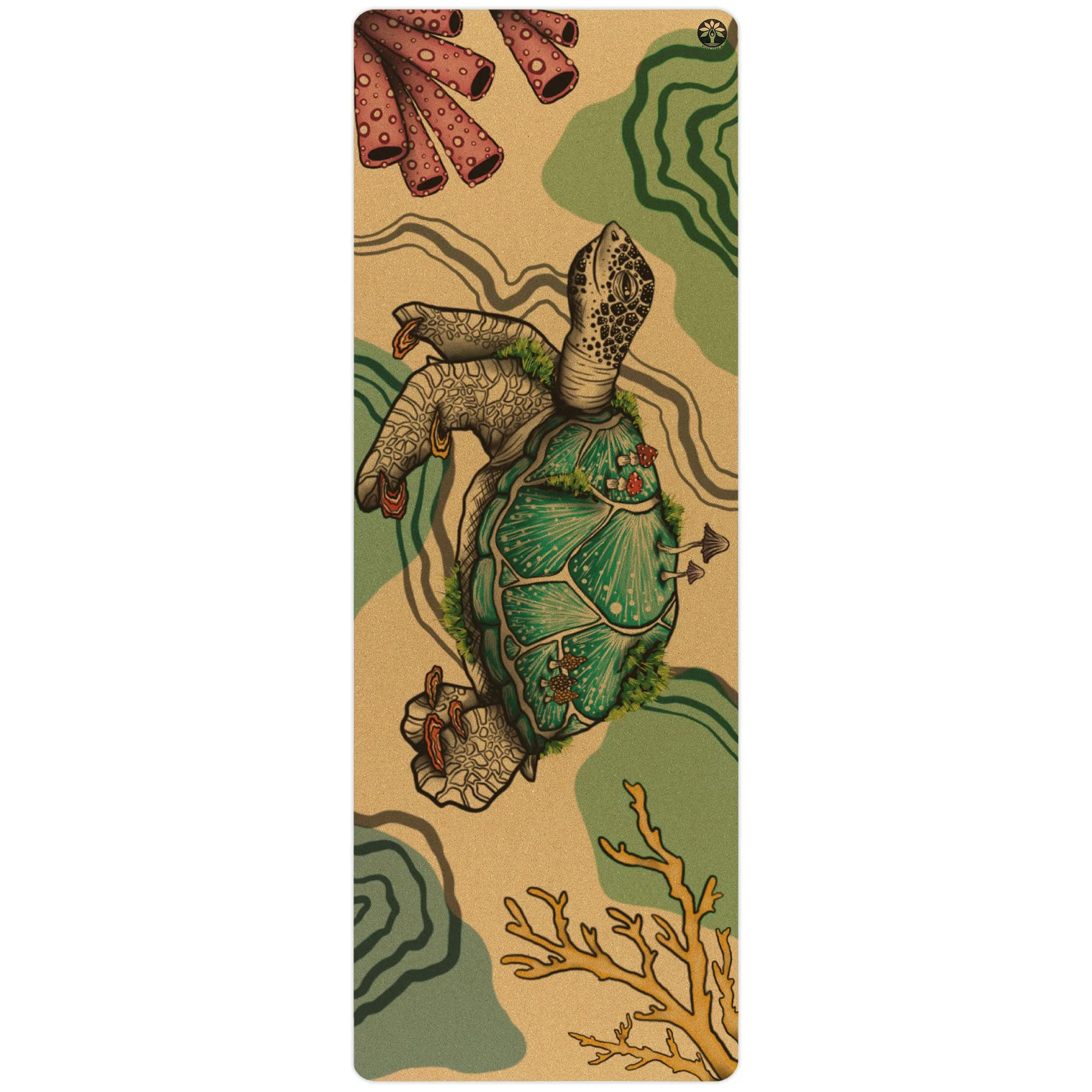
Float On Aura Cork Yoga Mat
-
Float On Aura Cork Yoga Mat: Described as the most cushioned mat in its line, with added support for joints. Extra cushioning is helpful for joint comfort, but it typically adds bulk and weight compared with a thinner mat.
Is a cork mat right for your carry routine?
Best for
- Commuters who want a natural-surface mat and can check weight and rolled size before buying
- Practitioners who value joint cushioning and do not need to carry the mat long distances
Not for
- Travelers who need the lightest possible mat for flights or backpacking
- Anyone who cannot confirm the mat's listed weight and dimensions before purchase