Quick answer
Choose a coude tip catheter when you need help steering past a narrowed or obstructed urethra, such as with an enlarged prostate. Choose a straight tip catheter for routine, uncomplicated intermittent catheterization or sterile urine sampling.
Tip design changes the path, not the job
Both catheter types drain the bladder, but the coude tip has a slight bend that can help guide the catheter around obstacles. A straight tip follows the urethra's natural line and is the standard choice when no obstruction is expected.
The trade-off is maneuverability versus simplicity. A coude tip may reduce the need for multiple attempts in tricky anatomy, but it requires you to align the bend correctly during insertion. A straight tip is more forgiving to insert but offers less help if you meet resistance.
Coating affects comfort and prep, not tip shape
The coude catheter in this comparison is hydrophilic coated, meaning it is pre-lubricated and designed to slide with less friction. The straight catheter is uncoated PVC, so you apply your own lubricant before use.
Hydrophilic coating can make self-catheterization quicker and more comfortable, especially for sensitive or frequent use. Uncoated PVC keeps the routine simple and lets you control the lubricant, but it adds a preparation step and may feel less slick during insertion.
When the catalog leaves a gap
The supplied records do not list French sizes for the straight catheter or detailed coating ingredients for either product. That means you cannot compare exact diameter ranges or coating materials from these facts alone. Use the available size and packaging options on each product page to confirm what fits your prescribed routine.
Trade-offs to weigh before you choose
- Navigation vs. simplicity: A coude tip can help steer around an enlarged prostate or other obstruction, but it must be oriented correctly. A straight tip is easier to insert routinely but gives less help if you meet resistance. If you often meet resistance, ask your clinician whether a coude tip is appropriate.
- Coating convenience vs. control: Hydrophilic coating is pre-lubricated for lower friction and faster preparation. Uncoated PVC requires you to apply lubricant, which adds a step but lets you choose the amount and type. Frequent users may value the coating's speed; occasional users may prefer the uncoated routine.
- Cost and catalog price: The coude catheter lists at a higher catalog price than the straight catheter. That difference may matter if you catheterize several times a day. Compare cost per catheter against how often you use one before committing to a box.
Product facts at a glance
-
McKesson Urethral Catheter Straight Tip Uncoated PVC: Straight tip, uncoated clear PVC, available in size, gender, and packaging options. A straightforward choice for routine intermittent catheterization or sterile urine sample collection when no obstruction is expected.
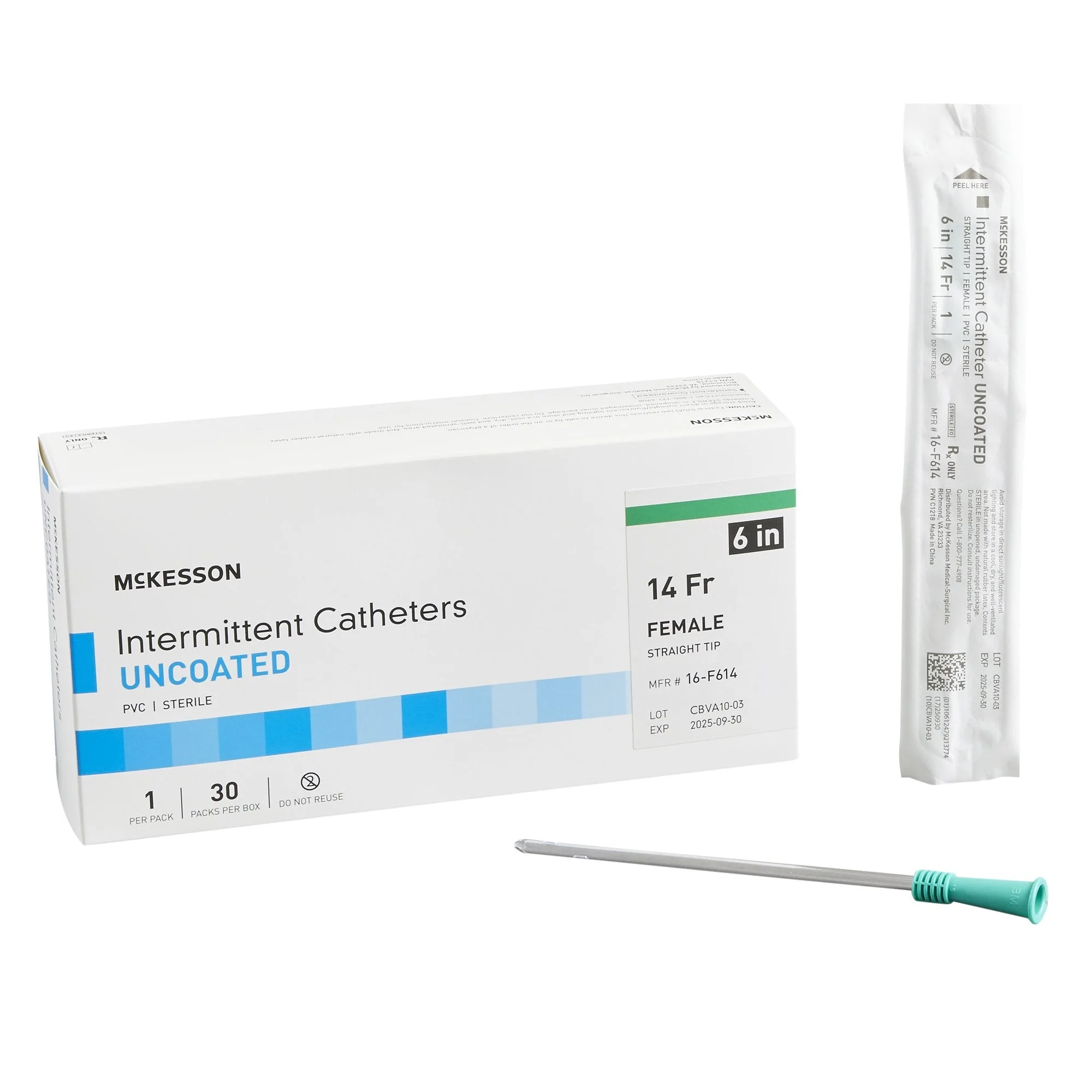
McKesson Urethral Catheter Straight Tip Uncoated PVC
-
Urethral Catheter Coude Tip Hydrophilic Coated PVC - Universal: Coude tip with pre-lubricated hydrophilic coating, available in French size and packaging options. The bent tip and slick coating can ease insertion when you need to navigate past a potential urethral obstruction.
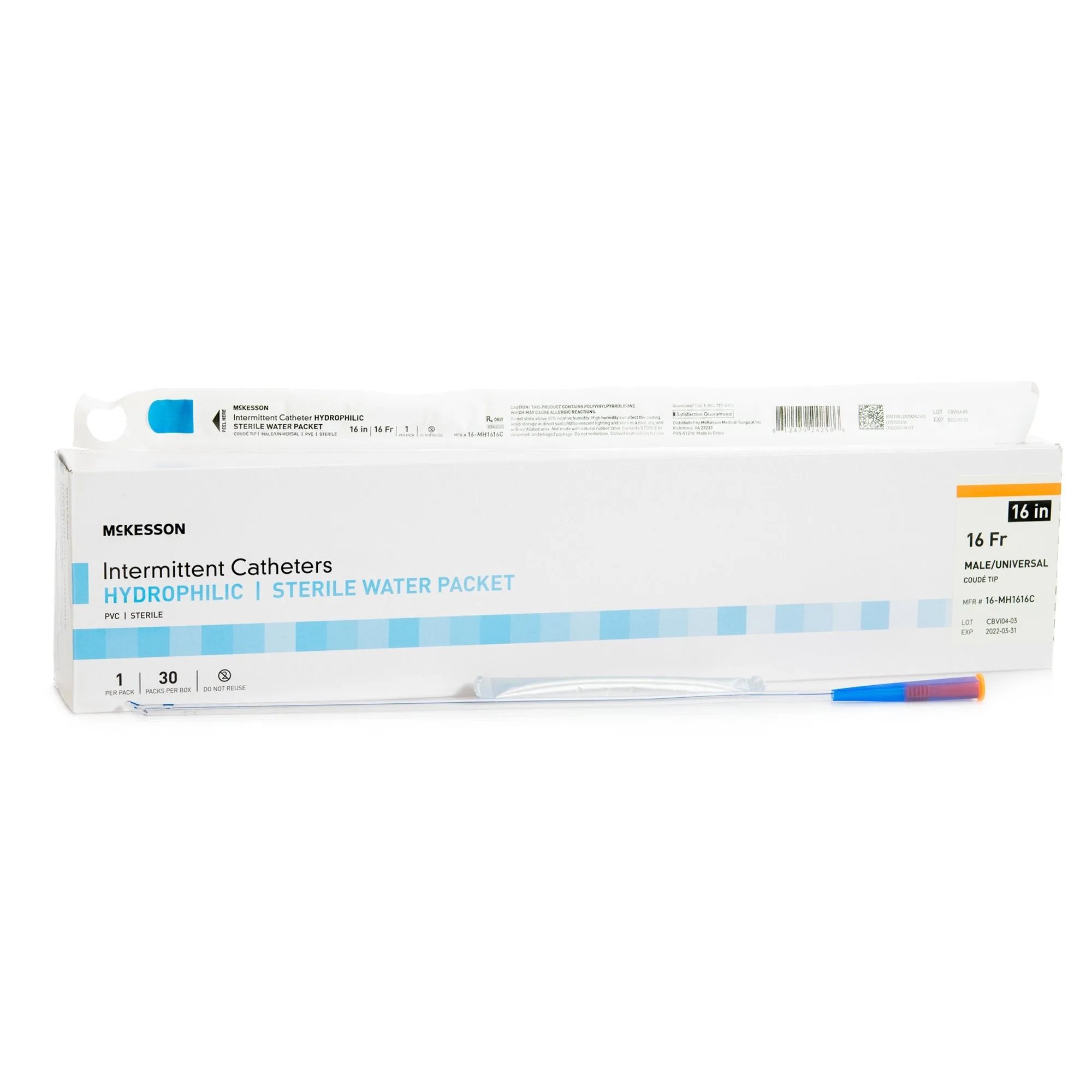
Urethral Catheter Coude Tip Hydrophilic Coated PVC - Universal
Which catheter fits your situation?
Best for
- People with an enlarged prostate or known urethral narrowing who need help guiding the catheter
- Those who want a pre-lubricated, lower-friction option for frequent self-catheterization
Not for
- Routine intermittent catheterization with no history of obstruction
- Sterile urine sample collection where a straight tip is typically used