Quick answer
Choose a cove bit for a traditional 1-inch scooped profile, a Shaker bit for a crisp 15-degree step, or a beveled bit for a broad angled face. Match the bit's large diameter and cut length to your door size and router horsepower before buying.
Profile shape changes the door style, not just the cut
A cove removes material in a concave arc, leaving a shadow line that reads as traditional. A Shaker profile is a straight 15-degree chamfer that produces a flat, stepped field—clean and modern. A beveled profile cuts a long, straight angle across the panel face, giving a wider visual transition than either of the other two.
The profile you pick should follow the door's overall design. Mixing a cove panel with a square, flat frame often looks busy; a Shaker panel with a heavily molded frame can look mismatched. Decide the door style first, then choose the bit that cuts it.
Diameter and cut length drive router setup and door size
Larger diameters cut a wider profile but demand more router power and a stable setup. The Whiteside 5900A beveled bit is 3-1/4 inches in diameter, the 5950 cove is 2-1/2 inches, and the 5980 Shaker is 2 inches. All three use a 1/2-inch shank, which is the safer choice for raised panel work in a table.
Cut length matters for panel thickness and reveal. The cove bit cuts 1/2 inch long, the Shaker bit 9/16 inch, and the beveled bit's cut length is not listed in the catalog—check the manufacturer's drawing if you need an exact number for your panel thickness.
The trade-off: profile character versus setup demands
The cove bit gives the most traditional look but its 1-inch-wide pattern and 2-1/2-inch diameter require a router table with enough power to spin a large cutter smoothly. The Shaker bit is the easiest to control at 2 inches in diameter, but its 15-degree pattern is less forgiving of frame/profile mismatches because the step is so visible. The beveled bit offers the broadest face, yet its 3-1/4-inch diameter is the most demanding of the three on router horsepower and feed control.
None of these bits is coated, so they rely on sharp carbide and clean feed rather than a low-friction coating. That makes steady feed rate and proper chip clearance more important than with coated cutters.
Trade-offs at a glance
- Cove profile: Best for traditional doors with a 1-inch scooped shadow line. Trade-off: the 2-1/2-inch diameter and 1/2-inch cut length need a router table and enough horsepower to avoid chatter. Check your router's maximum bit diameter before ordering.
- Shaker profile: Best for clean, modern doors with a 15-degree step. Trade-off: the 2-inch diameter is easy to control, but the straight step shows any mismatch between frame and panel. Dry-fit the frame and panel before cutting the final profile.
- Beveled profile: Best for a broad, angled face on larger panels. Trade-off: the 3-1/4-inch diameter is the most demanding on router power and feed control, and its cut length is not listed in the catalog. Confirm cut length from the manufacturer's drawing if panel thickness is critical.
Product facts
-
Large Beveled Raised Panel Router Bit – Whiteside 5900A: 3-1/4-inch large diameter, 1/2-inch shank, 2 wings, not coated, made in USA. The wide beveled face suits larger panels, but the big diameter needs a powerful router and a stable table setup.

Large Beveled Raised Panel Router Bit – Whiteside 5900A
-
Cove Medium Raised Panel Router Bit – Whiteside 5950: Cuts a 1-inch-wide cove pattern with a 2-1/2-inch large diameter and 1/2-inch cut length. The wide cove gives a traditional shadow line, while the moderate diameter is easier to manage than the largest beveled bit.
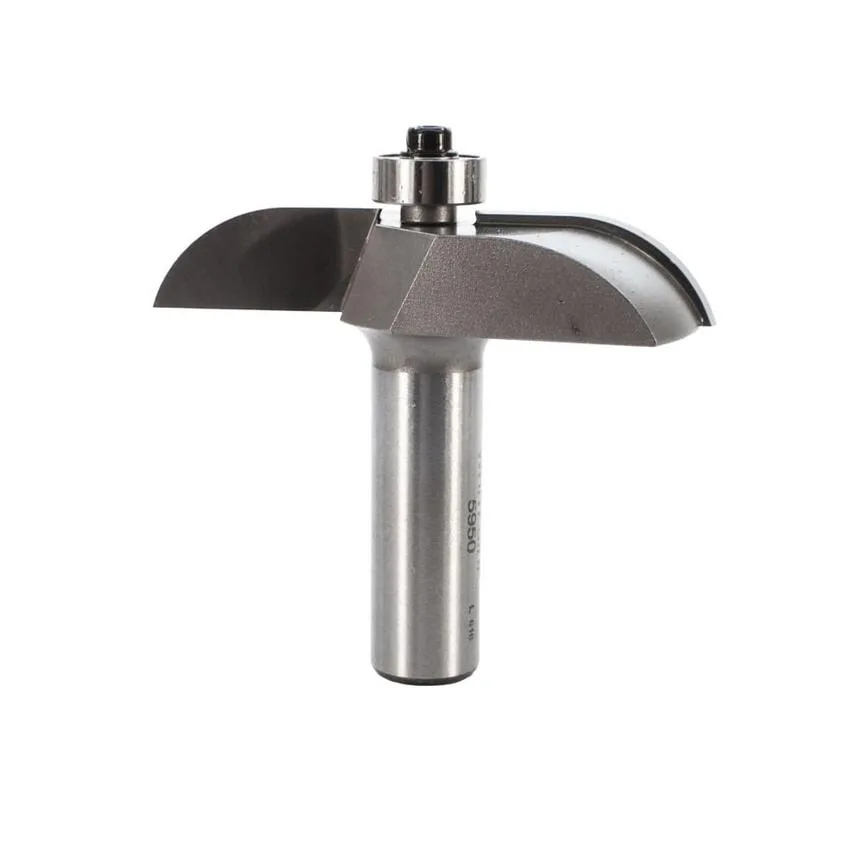
Cove Medium Raised Panel Router Bit – Whiteside 5950
-
Medium Shaker Raised Panel Router Bit – Whiteside 5980: Cuts a 15-degree pattern with a 2-inch large diameter and 9/16-inch cut length. The small diameter and straight step make it the most controllable option for Shaker-style doors and lighter routers.
Which bit fits your door
Best for
- Woodworkers building traditional cabinet doors with a cove shadow line
- Shaker-style door projects where a crisp 15-degree step is wanted
- Large panels that need a wide beveled transition
Not for
- Trim routers or low-horsepower setups that cannot spin a 2-1/2-inch or larger bit safely
- Door designs that mix a heavy frame molding with a simple Shaker panel
- Projects where exact cut length must be known and the beveled bit's length is not published
