Quick answer
Treat your covered linear kitchen as a ventilated, weather-exposed structure, not a sealed indoor room. Match each symptom to its likely cause, fix what you can safely reach, and call a professional for gas, electrical, or structural issues.
Why a roof does not make the kitchen weatherproof
A cover blocks direct rain and sun, but wind-driven rain, humidity, and heat buildup still reach surfaces and appliances. Powder-coated galvanized steel resists rust, yet standing water and trapped moisture can degrade finishes and encourage mold in crevices. Ventilation matters as much as the roof: without airflow, heat and smoke linger under the cover.
When to stop DIY and call a professional
Stop and call a licensed technician for any gas smell, electrical fault, or structural movement. Do not attempt to reseal a built-in grill’s gas connections or repair damaged electrical outlets yourself. For surface cleaning and cover care, DIY is usually safe. If you are unsure whether a symptom is cosmetic or structural, err on the side of a professional inspection.
Symptom, cause, and fix guide
- Heat or smoke lingering under the cover: Likely cause: poor ventilation. Corrective action: open all sides, use an exhaust fan rated for outdoor use, and never enclose the cooking area with walls or curtains. If smoke still accumulates, add a vent hood or consult a professional about airflow. Check ventilation before every cooking session; if smoke does not clear within minutes, stop cooking and improve airflow.
- Water pooling on countertops or near the grill: Likely cause: roof runoff or wind-driven rain. Corrective action: clear gutters, adjust the roof pitch if possible, and wipe standing water promptly. Check that the grill cover drains and does not trap water against the built-in grill. After any storm, inspect for pooled water and dry surfaces within 24 hours to prevent finish damage.
- Chalky or faded powder coating: Likely cause: UV exposure and abrasive cleaners. Corrective action: wash with mild soap and water, rinse, and dry. Avoid harsh solvents. If fading is severe, a professional can assess whether recoating is needed. Use only mild soap; never power-wash powder-coated steel, as it can chip the coating.
- Built-in grill cover feels stiff or cracked: Likely cause: sun damage or trapped moisture. Corrective action: clean the cover with mild soap, dry fully, and apply a UV-protectant spray if recommended by the cover manufacturer. Replace the cover if cracks let water through. Inspect the cover monthly; a cracked cover is cheaper to replace than grill components.
- Persistent musty smell or visible mold: Likely cause: moisture trapped in crevices or under the cover. Corrective action: clean affected areas with a diluted vinegar solution, dry thoroughly, and improve airflow. If mold returns or spreads behind panels, call a professional. If mold covers more than a small patch, stop DIY and seek professional remediation.
Product facts
-
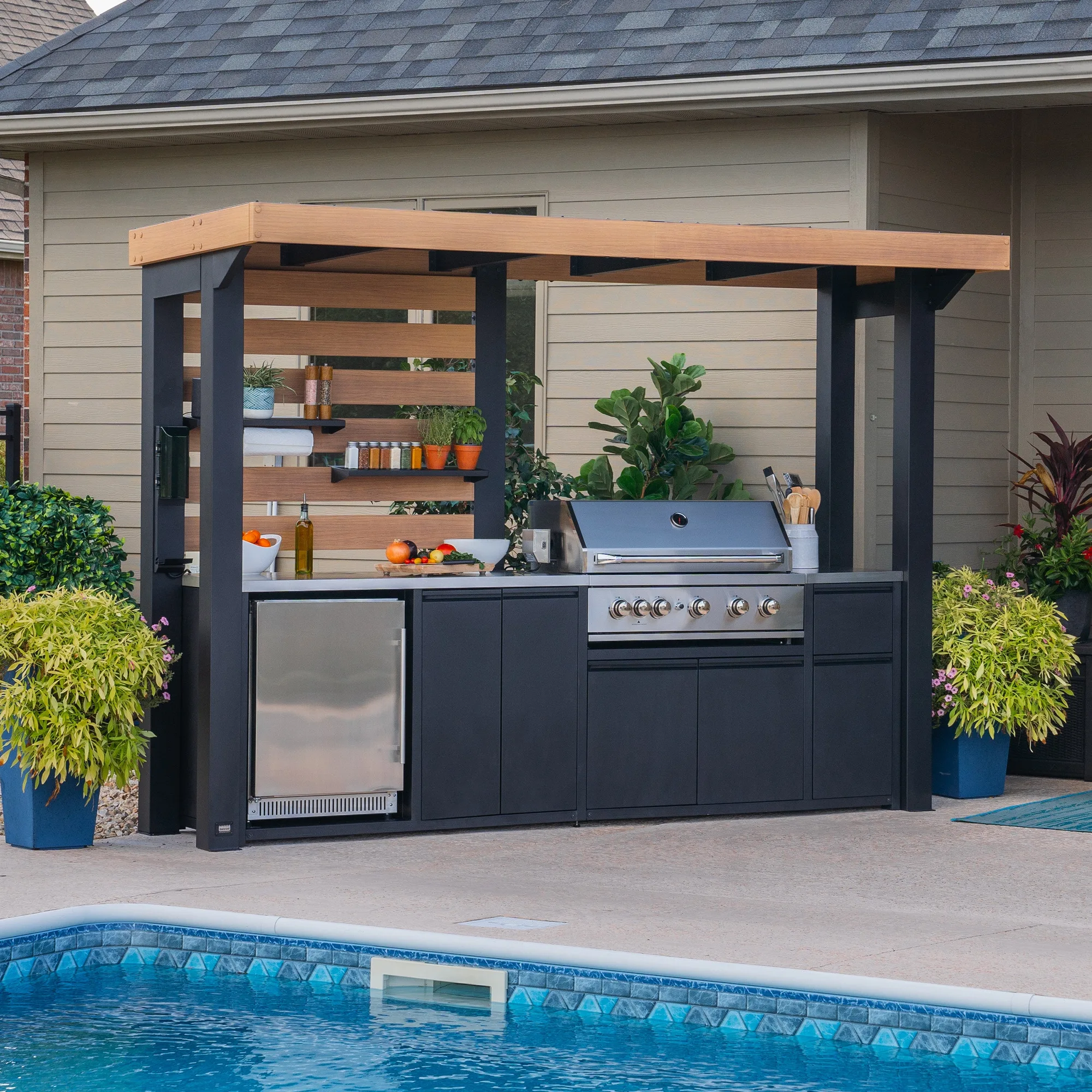
Lancaster | Covered Linear Outdoor Kitchen with Built-In Grill: Constructed from fully powder-coated galvanized steel and engineered for extreme weather year-round. This means your maintenance focus should be on inspection and cleaning rather than rust-proofing, but powder coating can still chip or scratch.

Lancaster | Covered Linear Outdoor Kitchen with Built-In Grill