Quick answer
Set up a cowhide posture sling restraint by fitting each cuff individually first, then connecting them in a sequence that matches your planned position. Check every connector for slack and pressure points before any tension is applied.
Why full-grain cowhide changes the setup sequence
Full-grain cowhide is stiff when new and softens with body heat and movement. That means a cuff that feels snug during setup may feel tighter after ten minutes of wear, so leave a little more room than you would with softer leather. The material also holds its shape, which helps connectors stay where you route them instead of sliding.
The trade-off is break-in time. Plan your first few sessions around fit checks rather than long wear, and recheck every cuff after the leather warms up.
Connectors are not one-size-fits-all
A posture sling restraint set uses connectors to link wrist, ankle and thigh cuffs to each other or to an anchor point. The order you connect them matters more than the hardware itself: connecting limbs before the sling is positioned can twist the cuffs and create pressure points. Route each connector so it lies flat against the body, with no twists or crossed straps.
If a connector feels tight before you add tension, it will feel tighter once the sling takes weight. Adjust the cuff position first, then the connector length.
Step-by-step posture sling restraint setup
- Fit each cuff before connecting anything: With the set laid flat, fasten each wrist, ankle and thigh cuff on the matching limb one at a time. Slide two fingers under each cuff; if you can’t, loosen one notch. Common mistake: fitting all cuffs at once and guessing the tension. Recheck the thigh cuffs last, since thigh circumference changes most between standing and lying positions.
- Route connectors flat and untwisted: Connect the cuffs in the order your planned position requires, keeping each strap flat against the body. Run a finger along every connector to confirm no edge is folded or twisted. Common mistake: connecting wrists to ankles first, which pulls the sling out of position. If a connector crosses itself, disconnect and reroute rather than twisting the cuff to compensate.
- Position the sling, then adjust tension: With all cuffs fitted and connectors routed, settle into the sling and adjust connector length only enough to remove slack. Common mistake: tightening connectors to pull the body into position instead of letting the sling support it. Leave a hand’s width of slack in each connector before the first tension check.
- Do a five-minute wear check: After five minutes, check every cuff for redness, numbness or tingling and recheck connector tension. Full-grain cowhide softens with body heat, so a cuff that felt right at setup may need one notch looser. Common mistake: skipping the check because everything felt fine initially. Keep a safety cutter within reach during every session, even after the set is broken in.
Product facts
-
Cowhide Leather Sex Posture Sling Wrist, Ankle & Thigh Cuffs with Connectors | Bondage Restraints Set: The Leather Bond Sex Posture Sling includes adjustable soft leather wrist and ankle cuffs plus thigh cuffs, all connected as one integrated system. Because the cuffs and connectors are designed to work together, you can fit each cuff first and then route the connectors without mixing hardware from different sets.
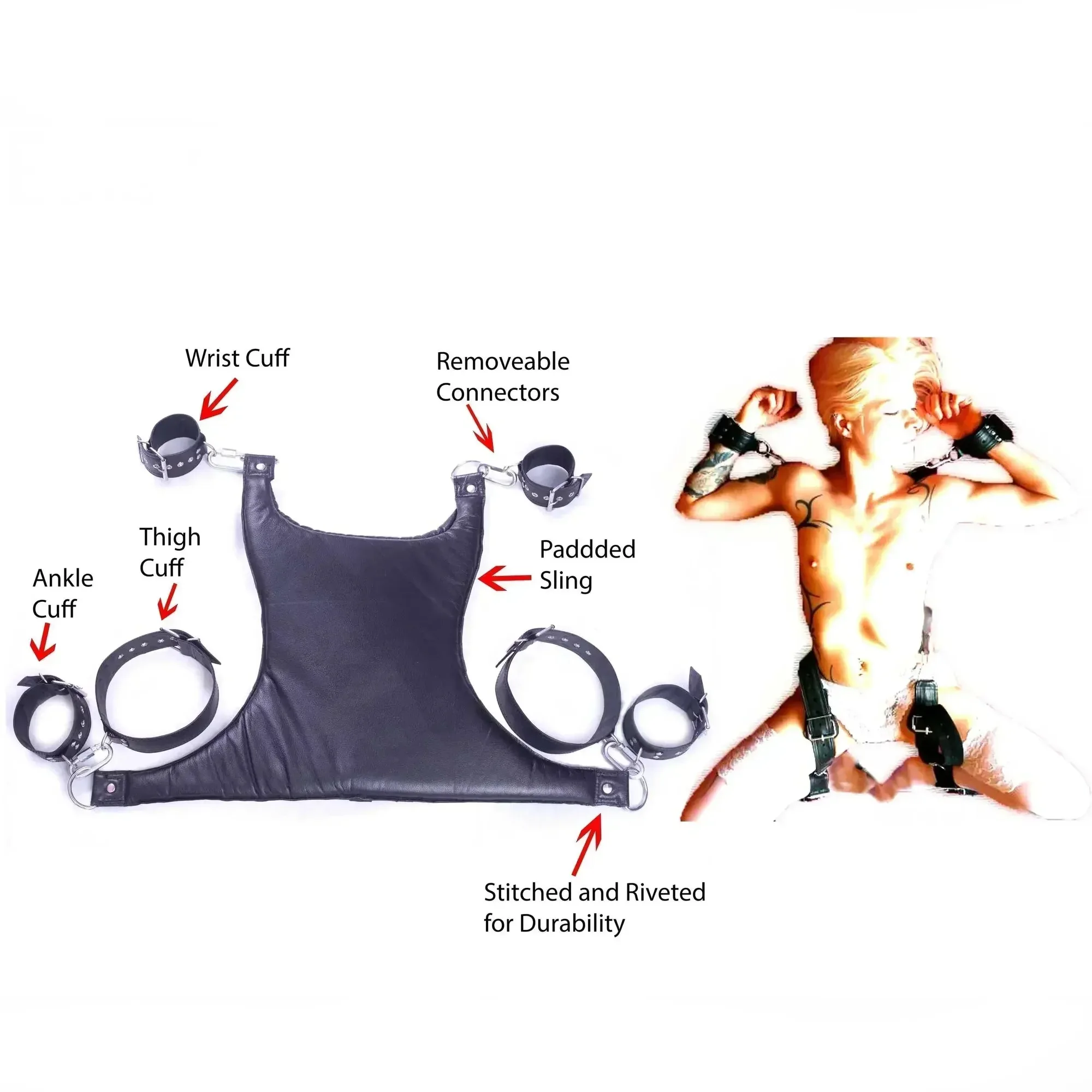
Cowhide Leather Sex Posture Sling Wrist, Ankle & Thigh Cuffs with Connectors | Bondage Restraints Set