One is a grain, the other is a flour
The names sit close together on a shelf, but these two W-qameh products are not interchangeable. ALBARAKEH WHEAT Cracked Local Wheat is cracked grain, sold in a 1kg bag. ALBARAKEH Local Whole Durum Wheat is whole durum wheat flour, also 1kg, stone-milled from grain grown in Madaba, the Jordan Valley, Al-Karak and Irbid.
That single difference decides most of your cooking. Cracked grain gives a dish body and bite. Stone-milled whole durum flour gives dough structure and a nutty, sweet flavor. If you are choosing for pilaf, the grain is the starting point. If you are choosing for flat bakes or pastries, the flour is.
Cracked wheat and whole durum wheat side by side
- What you are buying: Cracked local wheat is grain broken into pieces. Whole durum wheat is stone-milled flour made from local grain.
- Texture in the finished dish: Cracked wheat keeps a grainy, chewy presence. Whole durum flour disappears into the crumb of a bake, leaving a nutty sweetness rather than distinct grains.
- Where it fits best: Cracked wheat suits dishes where you want a rice-like component. Whole durum flour suits flat bakes and pastries, as stated in its product record.
- Bulgur vs durum wheat difference: The cracked wheat record notes that, compared with bulgur, cracked wheat is higher in nutritional value because it is not pre-cooked and dried, a process the record says results in a loss of 40% of nutrients.
What the cracked wheat record tells you
-
ALBARAKEH WHEAT Cracked Local Wheat (1kg): Local cracked wheat was used in the Levant as a substitute for white rice before white rice became commercially available, and was a major component of Levantine and Arabian Peninsula cuisine. This is the clearest signal that cracked wheat belongs in rice-style dishes and pilaf, where it can take the place of a grain rather than a flour.
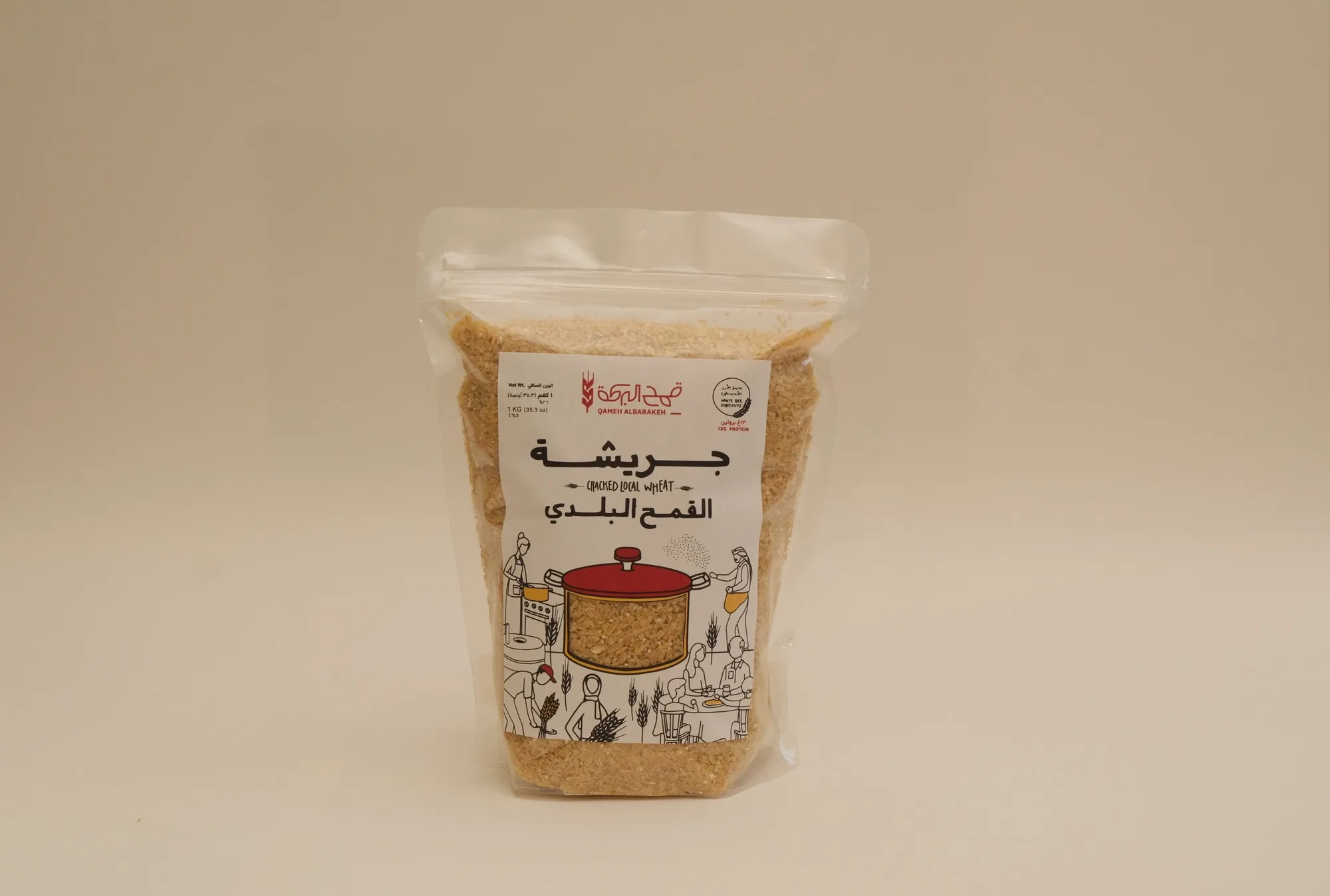
ALBARAKEH WHEAT Cracked Local Wheat (1kg)
-
ALBARAKEH WHEAT Cracked Local Wheat (1kg): One serving contains 13 grams of protein and is described as a complex carbohydrate that does not raise blood sugar levels quickly. If you are choosing a grain for a main meal, this is the practical nutritional context the record provides. It is not a reason to use it as flour.
Which wheat for pilaf and rice-style dishes
Cracked wheat is the one to reach for. Its history as a stand-in for white rice in the Levant points directly at that role, and its cracked form gives a dish the separate, grainy texture you expect from a pilaf rather than the smooth body of a flour-thickened one.
Whole durum wheat flour is not a substitute here. The product record describes it as flour for flat bakes and pastries, with a nutty sweet flavor. Adding it to a pilaf would change the dish into something closer to a dough than a grain dish.
The supplied records do not include cooking times, soaking ratios or water quantities for either product. Treat any timing as something you establish in your own kitchen rather than a figure confirmed by the catalog.
What the whole durum wheat record tells you
-
ALBARAKEH Local Whole Durum Wheat (1kg): Local whole durum wheat flour, grown in Madaba, the Jordan Valley, Al-Karak and Irbid and milled on stone. The record identifies this as a stone-milled whole flour from named local growing areas, which matters if origin and milling style are part of your buying decision.
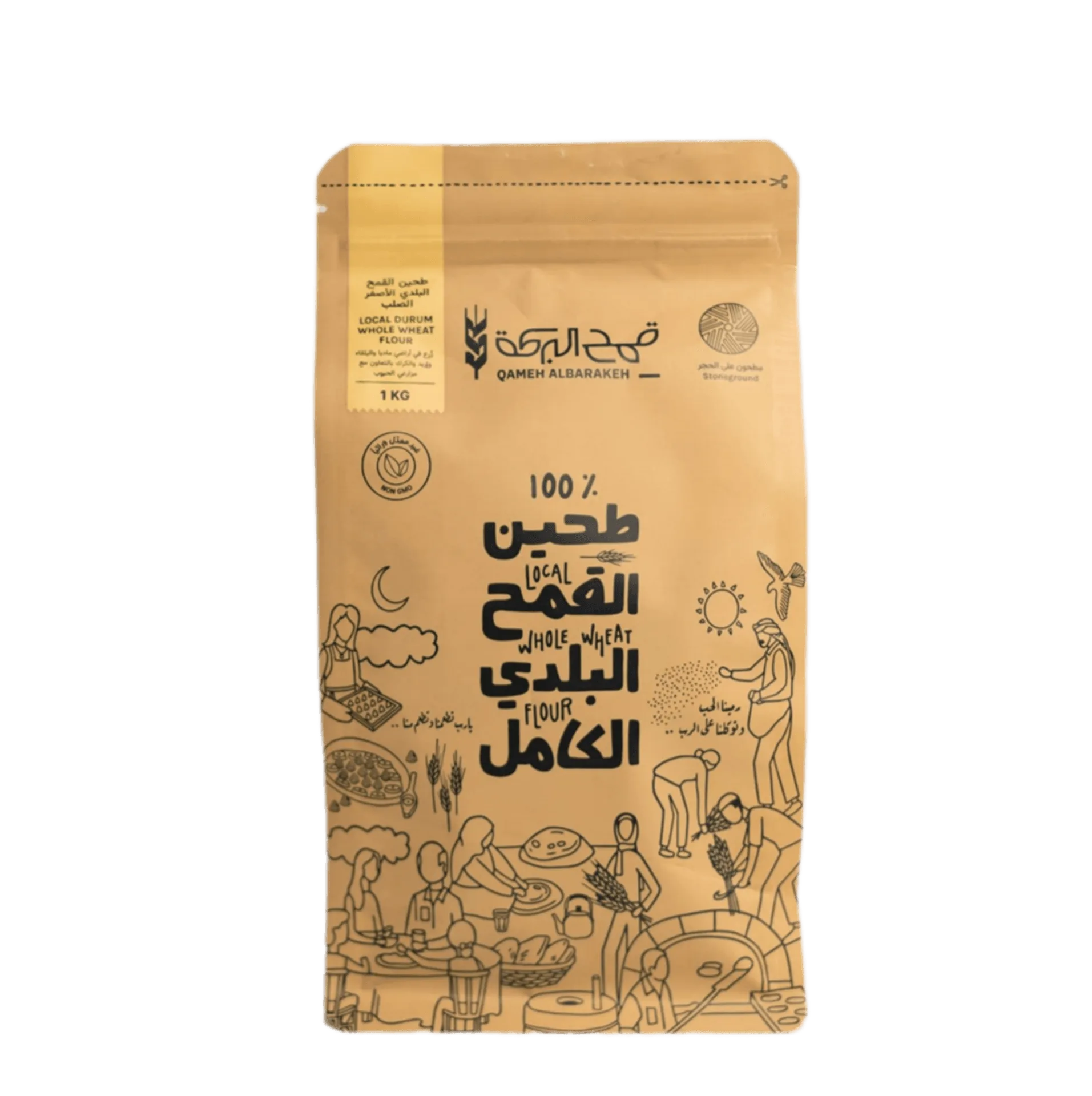
ALBARAKEH Local Whole Durum Wheat (1kg)
-
ALBARAKEH Local Whole Durum Wheat (1kg): Suitable for flat bakes and pastries, with a nutty sweet flavor. This is the supported use case. It tells you where the flour is intended to go and what flavor it brings, without implying it works as a cracked grain substitute.
Whole durum wheat recipes the record actually supports
The product record names two categories: flat bakes and pastries. Those are the safe starting points. It does not list bread loaves, pasta or thickeners, so treat those as untested rather than recommended.
- Flat bakes: The record explicitly names flat bakes as suitable. The nutty sweet flavor is the character the flour brings to them.
- Pastries: Pastries are the second named use. Again, the record gives the flavor note but no ratios, so follow your own recipe rather than a catalog figure.
- Anything else: The supplied evidence does not confirm other uses. If you want to try the flour elsewhere, do it as an experiment, not as a documented method.
Buying both, and what the records leave open
These two 1kg bags do different jobs, so buying both is reasonable if your cooking moves between grain dishes and baking. The cracked wheat covers rice-style meals. The whole durum flour covers flat bakes and pastries.
What the records do not settle: neither product lists preparation instructions, soaking or resting times, water ratios, storage guidance or shelf life. The cracked wheat record also does not specify the crack size, which affects how quickly it cooks. Check the pack you receive for that information rather than assuming a figure.
If you are choosing one bag today, decide by the dish in front of you. Pilaf and grain-based meals point to cracked wheat. Flat bakes and pastries point to whole durum wheat flour.