Quick Answer
Match the needle to the fabric and thread: use cross stitch needles for even-weave fabric, milliner needles for basting and pleats, and quilting needles for piecing and quilting.
Why Needle Shape Matters
Each needle type in a craft needle assortment has a specific shape and eye size that affects how it moves through fabric and how the thread behaves. Using the wrong needle can cause skipped stitches, fabric damage, or frustration.
For example, cross stitch needles have blunt tips that slip through even-weave fabric without splitting threads, while milliner needles are long and uniform in thickness, making them ideal for basting and creating gathers.
Trade-Offs: Versatility vs. Precision
A general-purpose hand sewing needle works for many tasks, but specialized needles offer better results for specific techniques. For instance, a quilting needle is shorter and has a small eye, which helps with quick, even stitching through multiple layers. A tapestry needle, with its large eye and blunt tip, is better for yarn work and darning.
If you are new to hand sewing, starting with a mixed assortment lets you experiment and learn which needle feels best for each project without committing to a full set of one type.
How to Choose the Right Needle from Your Assortment
- Identify Your Fabric and Technique: Start by determining what you are making: cross stitch on even-weave, embroidery on woven fabric, quilting through layers, or general mending. Each technique has a needle designed for it. Checkpoint: If you are unsure, look at the fabric weave and thread thickness.
- Match the Needle Type: Use cross stitch needles for counted thread work, tapestry needles for yarn and darning, milliner needles for basting and pleats, candlewicking needles for textured embroidery, embroidery needles for decorative stitches, and quilting needles for piecing and quilting. Common mistake: Using a sharp embroidery needle on even-weave fabric can split threads and distort the pattern.
- Consider Needle Size and Eye: Larger eyes accommodate thicker threads (like yarn), while smaller eyes are better for fine threads. Shorter needles give more control for precise stitches, longer needles are faster for basting. Checkpoint: Test the needle on a scrap of your fabric before starting.
- Store and Organize: Keep your assortment in the compact dispenser to prevent losing needles and to quickly identify the type you need. Store in a dry place to avoid rust. Common mistake: Leaving needles loose in a drawer can lead to bent or lost needles.
Product Spotlight
-
Craft Needle Assortment, 25 pc: The Dritz Craft Needle Assortment, 25 pc, includes cross stitch, tapestry, milliner, candlewicking, embroidery, and quilting needles in a handy compact dispenser. This variety covers most hand sewing and craft needs, so you can match the right needle to your project without buying separate packs.
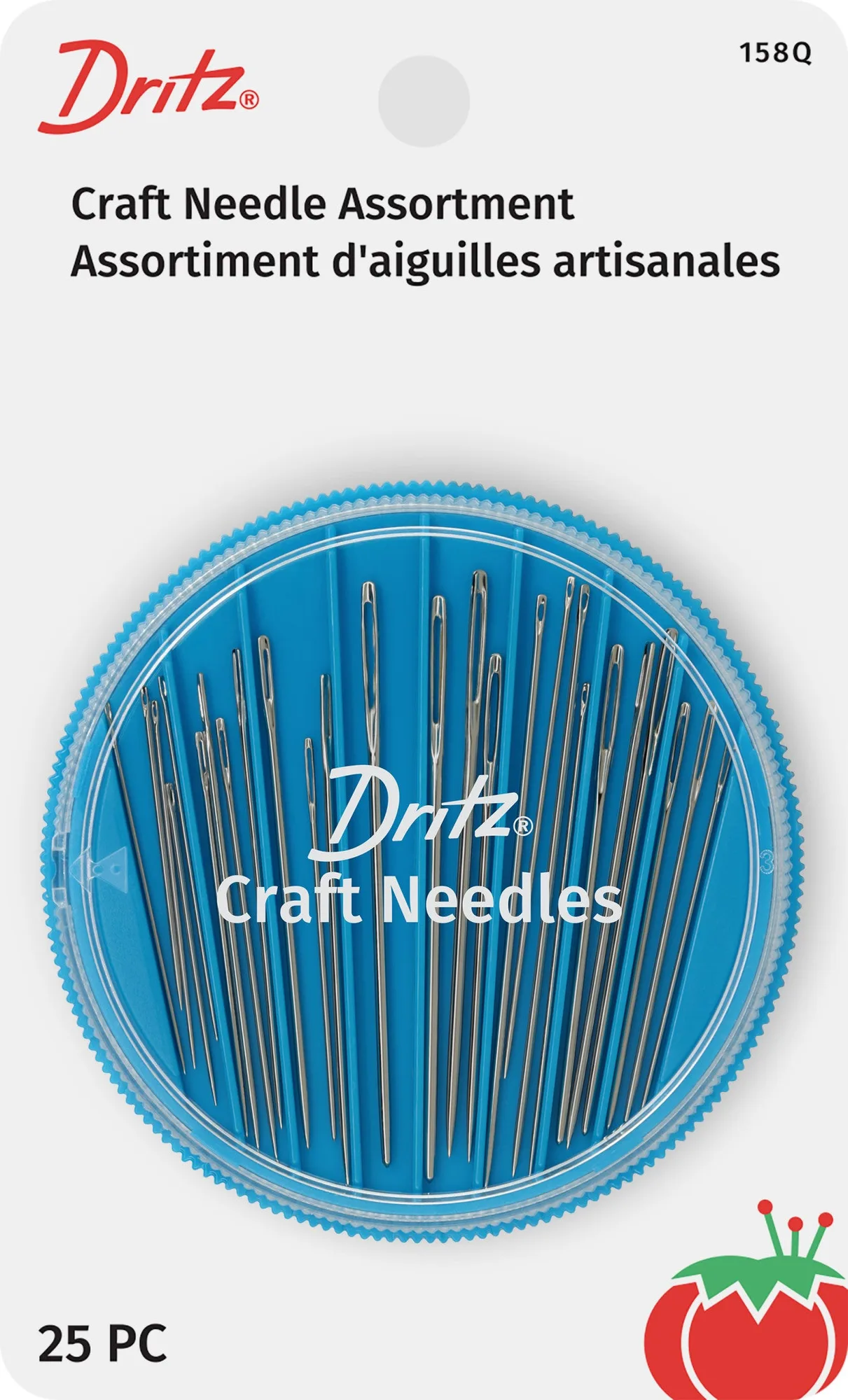
Craft Needle Assortment, 25 pc