Start with what the label can and cannot prove
Creatine has a loud online reputation, and much of the noise around women and creatine comes from claims that go beyond what a product label can tell you. The supplied record for Creatine Powder for Women confirms a micronized creatine monohydrate powder with a 3g serving, described as unflavored, vegan, and non-GMO. It also lists intended-use language about workout endurance, post-workout recovery, and lean muscle support.
What the record does not include is a full safety section, preparation instructions, or a complete specification list. That absence matters for a myth-busting article: it means you should not treat any claim in this article as a medical clearance, a dosing protocol, or a guarantee of results. Use the confirmed facts to judge product fit, and use your own clinician's guidance for personal safety questions.
Five common creatine myths, checked against the record
- Myth: Creatine is only for men or bodybuilders: The product is explicitly positioned for active women, and the label language focuses on workout endurance, recovery, and lean muscle support. That does not prove every woman will respond the same way, but it does mean the product is not framed as a men-only formula.
- Myth: A 3g serving is too small to matter: The supplied record lists 3g per serving as the product's serving size. Whether that amount suits you is a personal question the label cannot answer. What the label does confirm is the serving number, so you can compare it with whatever your own clinician or coach recommends rather than guessing from internet claims.
- Myth: Creatine causes immediate visible muscle gain: The record says regular use helps support lean muscle mass development, not that results appear overnight. Any timeline claim beyond that wording would be invented. Treat lean muscle support as a long-game reason to be consistent, not a promise of fast visual change.
- Myth: You need a flavored, complicated stack: This product is described as unflavored and versatile, and the record says it can be mixed into water, smoothies, or shakes. That simplicity is a real fit advantage if you already have a post-workout drink you like. It also means the taste experience depends on what you mix it with, not on the powder itself.
- Myth: Any creatine product is interchangeable: The record identifies this as micronized creatine monohydrate, vegan, and non-GMO. Those are meaningful label details if they matter to you. They do not establish superiority over other forms or brands, because the supplied information contains no head-to-head testing or comparison data.
What the Creatine Powder for Women record confirms
-
Creatine Powder for Women, 3g / serving: Micronized creatine monohydrate powder with a 3g serving, described as formulated for active women. This is the core identity of the product. It tells you the form, the serving size, and the intended audience without adding unverified claims.
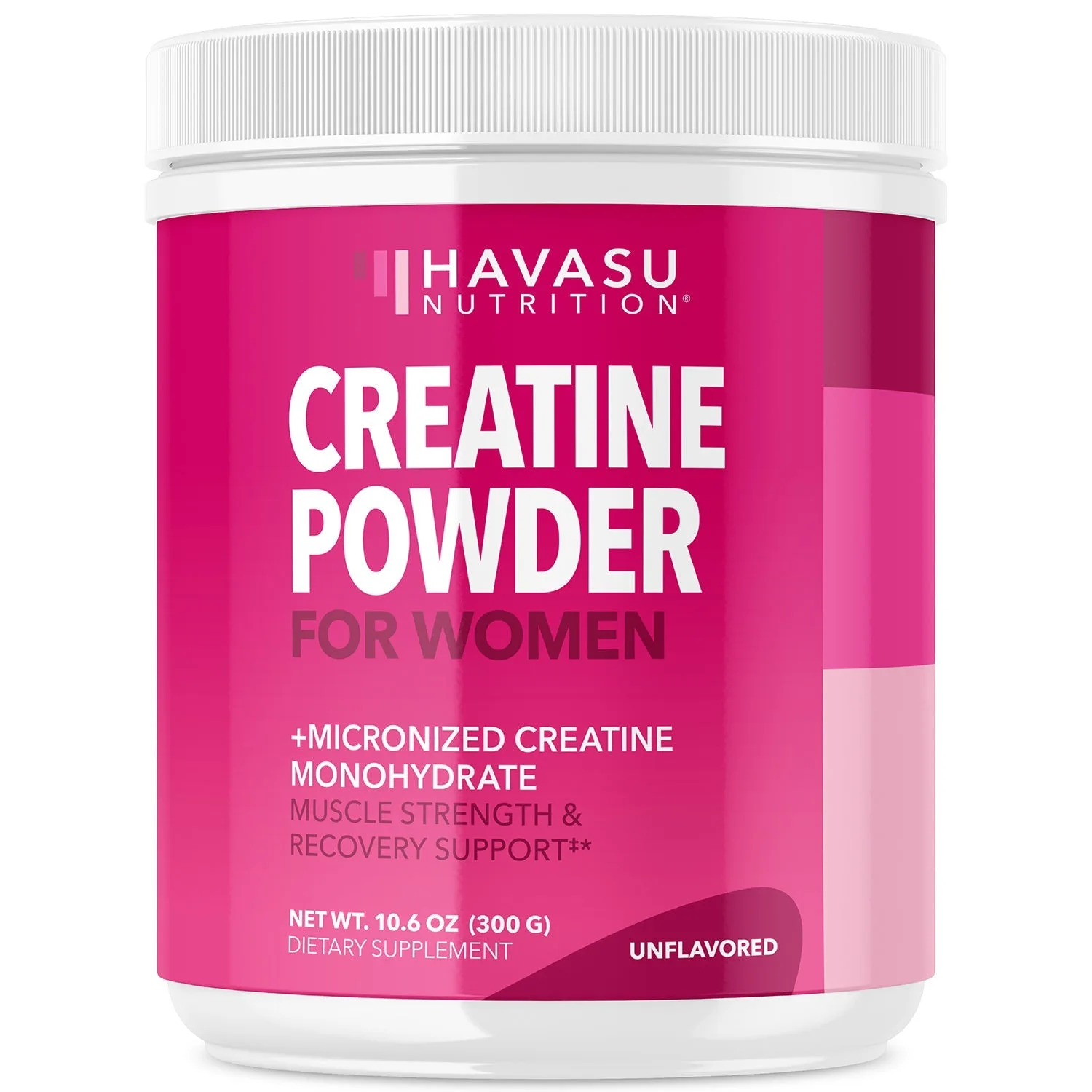
Creatine Powder for Women, 3g / serving
-
Creatine Powder for Women, 3g / serving: Label language says it may help increase energy levels during intense workouts and support post-workout recovery. These are the intended-use statements you can evaluate against your own training routine. They are possibilities described by the label, not guaranteed outcomes.
-
Creatine Powder for Women, 3g / serving: Described as unflavored and easy to mix into water, smoothies, or shakes. This supports a practical how-to-take decision: you can add it to a drink you already consume rather than building a new habit around a flavored product.
-
Creatine Powder for Women, 3g / serving: Vegan and non-GMO. These are useful fit criteria for shoppers who screen supplements against dietary or sourcing preferences.
A realistic women's creatine routine built around the 3g serving
- Anchor the serving to a drink you already have: The record says the powder can be mixed into water, smoothies, or shakes. Choose the one that already fits your day, such as a post-workout shake, so the 3g serving rides on an existing habit.
- Measure the 3g serving rather than eyeballing a scoop: The supplied record confirms 3g per serving but does not include preparation instructions or a scoop specification. Use the serving size as your reference point and follow the packaging directions when your product arrives.
- Keep timing simple and consistent: The label ties the product to workout endurance and post-workout recovery, which makes a post-workout drink a logical placement. The supplied information does not include a required timing window, so do not treat any specific clock time as a manufacturer instruction.
- Track your own experience instead of chasing claims: Because the record offers no timeline for results, judge the product by your own consistency and recovery notes over weeks, not by a promised deadline. If something feels off, stop and ask a qualified professional.
Is creatine safe for women? What the supplied record can and cannot settle
The supplied product record does not include a safety section, warnings, or interaction information. That means this article cannot tell you that creatine is safe or unsafe for you personally, and it should not try. Safety depends on your health history, medications, pregnancy or breastfeeding status, and other factors that a product label summary cannot assess.
What the record does support is a clear product identity: micronized creatine monohydrate, 3g per serving, unflavored, vegan, and non-GMO. If you are evaluating creatine powder for women and safety is your main question, take those confirmed details to a qualified healthcare professional and ask about your specific situation. Do not use marketing language or a myth-busting article as a substitute for that conversation.
What the label settles versus what it leaves open
- Settled: form and serving: Micronized creatine monohydrate powder, 3g per serving.
- Settled: dietary fit: Vegan and non-GMO.
- Settled: mixing versatility: Unflavored and described as easy to mix into water, smoothies, or shakes.
- Open: personal safety: The supplied record contains no safety, warning, or interaction information. That question needs professional guidance.
- Open: exact preparation details: No preparation or operating instructions are included in the supplied record, so follow the physical packaging when it arrives.
- Open: guaranteed results or timelines: The label uses supportive language such as may help and helps support. It does not promise specific outcomes or deadlines.