Getting Started with Abstract Seascapes
Creating abstract seascapes is about moving beyond literal ocean photography and exploring shape, color, and texture. Instead of capturing a recognizable shoreline, you experiment with blurred motion, reflections, and minimal compositions. The goal is to evoke the feeling of the sea rather than document it.
In this guide, you'll learn practical techniques to create your own abstract seascapes, inspired by the work of photographer Padma Inguva. The class Creative Abstract Seascapes from Visual Wilderness walks through these methods step by step.
Essential Creative Seascape Photography Techniques
To achieve an abstract look, start with a slow shutter speed. This blurs waves and clouds into soft, painterly streaks. Use a tripod to keep the camera steady during longer exposures. A neutral density filter can help you extend shutter times even in bright daylight.
Another technique is intentional camera movement (ICM). By gently moving the camera during the exposure, you transform crashing waves into flowing ribbons of color. Experiment with panning horizontally or vertically to see what patterns emerge.
Focus on minimal compositions. Isolate a single wave, a patch of sand, or the line where water meets sky. Remove distractions by zooming in or using a telephoto lens. The less clutter, the stronger the abstract effect.
A Class Designed for Abstract Seascapes
-
Creative Abstract Seascapes: Creative Abstract Seascapes is a class recording from Visual Wilderness, presented by Padma Inguva. This class provides a structured tutorial on blending creative ocean imagery into abstract art, so you can learn techniques like ICM and long exposure from an experienced instructor.
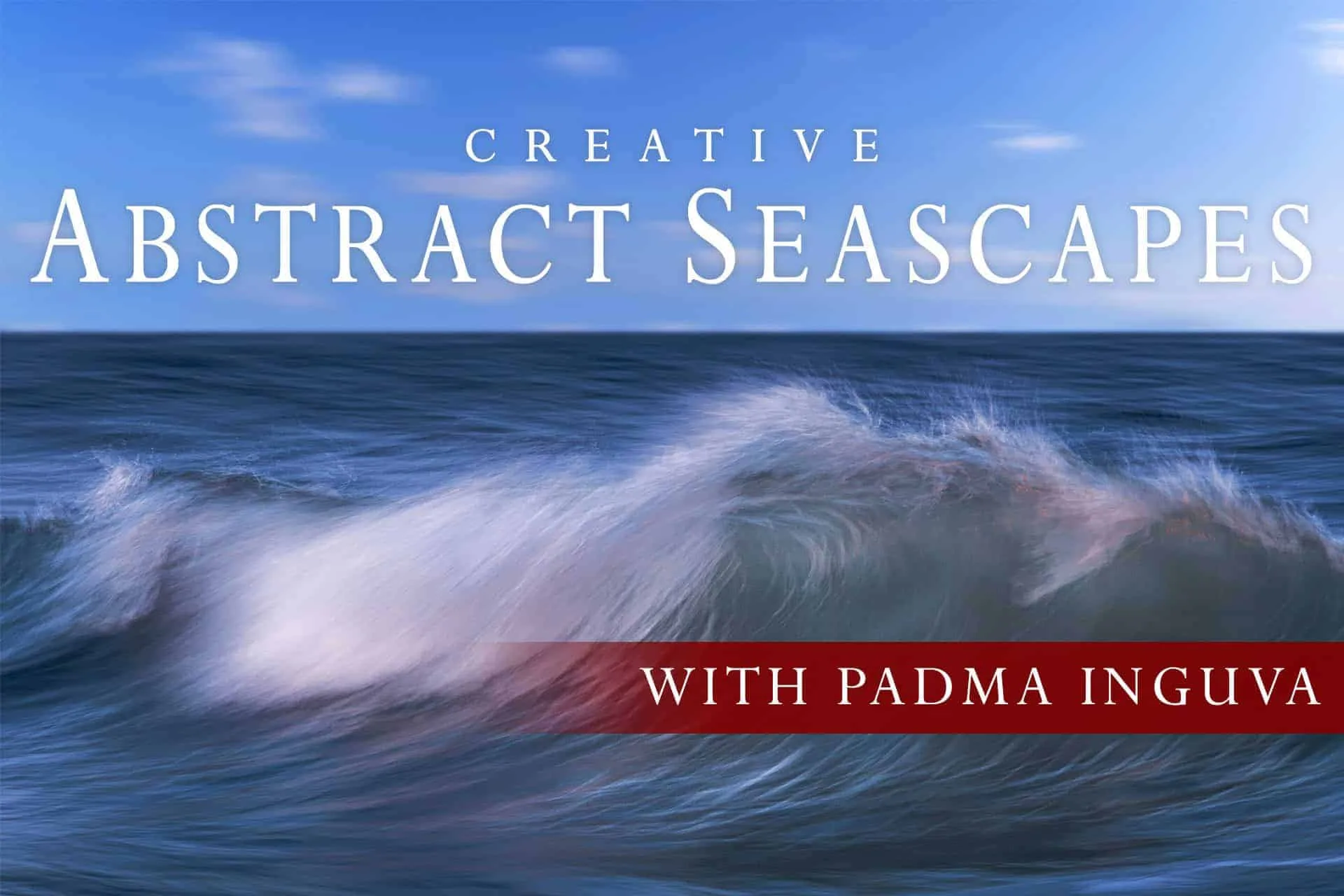
Creative Abstract Seascapes
-
Creative Abstract Seascapes: The artwork shown features an abstract seascape with waves and sky, blending creative ocean imagery into abstract art. Seeing real examples of abstract seascapes helps you understand how to apply the techniques in your own photography.
Exploring Ocean Abstraction with Long Exposures
Long exposure is a powerful tool for ocean abstraction. When you set your shutter speed to several seconds or more, moving water turns into a smooth, ethereal surface. This works especially well with crashing waves, creating a misty, dreamlike effect.
For best results, shoot during overcast days or at dawn/dusk when the light is soft. Use a remote shutter release to avoid camera shake. Adjust shutter speed based on the wave motion, following the product instructions. The class Creative Abstract Seascapes covers these settings in detail.
Minimalist Seascapes: Less is More
Minimalist seascapes rely on negative space and simple shapes. Look for a single rock, a lone wave, or a streak of foam. Compose so that the subject occupies a small part of the frame, leaving the rest as open water or sky.
Use a wide aperture to blur the background, or a long exposure to smooth out water textures. The result is a clean, meditative image that draws the viewer's eye to the essential elements.
Seascape Composition Tips for Abstract Art
Composition in abstract seascapes is about rhythm and flow. Look for leading lines in the water, repeating patterns in foam, or contrasting colors between sky and sea. Place the horizon off-center to create dynamic tension.
Don't be afraid to crop tightly in post-processing to emphasize the abstract quality. Convert to black and white to highlight textures and shapes. The class Creative Abstract Seascapes includes practical guidance on these compositional choices.
The Honest Trade-Offs in Abstract Seascapes
Abstract seascapes require patience and experimentation. Not every shot will work, and the results can be unpredictable. ICM, in particular, has a steep learning curve. You may need many attempts to get a pleasing blur.
Long exposure requires extra gear like a tripod and filters, which can be cumbersome on the beach. Also, the abstract style may not appeal to viewers who prefer sharp, realistic ocean photos. But for those who enjoy creative freedom, the payoff is unique art that stands out.