Quick answer
Measure your crib's interior from side rail to side rail and from headboard to footboard, then compare those numbers to the mattress dimensions before ordering. A properly fitted mattress leaves no gap wider than two fingers between the mattress edge and the crib side. If you are unsure, choose a mattress labeled for your crib type and test the fit as soon as it arrives.
Why crib mattress fit matters more than you think
A mattress that is too small creates gaps where a baby can become wedged, and a mattress that is too large may not sit flat or allow the crib's hardware to lock correctly. The safest crib mattress is the one designed for your specific crib's interior dimensions, not just the one that looks closest in the store. Even a half-inch of extra space around the edges can be a problem over time as the mattress compresses.
Standard full-size crib mattresses are generally around 52 inches long and 28 inches wide, but exact dimensions vary by manufacturer. Mini cribs use smaller mattresses, often around 38 inches by 24 inches. Always verify the crib's manual or measure the interior yourself rather than assuming a mattress will fit because it is labeled 'standard.'
How to measure your crib in four steps
Remove the mattress and any bedding. Use a metal tape measure for accuracy, and measure at the mattress support level, not the top rails, because the crib sides may taper. Record each measurement to the nearest eighth of an inch.
Step 1: Measure the interior width from the inside of the left side rail to the inside of the right side rail at the center of the crib. Step 2: Measure the interior length from the inside of the headboard to the inside of the footboard. Step 3: Measure the depth from the mattress support platform to the top of the lowest crib rail to confirm the mattress thickness will leave the rail at least 26 inches above the mattress when the crib is at its lowest setting. Step 4: Repeat all measurements at two or three points and use the smallest number, since cribs can be slightly out of square.
The two-finger gap test after unboxing
Once your mattress arrives, place it in the crib without sheets and press down on all four corners. Try to slide two fingers between the mattress and the crib side at each corner and along each side. If two fingers fit easily, the mattress is too small and should be returned. If the mattress is so tight that you cannot smooth a sheet over it or it bulges upward, it is too large and may not be safe either.
A correct fit feels snug but not forced. You should be able to lift a corner slightly to tuck in a sheet, but the mattress should not shift when your child moves. This test is the single most reliable way to confirm crib mattress fit before your baby sleeps in it.
Full-size vs. mini crib mattress: know which you have
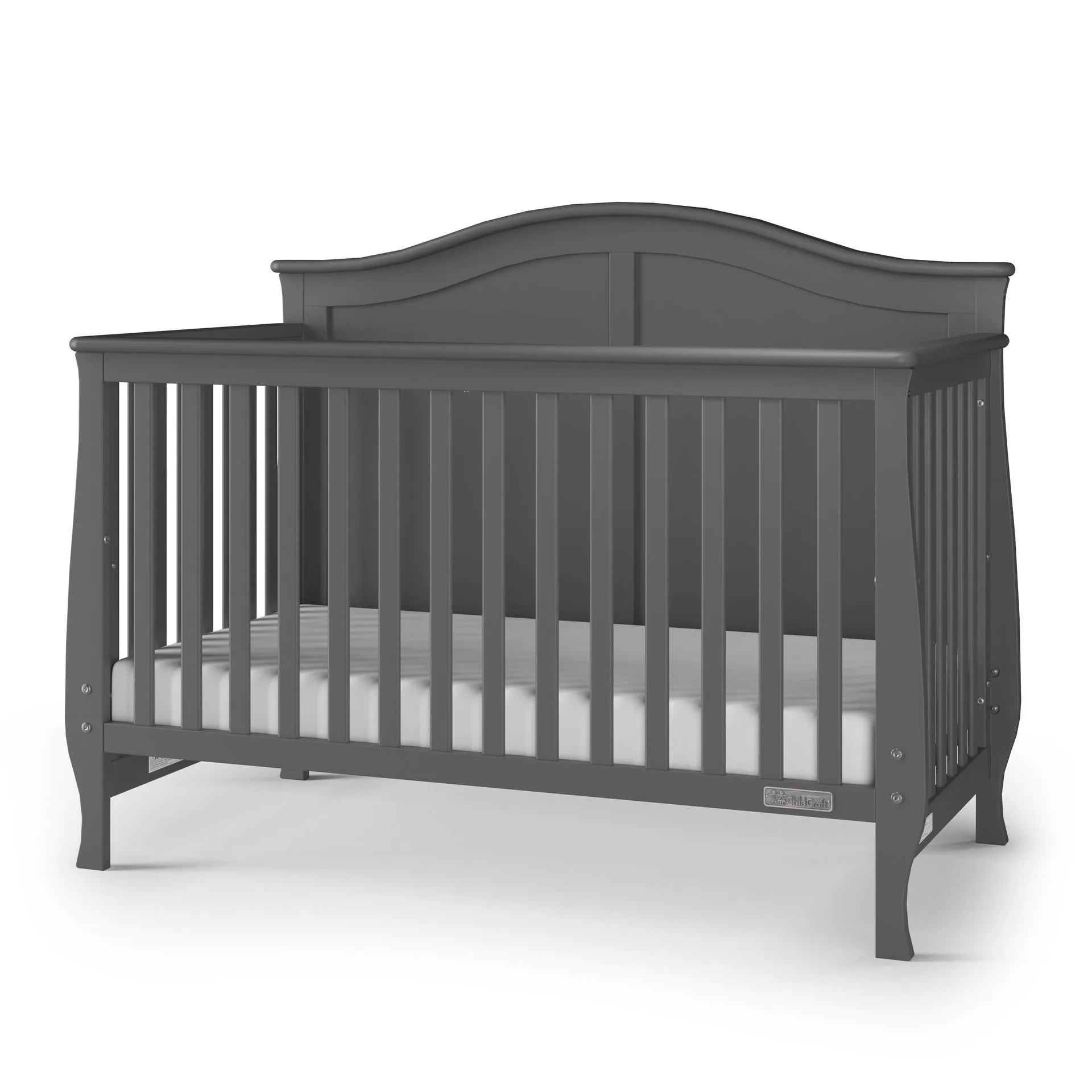
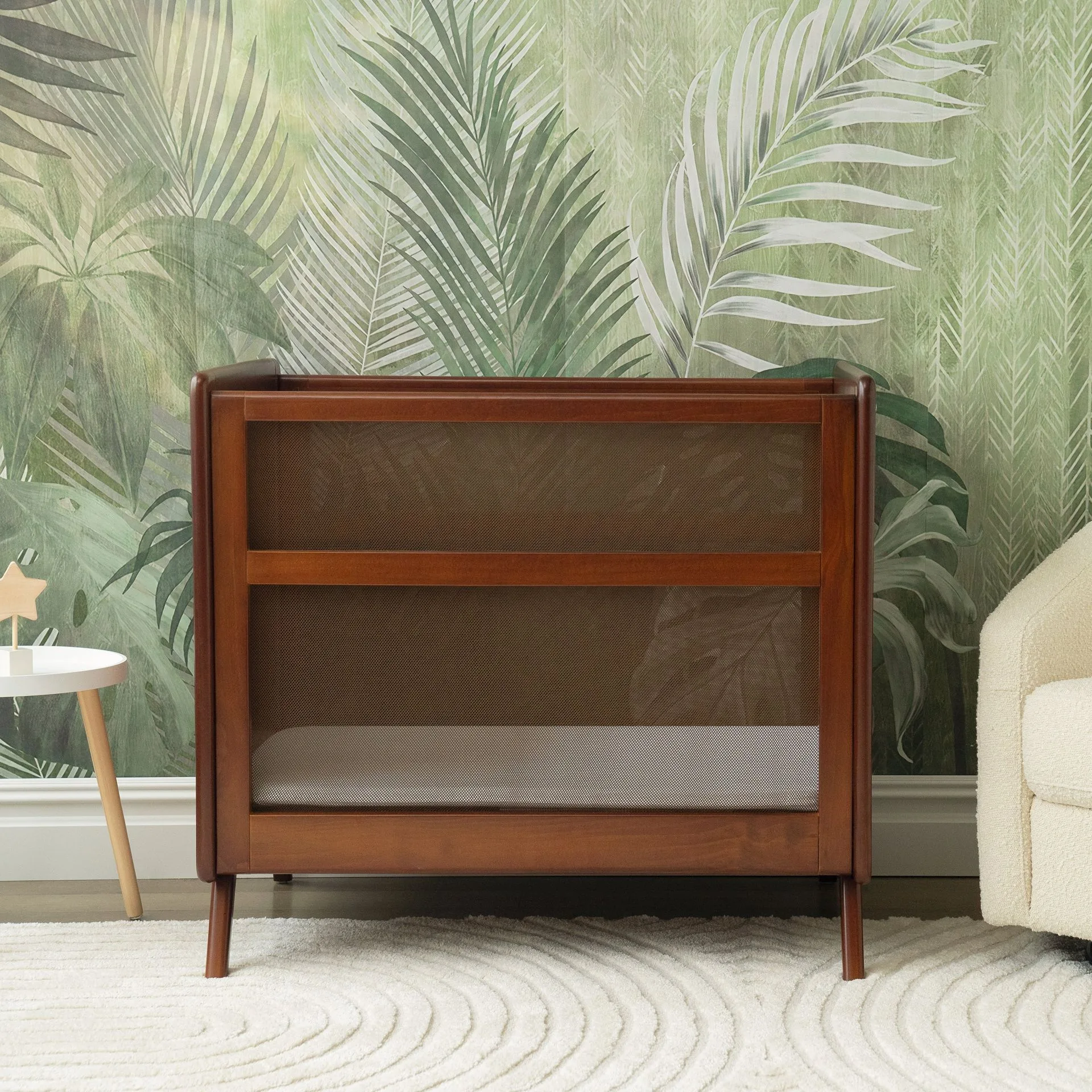
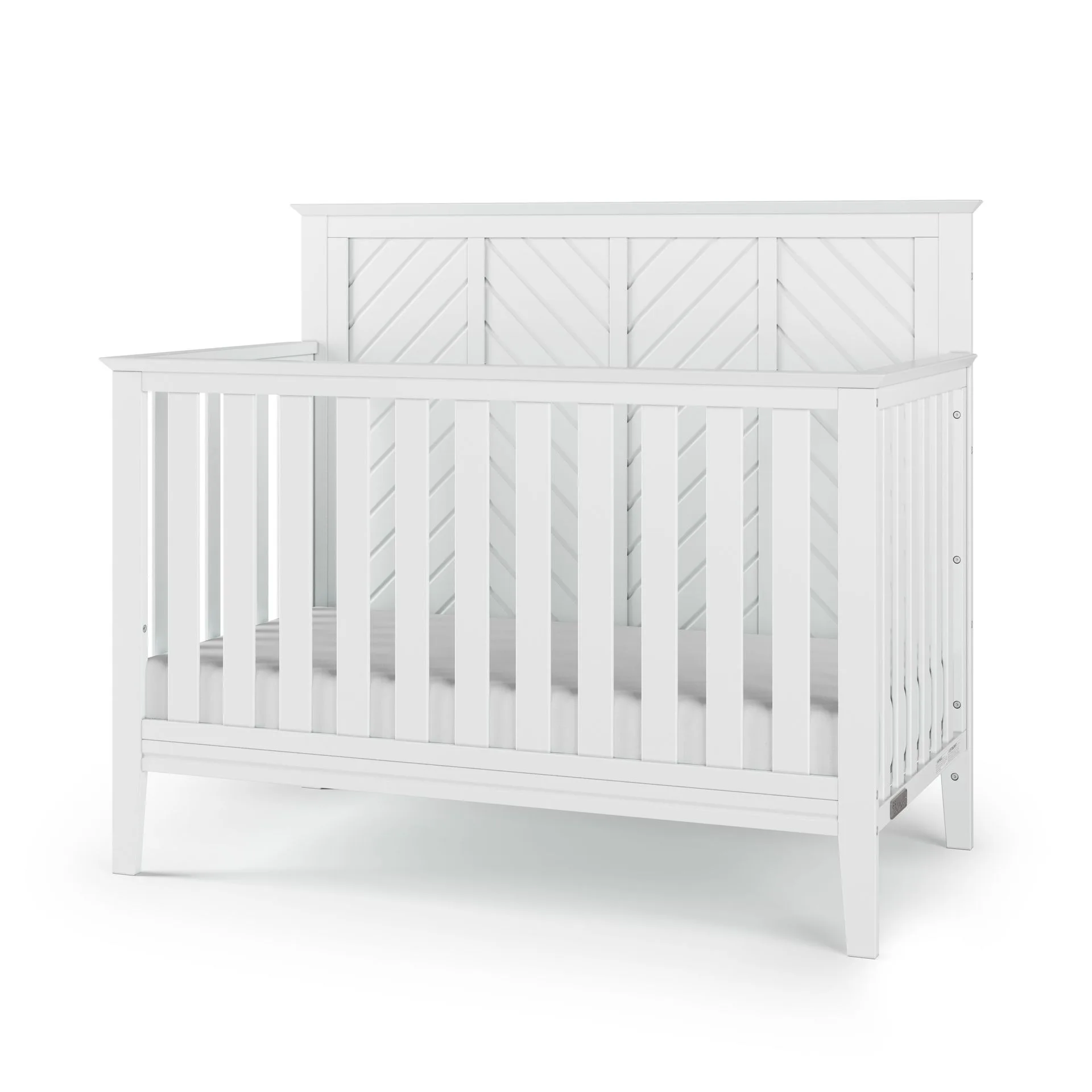
Full-size cribs accept mattresses near 52 by 28 inches and are the most common choice for a standard nursery. Mini cribs, portable cribs, and some bassinet-style sleepers use smaller mattresses, often 38 by 24 inches or less. These are not interchangeable. If you own a mini crib, a full-size mattress will not fit, and a mini mattress in a full-size crib leaves dangerous gaps.
Check your crib's manual or the label on the crib frame. If you cannot find it, measure the interior as described above. When in doubt, buy from a retailer that accepts returns on mattresses, and keep the packaging until you have completed the two-finger test.
When to replace a mattress instead of adjusting it
If your current mattress passes the two-finger test but is more than five to seven years old, has a torn cover, or has been stored in a damp environment, replace it rather than trying to make it work. A compressed or damaged mattress may not provide the firm, flat surface a baby needs. Also replace any mattress that was used with a different crib if the fit is loose.
For convertible cribs that later become a full-size bed, you will eventually need a full-size mattress and box spring, which are sold separately from the crib. Plan for that purchase when you convert, and keep the crib's conversion hardware in a labeled bag so you are not searching for it later.
Decision rules for buying a crib mattress
- Measure first, then shop: Write down your crib's interior length, width, and depth before you browse. Compare those numbers to the mattress dimensions in the product listing, not the mattress name. If the listing does not state dimensions, contact the seller before ordering.
- Match the mattress type to the crib type: Full-size cribs need a mattress near 52 by 28 inches; mini cribs need a smaller mattress. Never force a full-size mattress into a mini crib or use a mini mattress in a full-size crib. Check the crib manual or measure the interior to confirm which type you own.
- Plan for the conversion before you buy: If your crib converts to a full-size bed, you will eventually need a full-size mattress and box spring plus a conversion kit such as the F06424 bed rails. Budget for those pieces when you buy the crib. Buy the conversion kit while it is still in stock, even if the transition is years away.
- Test the fit the day it arrives: Unbox the mattress, place it in the crib, and do the two-finger gap test at all four corners and along both sides. Do not remove the packaging until the test passes. If two fingers slide in easily, return the mattress and try a different size or brand.
Products that help with crib-to-bed transitions
- F06424 - Full-Size Bed Rails, Biscotti: F06424 Full-Size Bed Rails in Biscotti convert a Child Craft crib into a full-size bed and include two bed rails plus three mattress support slats. If you plan to convert your crib rather than buy a new bed frame, these rails let you reuse the crib's headboard and footboard with a standard full-size mattress and box spring, which are sold separately.
- F06424 - Full-Size Bed Rails, Midnight Grey: F06424 Full-Size Bed Rails in Midnight Grey offer the same conversion kit in a darker finish. Choosing the finish that matches your crib keeps the converted bed looking intentional, and the included support slats save you from buying a separate box spring foundation for the rails.
- organic cotton light sleep sack TOG 1.0: The https://halosleepus.com/products/organic-cotton-light-sleep-sack-tog-1-0-80911https://halosleepus.com/products/organic-cotton-light-sleep-sack-tog-1-0-80912https://halosleepus.com/products/organic-cotton-light-sleep-sack-tog-1-0-80913https://halosleepus.com/products/organic-cotton-light-sleep-sack-tog-1-0-80914organic cotton light sleep sack TOG 1.0 is made from 100% organic cotton muslin and is sized extra-long to wear over pajamas. Once your mattress fit is confirmed, a sleep sack replaces loose blankets in the crib, which keeps the sleep surface clear and reduces the risk of overheating.
Who this buying approach is for
Best for
- Parents buying a first crib mattress who want to avoid a return
- Caregivers replacing a mattress in an existing crib
- Families planning to convert a crib into a full-size bed later
Not for
- Shoppers who already know their crib's exact interior dimensions and have confirmed the mattress fit
- Anyone looking for a bassinet or bedside sleeper mattress, which uses different sizing standards