Quick answer
A crinkle rattle is ideal for early auditory and tactile play, while a teether soothes sore gums during teething. Many babies benefit from both, but your child's current stage and needs will guide the best choice.
When a crinkle rattle works best
Crinkle rattles are designed to engage a baby's sense of hearing and touch. The crinkly sound is novel and encourages reaching, grasping, and cause-and-effect learning. They are especially useful from birth to around 6 months, before teething typically begins.
When a teether is essential
Teethers are specifically made for chewing. They provide counter-pressure on swollen gums, which can relieve discomfort during teething, which often starts around 4-7 months. A teether made from safe, chewable materials like food-grade silicone or natural wood is a must-have for this stage.
Crinkle rattle vs. teether: the trade-offs
- Primary function: Crinkle rattle: auditory and tactile stimulation through sound and texture. Teether: oral relief and chewing practice.
- Best age range: Crinkle rattle: 0-6 months, before teething begins. Teether: 4-12+ months, during active teething.
- Material safety: Crinkle rattles often use fabric and plastic; ensure they are securely sewn and non-toxic. Teethers must be made of food-grade, BPA-free materials like silicone or natural wood. Always check the material composition and safety certifications for any toy your baby puts in their mouth.
Product spotlight
-
Flower Crocheted Rattle Teether: The Flower Crocheted Rattle Teether doubles as a playful rattle and a safe teether, with a soft cotton body and a beech wood ring for chewing. This 2-in-1 design saves you from buying separate items and supports both sensory play and gum relief in one toy.
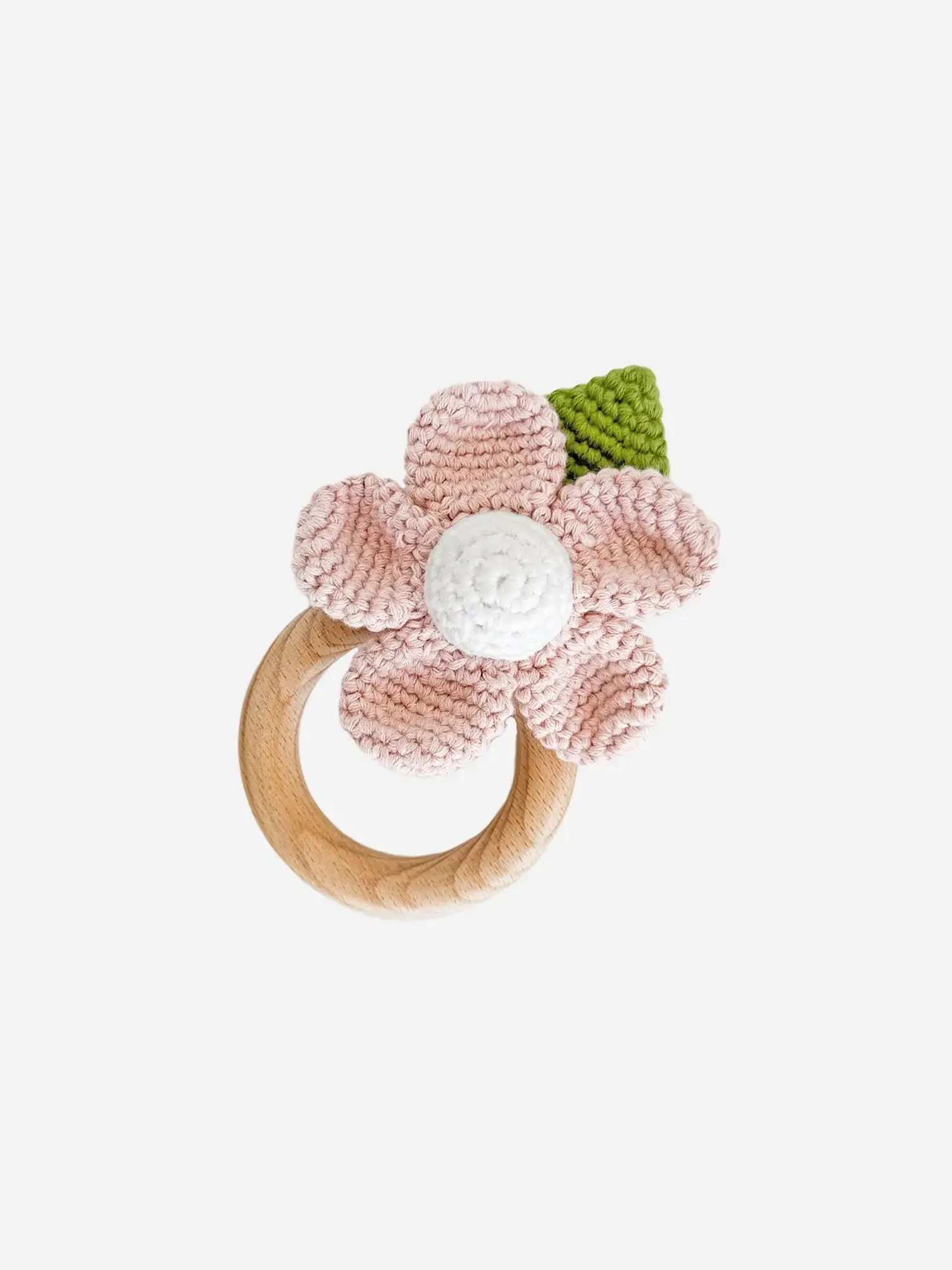
Flower Crocheted Rattle Teether
Which one fits your baby?
Best for
- Newborns and young infants (0-4 months) who are not yet teething but enjoy auditory play.
- Parents who want a single toy that offers both sensory stimulation and teething relief.
Not ideal for
- Babies who are already in active teething and need dedicated gum relief (a teether alone is better).
- Older babies (12+ months) who may prefer more complex toys or solid teething rings.