Start with the open pattern, not the outfit
The Crochet Midi Dress is a long-sleeve midi made in a geometric crochet pattern, with sleeves that flare at the openings. Because crochet is an open construction, the first decision is not which shoes or bag to add — it is what goes underneath. The product record itself names two supported ways to wear it: as a swim coverup, or out at night with a slip. Those two routes solve the same problem differently, and choosing between them sets everything else.
What the dress record confirms
-
CROCHET MIDI DRESS: Long Sleeve Midi Dress made in a geometric crochet pattern. The open geometric pattern is why lining or layering matters; it is also the visual feature you want to keep visible rather than cover completely.
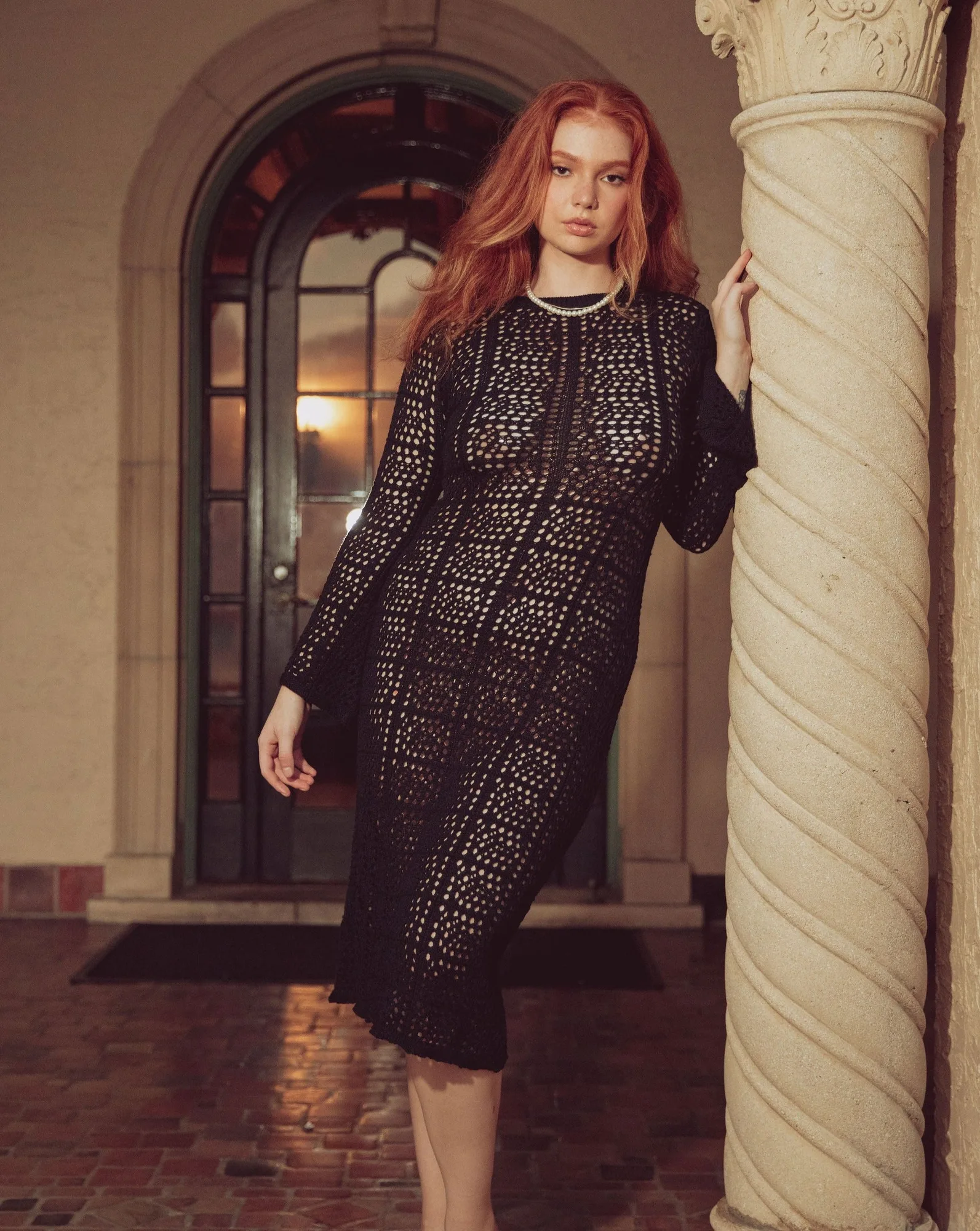
CROCHET MIDI DRESS
-
CROCHET MIDI DRESS: Sleeves flared at openings. Flared sleeves change what fits underneath at the wrist and forearm, so check that any long-sleeve layer does not bunch at the opening.
-
CROCHET MIDI DRESS: Wear as a swim coverup or out at night with a slip. These are the two supported wearing routes in the product record, so build your underlayer around one of them rather than guessing at a third.
-
CROCHET MIDI DRESS: Cotton/Acrylic. The fiber blend is the only material information supplied, and it is the starting point for any care decision.
What to wear under it for a night out
The record specifically supports wearing the dress out at night with a slip. That makes a slip the most grounded choice for evening, because it gives you an opaque layer without hiding the crochet pattern.
- Choose a slip as the base layer: The product record names a slip as the evening underlayer. Look for one that sits smoothly under the midi length so it does not bunch at the hem.
- Match the slip to the coverage you want: The supplied record does not specify how open the geometric pattern is in every area, so the slip's opacity is a personal call. If you want more coverage, a fuller slip is the safer starting point.
- Keep the sleeve openings clear: Because the sleeves flare at the openings, avoid adding a long-sleeve layer underneath for evening unless you have checked that it sits cleanly at the flare.
- Let the crochet stay the focus: A simple slip in a solid tone keeps the geometric pattern readable. The record does not supply color-matching guidance, so treat this as styling judgment rather than a product instruction.
What to wear under it as a swim coverup
The second supported route is the beach: the record explicitly allows the dress as a swim coverup. Here the underlayer is swimwear, and the dress does the job of a light, open layer over it.
- Wear it over your swimsuit: This is the use the product record names. Choose a swimsuit you are comfortable being seen in, since the crochet pattern is open.
- Plan for the walk to and from the water: A coverup is most useful in transit. The record does not describe quick-dry performance, so do not assume the dress will dry like a towel.
- Keep the rest of the outfit simple: Sandals and a bag are enough; the crochet pattern and flared sleeves already carry the look.
Building a crochet dress summer outfit around the layer
Once the underlayer is settled, the rest of the outfit follows from the dress's own features. The midi length and long sleeves mean the dress already covers a lot, so the underlayer should add coverage rather than bulk. For a daytime crochet dress summer outfit, the coverup route keeps things casual; for evening, the slip route keeps the same dress but changes the register.
The product record describes the dress as vintage inspired and so comfortable, but it does not list stretch, lining, or closure details. That means fit and feel are best judged against the size chart and the variant list rather than assumed from the description.
Sizes and color available in the record
- CROCHET MIDI DRESS: Available variants: S, M, L, XL, XXL, and XXXL, all in BLACK. The record confirms a broad size run but only one color, so your underlayer and styling choices should work with black.
- CROCHET MIDI DRESS: Catalog price USD 91.98, with a catalog comparison price of USD 126.00. This is the supplied pricing context; it does not tell you how the dress fits or how to care for it.
How to approach care when the label is not supplied
The supplied record lists Cotton/Acrylic but does not include a care label, washing temperature, drying method, or ironing guidance. Rather than invent a routine, use these checkpoints.
- Check the garment label first: The sewn-in care label is the authoritative source for this specific dress. The supplied record does not replace it.
- Treat the cotton-acrylic blend as the starting point: The record confirms the fiber content but not the care method. Acrylic and cotton can behave differently in heat, so avoid assuming a high-heat wash or dry.
- Test any cleaning method on a small area: Because no wash instructions are supplied, spot-testing is a reasonable precaution before cleaning the whole dress.
- Store it to protect the crochet structure: The record does not specify hanging or folding. Fold rather than hang if you want to avoid stretching the open pattern, but treat that as general practice, not a supplied instruction.
What the missing care details mean for your decision
The absence of care instructions in the supplied record is a limitation of the information available here, not a statement that the dress is difficult to care for. If care guidance is important to you, check the product page or the garment label before ordering. The same applies to lining: the record does not confirm whether the dress is lined, so plan on the slip or swimwear layer described above rather than assuming built-in coverage.