When it comes to emergency preparedness, few tools are as critical as a tourniquet. Whether you're a first responder, a military professional, or a civilian who wants to be ready for anything, the choice between a tactical tourniquet like the Cuattro DR Flex and a standard model like the CAT can be overwhelming. Both are designed to stop life-threatening bleeding, but they differ in design, usability, and reliability. In this comparison, we'll break down the key differences to help you decide which is better for your kit.
We'll examine the Cuattro DR Flex Wireless Detector, a modern tactical tourniquet with advanced features, against the classic Combat Application Tourniquet (CAT), the gold standard for decades. By the end, you'll have a clear understanding of what each offers and which might be the right fit for your needs.
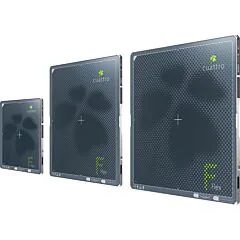
Cuattro DR Flex Wireless Detector
Design and Build Quality
The Cuattro DR Flex is a next-generation tactical tourniquet that incorporates a wireless detector to confirm proper application. Its design is sleek and modern, with a durable polymer frame that can withstand harsh conditions. The windlass mechanism is smooth and easy to tighten, and the band is wide to distribute pressure effectively. In contrast, the standard CAT tourniquet features a simpler design with a plastic windlass and a one-handed routing strap. It's proven and reliable, but lacks the high-tech features of the Cuattro.
When it comes to build quality, both are constructed to military standards. The Cuattro's wireless detector adds an extra layer of sophistication, but it also introduces electronic components that could fail in extreme conditions. The CAT, on the other hand, is purely mechanical, meaning there's less to go wrong. For those who prioritize simplicity and ruggedness, the CAT might be the better choice. However, if you value innovation and real-time feedback, the Cuattro stands out.
- Cuattro DR Flex features a wireless detector for application confirmation.
- CAT tourniquet is purely mechanical with a proven track record.
- Both are built to withstand harsh environments.
Ease of Use in High-Stress Situations
In an emergency, every second counts. The Cuattro's wireless detector provides audible and visual cues when the tourniquet is applied correctly, which can be a lifesaver for those with minimal training. This feedback helps reduce the risk of under-tightening, a common mistake. The windlass is designed for quick turns, and the securing clip locks firmly in place. For first responders who may be dealing with chaotic scenes, this feature can be invaluable.
The standard CAT tourniquet is also designed for rapid application, with a windlass that can be turned with one hand and a free-moving band that allows for quick routing. However, it relies on the user's training to gauge proper tightness. In high-stress situations, even trained professionals can make errors. While the CAT is simpler, it requires more practice to master. For those who train regularly, this isn't a problem, but for casual users, the Cuattro's feedback could be a game-changer.
- Cuattro provides real-time feedback to prevent under-tightening.
- CAT requires more training to apply correctly under stress.
- Both can be applied with one hand.
Versatility and Compatibility
Both tourniquets are versatile and can be used on arms and legs. The Cuattro's band is slightly wider, which may be more comfortable for patients, but it also means it's less compact when stored. The CAT is more compact and can be easily carried in a pocket or attached to a vest. When it comes to compatibility with other gear, both work with standard tourniquet holders and pouches. However, the Cuattro's wireless detector may require additional care to avoid damage.
For those building a comprehensive first aid kit, the choice between a tactical and standard tourniquet often comes down to personal preference and mission requirements. The Cuattro DR Flex is an excellent choice for those who want the latest technology, while the CAT is a reliable workhorse that has saved countless lives. It's also worth considering other components of your kit, such as hemostatic bandages like the ChitoGauze XR2 Pro Hemostatic Bandage, which can complement your tourniquet in severe bleeding situations.
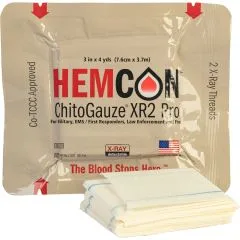
ChitoGauze XR2 Pro Hemostatic Bandage
- Cuattro has a wider band for comfort but is less compact.
- CAT is compact and easy to carry.
- Both are compatible with standard mounting systems.
Cost and Value
Price is often a deciding factor. The Cuattro DR Flex, with its advanced technology, is typically more expensive than the standard CAT. However, the added cost can be justified if you value the feedback feature and the potential to save lives with less training. On the other hand, the CAT is more affordable and widely available, making it a practical choice for budget-conscious individuals or for stocking multiple kits.
When considering value, think about your specific needs. If you're a professional who uses tourniquets regularly, the Cuattro's features may be worth the investment. If you're a civilian preparing a home or car kit, the CAT offers proven performance at a lower price. Remember, the best tourniquet is the one you have when you need it, so ensure you can afford to have them in all the places you might need them.
- Cuattro is pricier but offers advanced features.
- CAT is budget-friendly and widely available.
- Consider your usage frequency and training level.
Ultimately, the choice between a Cuattro tactical tourniquet and a standard model like the CAT depends on your priorities. If you want cutting-edge technology and real-time feedback, the Cuattro DR Flex is a superb option. If you prefer a simple, proven, and cost-effective solution, the CAT is hard to beat. Whichever you choose, make sure to practice with it and include it in your emergency kit. For more essential gear, check out the Cuattro DR Flex Wireless Detector and the Black GEN 7 C-A-T® TQ With Rigid Case to see which fits your needs best.