Quick answer
Check the soil moisture before you change anything else. If the top 3 cm is dry, water slowly until it drains; if it is soggy, stop watering and let the bed dry out. Most Lemon Cucumber yellowing is a watering problem, and feeding a waterlogged plant usually makes it worse.
Read the yellowing pattern before you act
Where the yellow appears tells you which fix to try. Yellow starting at the oldest, lowest leaves and moving upward points to a mobile nutrient shortage or a root problem. Yellow between the veins on newer growth points to a nutrient that the plant cannot move, often because the soil pH is off or the roots are damaged. Yellow blotches with a crisp brown edge usually mean sun or heat stress rather than a deficiency.
Lemon Cucumber is a thin-skinned, crisp-fleshed variety, and the catalog notes it is reputedly more resistant to fungal diseases than thick-skinned cucumbers, which makes it a sensible choice for humid summers. That resistance does not protect it from overwatering, so do not assume every yellow leaf is disease.
- Oldest leaves first: likely nitrogen, root damage, or waterlogging.
- New growth first: likely iron or another immobile nutrient, or pH lockout.
- Scattered yellow with dry edges: likely heat or sun stress.
- Yellow with soft, foul-smelling stems: likely root rot, not a feeding problem.
Fix watering problems first
Cucumbers want consistent moisture, not constant wetness. Water deeply in the morning so the foliage dries before evening, and let the top few centimetres dry between waterings. In humid weather, water at the base rather than over the leaves to reduce the time the foliage stays wet.
If the plant is in a pot, check that the drainage holes are open and that the pot is not sitting in a saucer of water. If it is in a bed, push a finger into the soil beside the stem. Soggy soil with yellow lower leaves is the classic sign to stop watering and improve drainage before you add anything else.
- Water deeply but less often, rather than a light daily sprinkle.
- Water in the morning, at the base, so leaves dry during the day.
- Empty saucers and clear blocked drainage holes immediately.
Feed only after the soil is draining properly
Once drainage is sorted, a balanced liquid feed at the label rate can correct a genuine nitrogen shortage. Do not exceed the label rate; overfeeding causes salt buildup that burns roots and produces more yellowing, not less. If you have already been feeding heavily, flush the pot or bed with plain water and wait a week before feeding again.
For a plant that has been waterlogged, wait until you see new green growth before feeding. Roots damaged by sitting in water cannot take up nutrients, so fertilizer at that stage is wasted and can worsen the problem.
- Use a balanced liquid feed at the label rate, not a stronger mix.
- Flush with plain water if you suspect salt buildup from overfeeding.
- Do not feed a plant that is still wilting in soggy soil.
Check for pests and disease that mimic deficiency
Aphids, spider mites, and whiteflies feed on sap and cause mottled yellow leaves that can look like a nutrient problem. Turn the leaves over and look along the veins and new tips. A strong jet of water dislodges many of them, and repeating it every few days is often enough on a healthy plant.
Fungal wilt and root rot also cause yellowing, but they usually come with wilting that does not recover after watering. If the stem is soft or the inside is brown when you cut it, the plant is unlikely to recover and should be removed so it does not spread to nearby cucumbers.
- Check leaf undersides and growing tips for insects before feeding.
- Wilting that persists after watering points to root or wilt disease.
- Remove and bin badly affected plants rather than composting them.
Yellow leaf diagnosis: match the symptom to the fix
- Lower leaves yellow, soil is soggy: Stop watering, clear drainage, and let the top few centimetres dry out before watering again. If new growth stays green for a week, the plant is recovering.
- Lower leaves yellow, soil is dry and pale: Water deeply, then apply a balanced liquid feed at the label rate once drainage is confirmed. If yellowing continues up the plant after feeding, check for root damage.
- New leaves yellow between green veins: Test or adjust soil pH and check that the plant is not sitting in cold, waterlogged roots. If pH is correct and drainage is good, the plant may not be suited to that spot.
- Wilting that does not recover after watering: Cut the stem near the base. A brown or soft interior indicates wilt or root rot. Remove the plant and do not replant cucumbers in the same soil that season.
About the variety you are growing
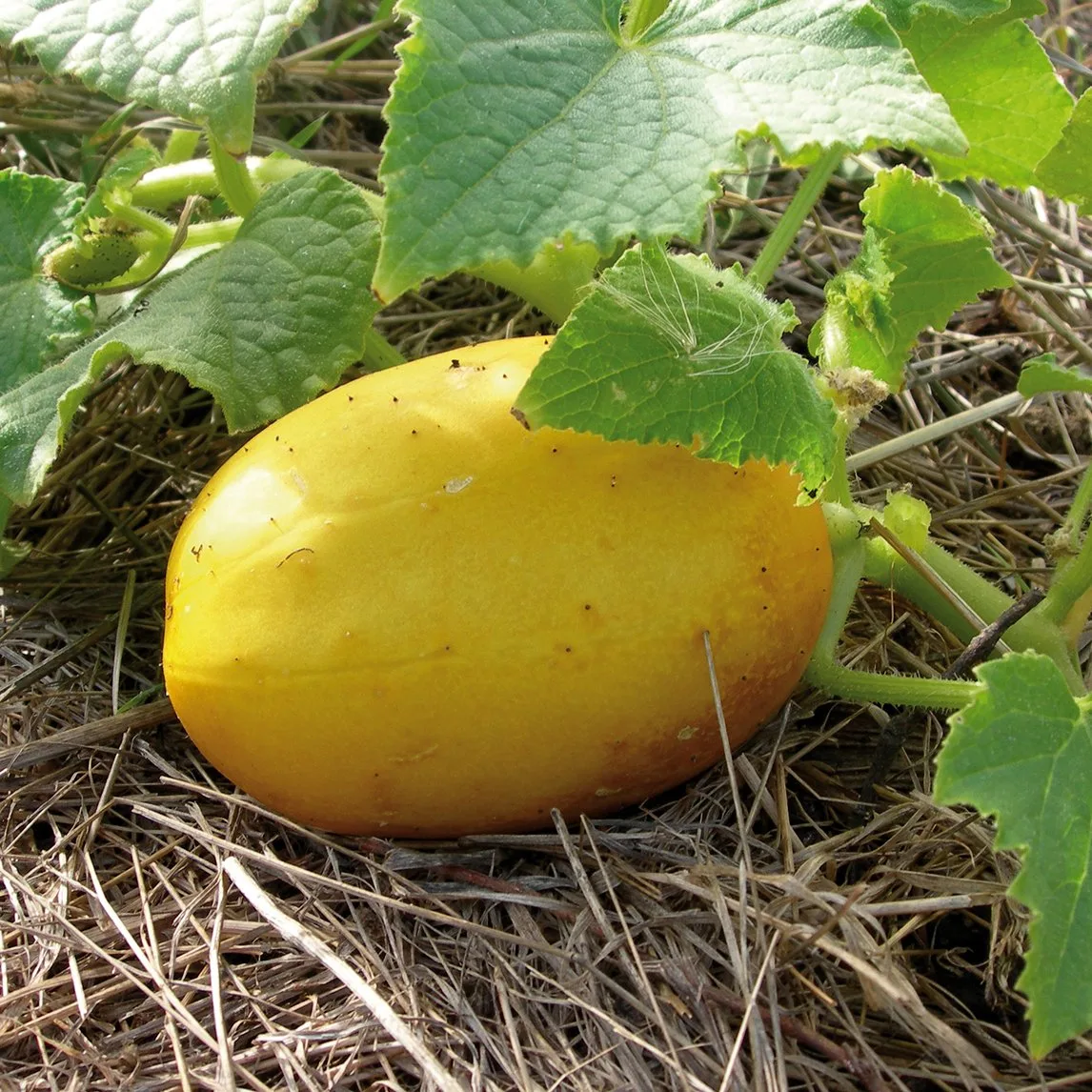
- Cucumber 'Lemon': Lemon Cucumber was introduced as a novelty plant in the USA in the late 1800s and is known for its crisp lemon flavour and thin skin without the bitterness often associated with thick green-skinned varieties. Because the skin is thin and not bitter, the fruit is usually eaten without peeling, so leaf health matters right through harvest rather than only at the start of the season.
- Cucumber 'Lemon': Lemon Cucumber is reputedly more resistant to fungal diseases than other cucumbers, making it a good choice for areas with humid summers. In humid weather, yellow leaves are more likely to be a watering or nutrient issue than a fungal one, so correct moisture and drainage before reaching for a fungicide.