Two Curator lines, one shared foundation
The Curator Palette Sleeves: Honey and the Curator Masterwork Sleeves: Echo come from the same tournament-grade sleeve family, so the practical differences are narrower than the names suggest. Both are standard-fit sleeves measuring 66 × 91 mm and packed 100 per pack, and both are built for standard-size 63 × 88 mm TCG cards. If you are choosing between them, the decision usually comes down to back design and how you want your deck to look and feel at the table—not to fit or capacity.
That said, the catalog evidence for each product is not identical, and some details are not confirmed by the supplied information. This comparison sticks to what the records actually state so you can make a grounded choice.
What both sleeves share
-
Curator™ Palette Sleeves: Honey: 66 × 91 mm standard fit; 100 cards per pack; cut tolerance ±0.5 mm. Confirms the Honey sleeve matches the standard size used by most TCG decks, so fit is not a differentiator here.
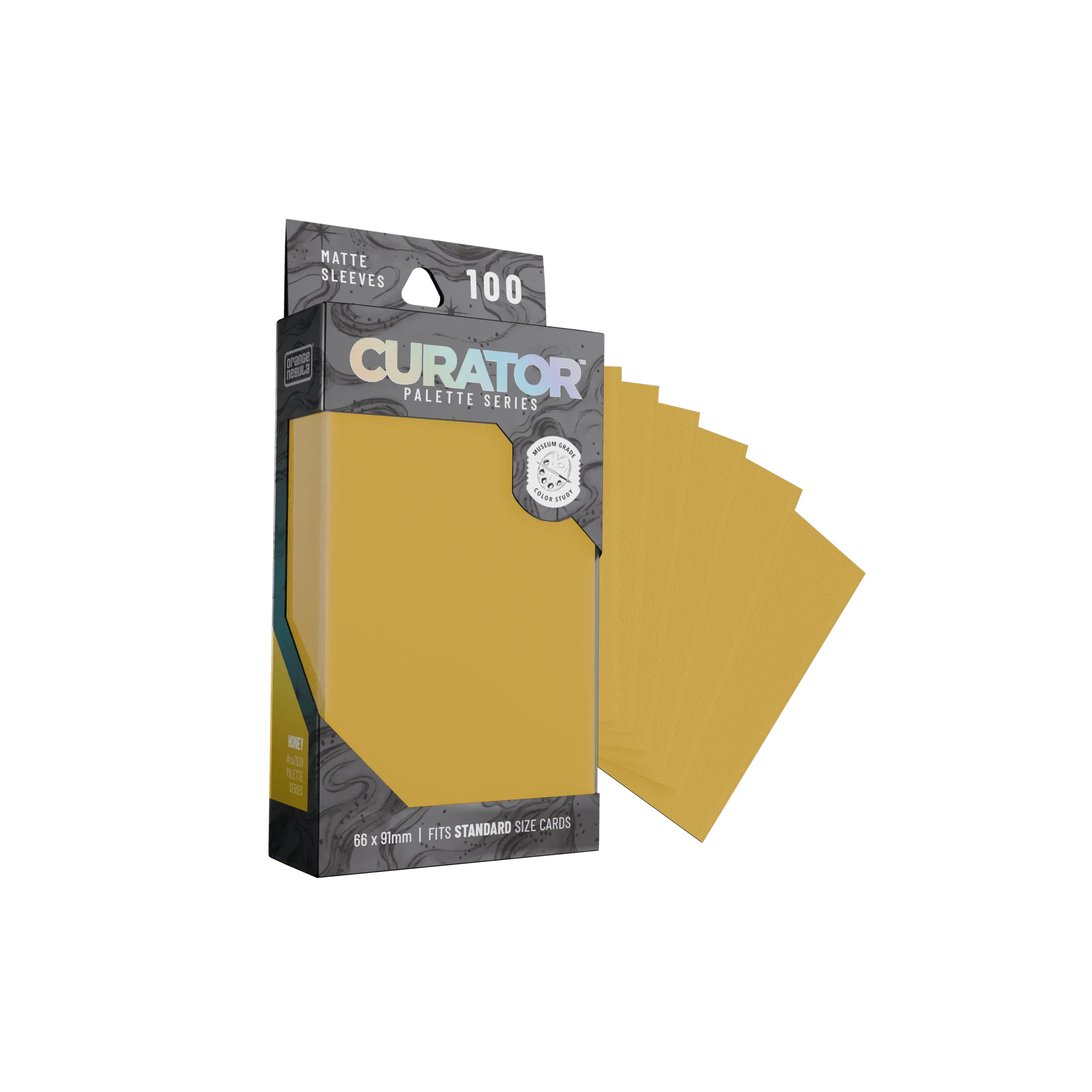
Curator™ Palette Sleeves: Honey
-
Curator™ Masterwork Sleeves: Echo: 66 × 91 mm standard fit; 100 cards per pack; cut tolerance ±0.5 mm. Echo carries the same size and pack count, reinforcing that the two products are directly comparable on fit and quantity.
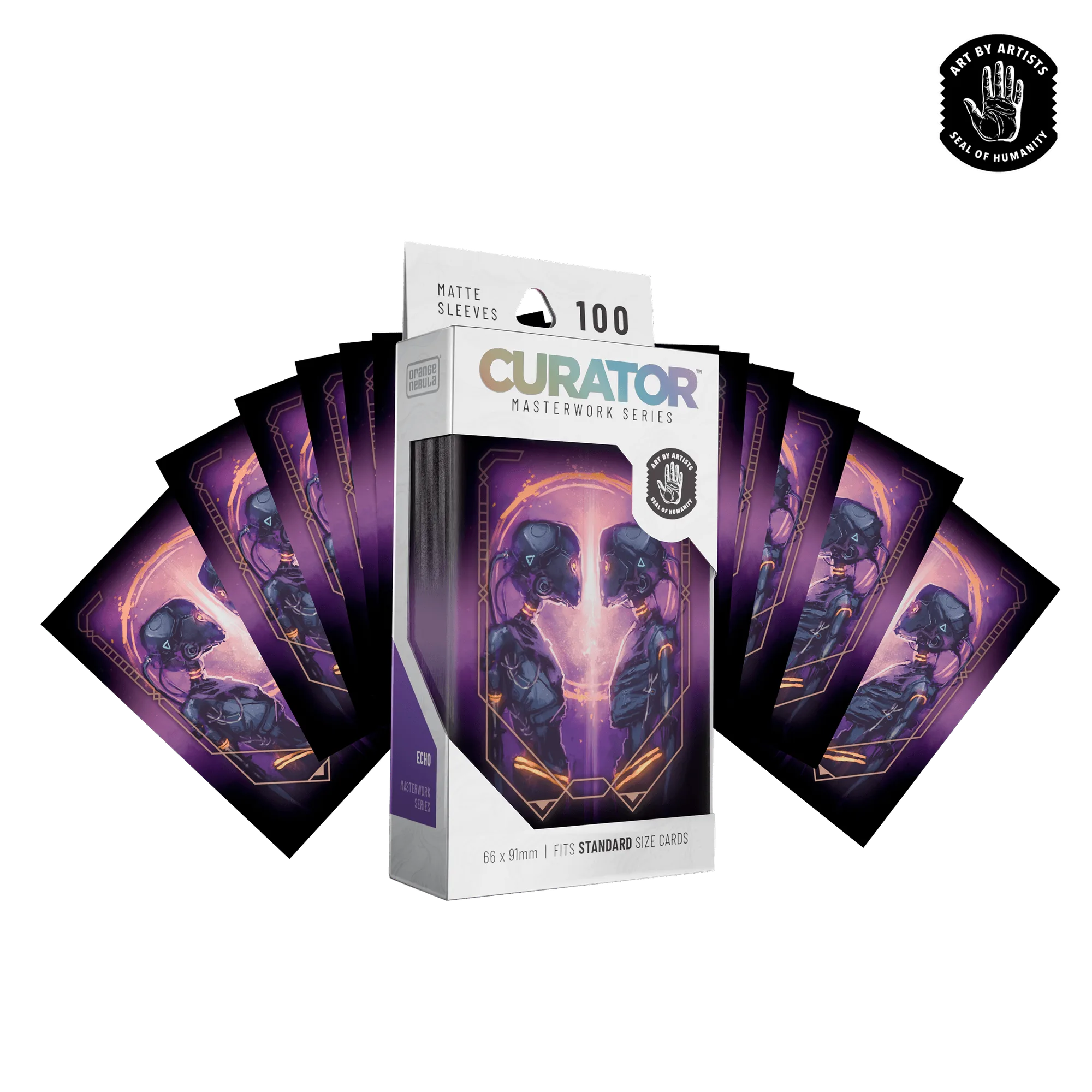
Curator™ Masterwork Sleeves: Echo
-
Curator™ Palette Sleeves: Honey: Fits standard-size 63×88 mm TCG cards, including Pokémon, Magic: The Gathering, One Piece Card Game, Disney Lorcana, Riftbound, Flesh and Blood, MetaZoo, and Final Fantasy TCG. Shows the Honey sleeve covers a broad range of popular TCGs, so compatibility is unlikely to be the deciding factor.
-
Curator™ Masterwork Sleeves: Echo: Fits standard-size 63×88 mm TCG cards, including Pokémon, Magic: The Gathering, One Piece Card Game, Disney Lorcana, Riftbound, Flesh and Blood, MetaZoo, and Final Fantasy TCG. Echo lists the same compatible games, confirming the two sleeves serve the same card pools.
Where the two sleeves actually diverge
The clearest documented difference is the back design. Honey is a solid-color sleeve from the Palette Series, with a hex code (#BE9C33) supplied so you know the exact shade. Echo is part of the Masterwork Series, which features original illustrations from artist collaborations—in this case, "Echo" by NinjaJo. That makes the choice largely aesthetic: a clean, color-matched back versus an illustrated back.
Both records mention a matte or satin back that reduces glare and improves shuffling control, and both list an opaque back film to prevent card show-through in competitive play. The catalog does not provide a thickness measurement for either sleeve, so any claim about which is thicker would be unsupported by the supplied evidence.
Honey vs Echo at a glance
The table below summarizes only the facts confirmed in the product records. Where a detail is not listed, it is marked as not confirmed rather than assumed.
- Back design: Honey: solid color (#BE9C33) from the Palette Series. Echo: original illustration by NinjaJo from the Masterwork Series.
- Series intent: Palette Series: solid-colored backs curated by designers. Masterwork Series: original illustrations as part of artist collaborations.
- Sleeve thickness: Not confirmed by the supplied records for either product.
- Front clarity: Both list a crystal-clear front for color-accurate showcase.
- Shuffle feel: Both list a low-friction shuffle coating and matte or satin back to reduce glare and improve control.
- Edge construction: Both list heat-sealed edges, tight welds, and square-cut edges without burs.
Design details that shape the choice
- Curator™ Palette Sleeves: Honey: Honey (#BE9C33) is a swatch from the Curator Palette Series, with solid-colored sleeve backs curated by designers and presented alongside a corresponding hex code. If you want a precise, uniform color match across your deck, the hex code gives you a concrete reference before you buy.
- Curator™ Masterwork Sleeves: Echo: "Echo" by NinjaJo is part of the Masterwork Series, which features original illustrations as part of thoughtfully curated artist collaborations. If you prefer a distinctive, illustrated back over a solid color, Echo is the line that delivers that.
What the records do not settle
Neither product record includes a thickness figure, a specific shuffle-count durability rating, or a stated tournament legality beyond the general "tournament-grade" branding. The catalog also does not list a difference in front-film clarity or cut tolerance between the two lines. If thickness or a formal tournament approval is critical to your purchase, the supplied information is not enough to compare on those points—check the product pages or ask the store directly.
The records also do not confirm whether either sleeve is textured on the front or back beyond the matte or satin description, so avoid assuming a specific texture.
How to pick between Honey and Echo
- Choose Honey if color consistency matters most.: The Palette Series gives you a documented hex code (#BE9C33), which helps when you want a clean, uniform look across multiple decks or a specific color theme.
- Choose Echo if you want an illustrated back.: The Masterwork Series is built around original artist illustrations, so Echo stands out visually in a way a solid color does not.
- Do not choose based on thickness.: Neither record supplies a thickness measurement, so there is no evidence-based way to rank them on that spec.
- Check the price difference against your priority.: The catalog lists Honey at USD 10.20 (comparison price USD 15.00) and Echo at USD 10.71 (comparison price USD 17.00). If the design difference is not important to you, the lower-priced option may be the practical pick.
The honest trade-off
Honey and Echo are close cousins: same fit, same pack count, same core construction claims. The real decision is whether you value a precise, solid color or an artist-illustrated back. Neither is objectively better, and the supplied records do not support a performance ranking between them. Pick the back design that suits your deck and your taste, and treat any unlisted specification—especially thickness—as an open question rather than a selling point.