Quick answer
Curcumin with ginger and black pepper is worth choosing because plain turmeric curcumin is poorly absorbed on its own. Piperine from black pepper can significantly boost curcumin bioavailability, while ginger adds complementary compounds that support comfort and digestion. If you want a practical everyday option, look for a formula that states its curcuminoid percentage and includes both ginger and black pepper rather than turmeric powder alone.
What does black pepper actually do for curcumin absorption?
Curcumin is the main active compound in turmeric, but on its own it is poorly absorbed from the gut and is rapidly processed by the liver. Piperine, the compound responsible for black pepper's pungency, slows that liver processing and can increase curcumin bioavailability substantially. That is why almost every well-designed turmeric curcumin capsule pairs curcuminoids with black pepper or a black pepper extract. The practical takeaway: if a label lists turmeric powder but no black pepper or piperine, you are likely absorbing very little curcumin.
How much curcuminoid content should I look for?
Standard turmeric powder is only around 2–5% curcuminoids, so the amount of actual curcumin you get from a spoonful of culinary turmeric is small. A concentrated extract is standardized to a much higher percentage, commonly 95%. When comparing turmeric curcumin capsules, check the supplement facts panel for the curcuminoid percentage and the milligrams per serving rather than the total turmeric weight. A product that clearly states 95% curcuminoids tells you exactly what you are getting, which is far more useful than a vague 'turmeric extract' line.
What are the benefits of adding ginger to a curcumin supplement?
Ginger root extract brings its own gingerols and shogaols, which are studied for supporting digestive comfort and easing everyday stiffness. Combining ginger with curcumin is not just a flavor decision: the two have overlapping traditional uses in Ayurvedic practice, and ginger may also support the body's own antioxidant systems. For readers who want one capsule instead of two, a curcumin with ginger formula covers both bases. It is not a replacement for medical treatment, but it is a sensible pairing for general wellbeing.
Which form of curcumin absorbs best?
Curcumin bioavailability depends on the delivery form. Standard curcumin extract with piperine is the most common and cost-effective approach. Other enhanced forms use phospholipid complexes, micellar technology, or added oils to improve absorption. There is no single winner for everyone; the right choice depends on your budget, how many capsules you are willing to take, and whether you prefer a simple piperine-based formula. What matters most is that the product is transparent about its curcuminoid content and includes an absorption enhancer.
When and how should I take curcumin with ginger and black pepper?
Curcumin is fat-soluble, so taking your capsule with a meal that contains some fat can support absorption. Many people split the dose across two meals to keep a steadier level in the body. If you are also taking medications, especially blood thinners or drugs for diabetes, speak to your doctor first because curcumin and ginger can interact with some prescriptions. Start with the dose on the label and give it a few weeks before judging whether it fits your routine.
Are there any downsides or people who should avoid it?
Curcumin with black pepper is generally well tolerated, but piperine can increase the absorption of certain medications, not just curcumin. Ginger may cause mild digestive warmth in sensitive people. If you have gallstones, a bleeding disorder, or are pregnant or breastfeeding, check with a healthcare professional before starting. Also be honest about the tradeoff: a higher-curcuminoid capsule usually costs more than plain turmeric powder, but you get a predictable dose. That predictability is the main reason to choose a formulated capsule over cooking with turmeric.
FAQ: curcumin with ginger and black pepper
Do I need black pepper if I take a high-curcuminoid extract?
Yes, in most cases. Even a 95% curcuminoid extract is still poorly absorbed without an enhancer like piperine. Black pepper or a standardized piperine extract is what makes the curcuminoids more usable by the body. Check the label for black pepper or piperine before you buy.
Is ginger in a curcumin capsule enough to get ginger benefits?
It depends on the dose. A combined capsule usually provides a supportive amount of ginger root extract rather than a full standalone ginger dose. If digestive comfort is your main goal, a dedicated ginger supplement may be more appropriate. Combined formulas are convenient, not a replacement for targeted dosing.
How long until I notice a difference?
Curcumin is not a fast-acting ingredient. Most people who use it for joint comfort or general wellbeing take it consistently for several weeks before deciding whether it helps. Absorption and individual response vary. Give it a fair trial of at least a few weeks before judging.
Can I just cook with more turmeric instead?
Culinary turmeric contains only a small percentage of curcuminoids, and typical cooking amounts are far below what studies use. Adding black pepper to food helps, but it is hard to reach a consistent curcumin dose through diet alone. A standardized capsule gives you a repeatable dose; cooking does not.
Product facts
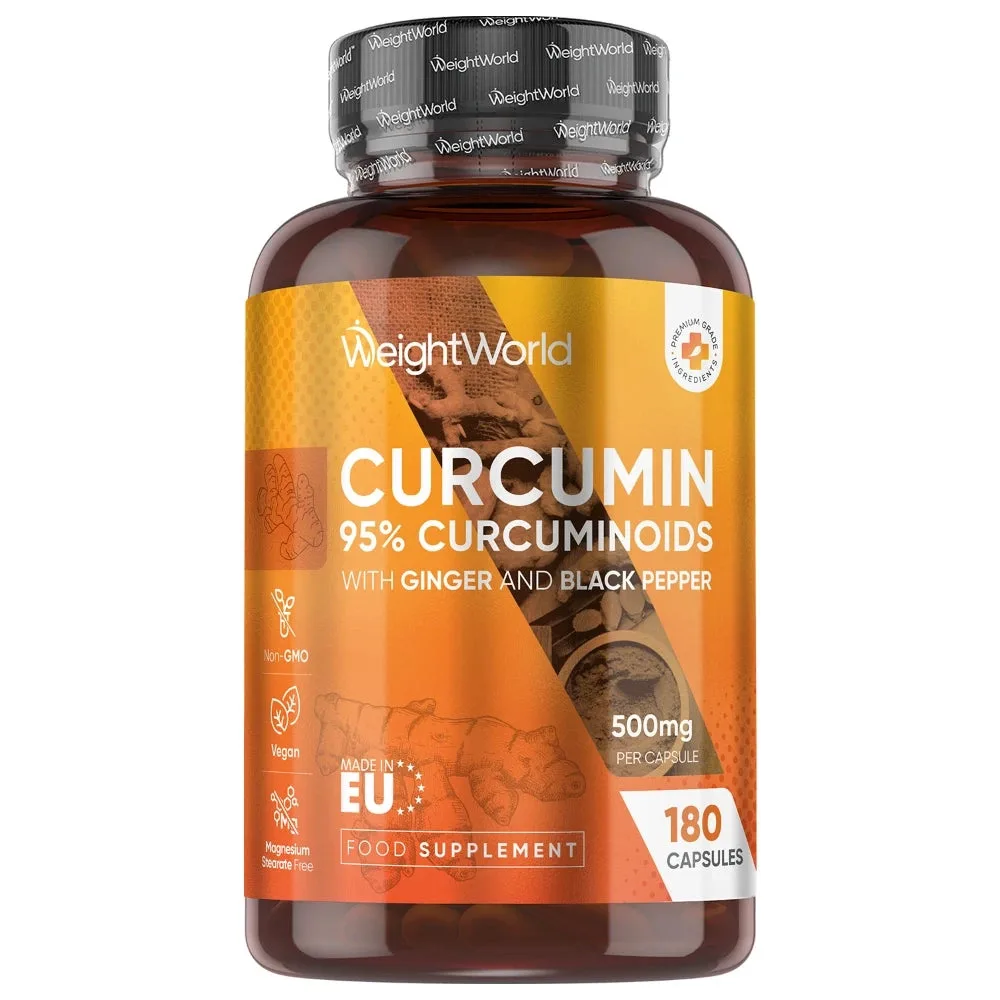
- Curcumin with Ginger and Black Pepper Capsules: Curcumin with Ginger and Black Pepper Capsules are standardized to 95% curcuminoids and combine turmeric with ginger root extract and black pepper. This matches the absorption strategy discussed above: a high-curcuminoid extract plus piperine from black pepper, with ginger added for complementary support.