Quick answer
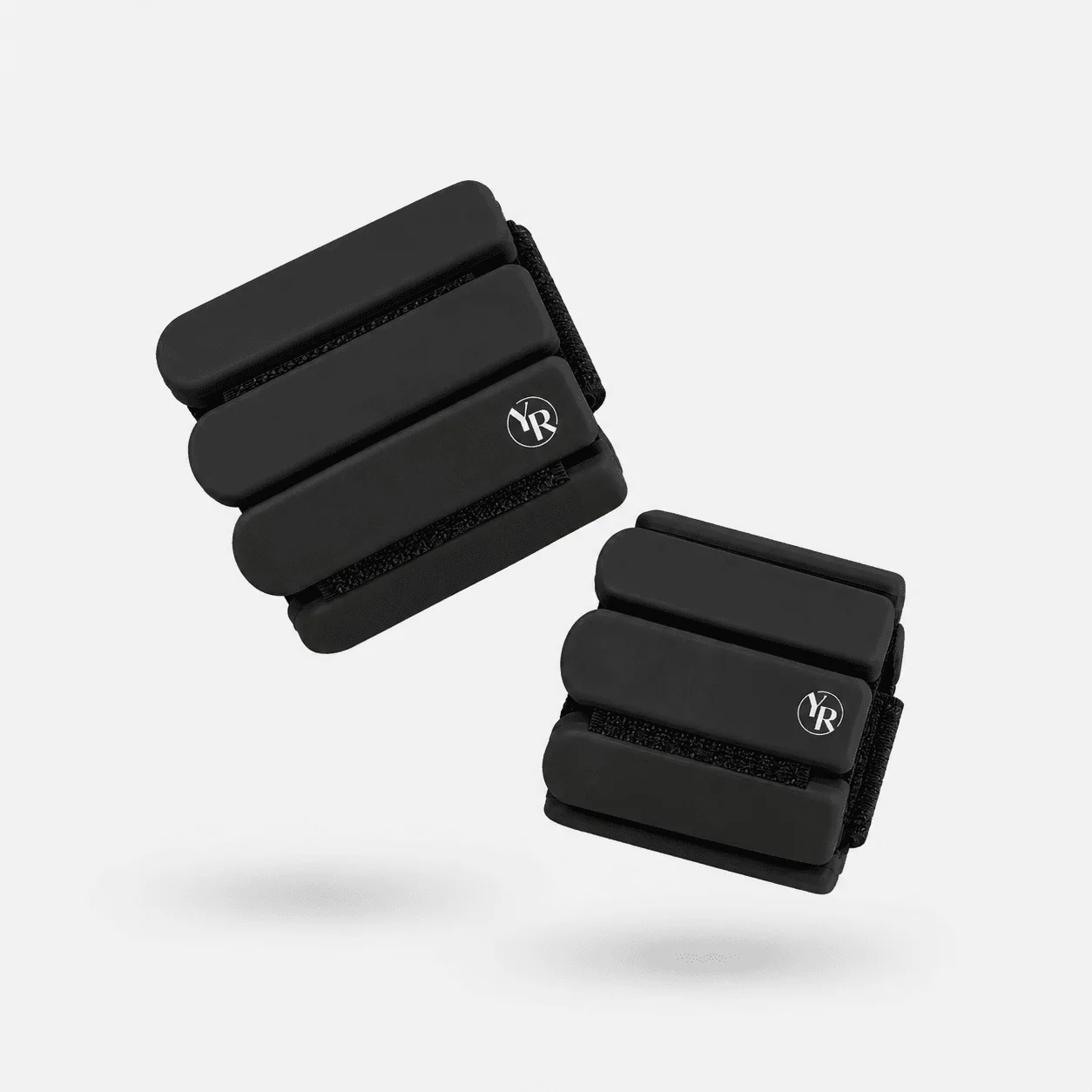
Curved weighted bands are wearable resistance bands made for wrists and ankles. Their ergonomic curve keeps them from sliding during Pilates arm toning, mat work, and glute activation. Start with one band per wrist, keep the curve facing the limb, and use slow, full-range movements before adding more resistance.
What curved weighted bands actually add to a Pilates session
Unlike flat resistance bands you hold or tie, curved weighted bands are worn directly on the wrist or ankle. That turns ordinary arm reaches, leg lifts, and standing sequences into loaded movements without changing the exercise. The weight is fixed, so the challenge comes from where you place the band and how slowly you move. This is different from stretch bands, where tension changes as you pull. Because the band stays on the limb, you can move through a full range without gripping anything.
How to choose the right band for your practice
Most people only need one pair to start. If you are new to wearable resistance, a lighter band on each wrist is enough for arm toning, while ankle placement increases the demand on glute and hip exercises. The Curved Weighted Bands from the store are sold as a wearable option with a curved shape designed to stay in place. If you already own flat bands, keep them for pulling work and use curved bands for carrying work. The two tools solve different problems.
Five-step setup for your first weighted band session
Use this sequence before you add weighted bands to an existing routine. Each step includes a checkpoint so you can catch problems early. You do not need a reformer for these steps, but they pair well with mat work or a reformer footbar warm-up.
Step-by-step: how to use curved weighted bands
- Start with one band per wrist: Place the curved band around your wrist with the curve following the natural shape of your arm. Keep it snug enough that it does not rotate, but loose enough to slide a finger underneath. Checkpoint: if the band pinches or leaves a deep mark, it is too tight. If it spins during arm circles, it is too loose.
- Warm up without the bands: Spend three to five minutes on shoulder rolls, arm circles, and gentle spine mobility before adding weight. Cold shoulders and wrists do not tolerate added load well. Common mistake: skipping the warm-up because the bands feel light. The repetitive nature of Pilates arm toning is what makes warm-up matter.
- Choose two or three arm-toning exercises: Use movements you already know, such as standing arm reaches, small pulses with the arms lifted, or a seated hug-a-tree motion. Keep the range small and the tempo slow. Checkpoint: if you cannot complete eight controlled repetitions without shrugging, remove the bands and practice the pattern first.
- Move the bands to your ankles for lower-body work: For glute bridges, side-lying leg lifts, or standing hip abduction, place the curved bands around your ankles. The curve should follow the ankle bone, not press into the Achilles tendon. Common mistake: using the same band tension for wrists and ankles. Ankles usually handle more load, so a slightly heavier band or a second band can work better here.
- Finish with a grip-free cooldown: Remove the bands and spend two minutes on wrist circles, ankle rolls, and slow breathing. This helps you notice whether the added resistance changed your form. Checkpoint: if your wrists or ankles feel irritated the next day, reduce the band weight or shorten the weighted portion of your session.
Product facts that matter
- Curved Weighted Bands: Curved weighted bands are wearable resistance training designed for wrists and ankles, with an ergonomic curved shape intended to stay securely in place without sliding or shifting. Because the band stays put, you can focus on slow, controlled Pilates arm toning instead of stopping to readjust.
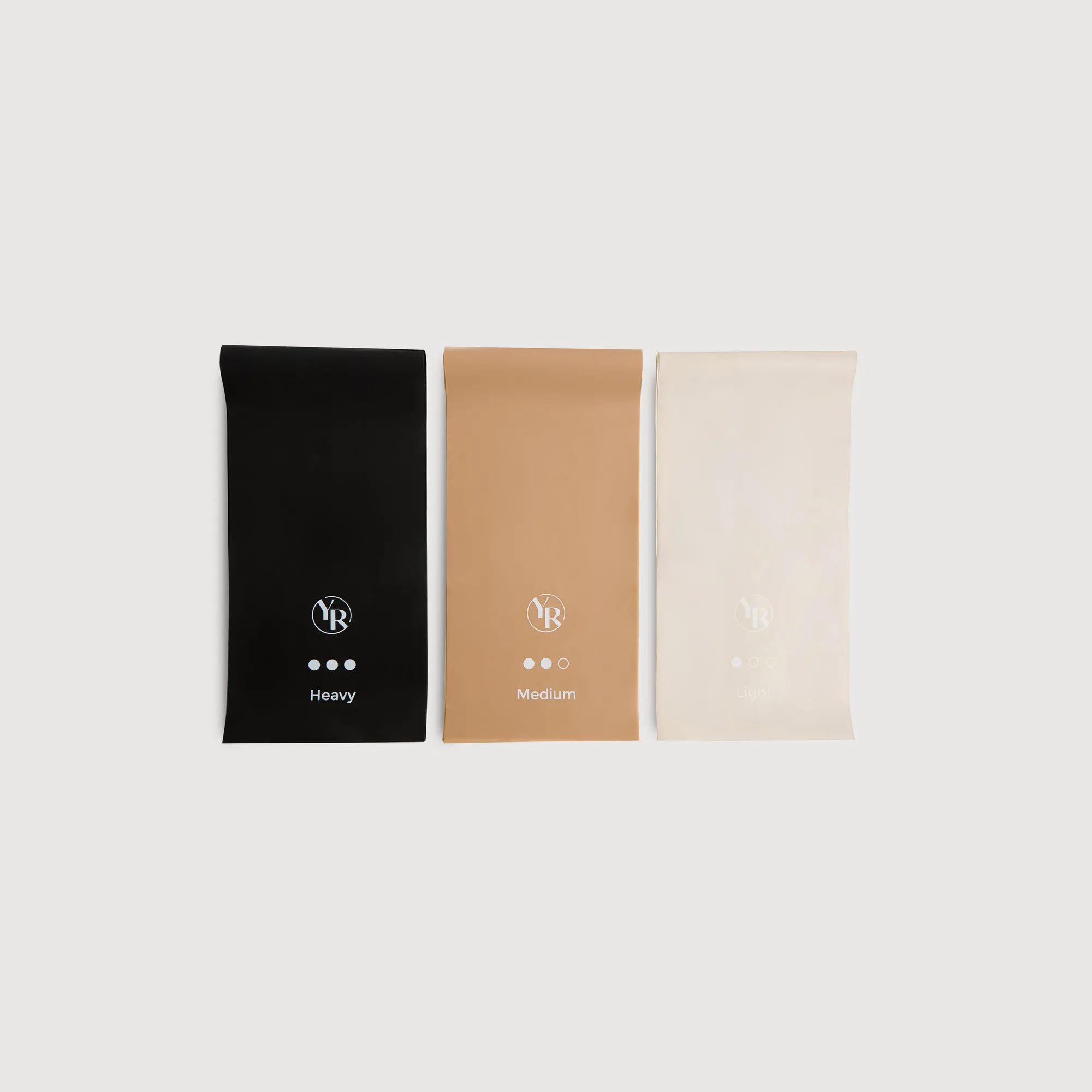
- Stretch Resistance Bands: Stretch Resistance Bands are latex resistance bands for Pilates and mat training, sold as a pack of three with distinct mild, medium, and strong resistance levels. Having clearly different tensions lets you match the band to the exercise instead of guessing which identical band is which.
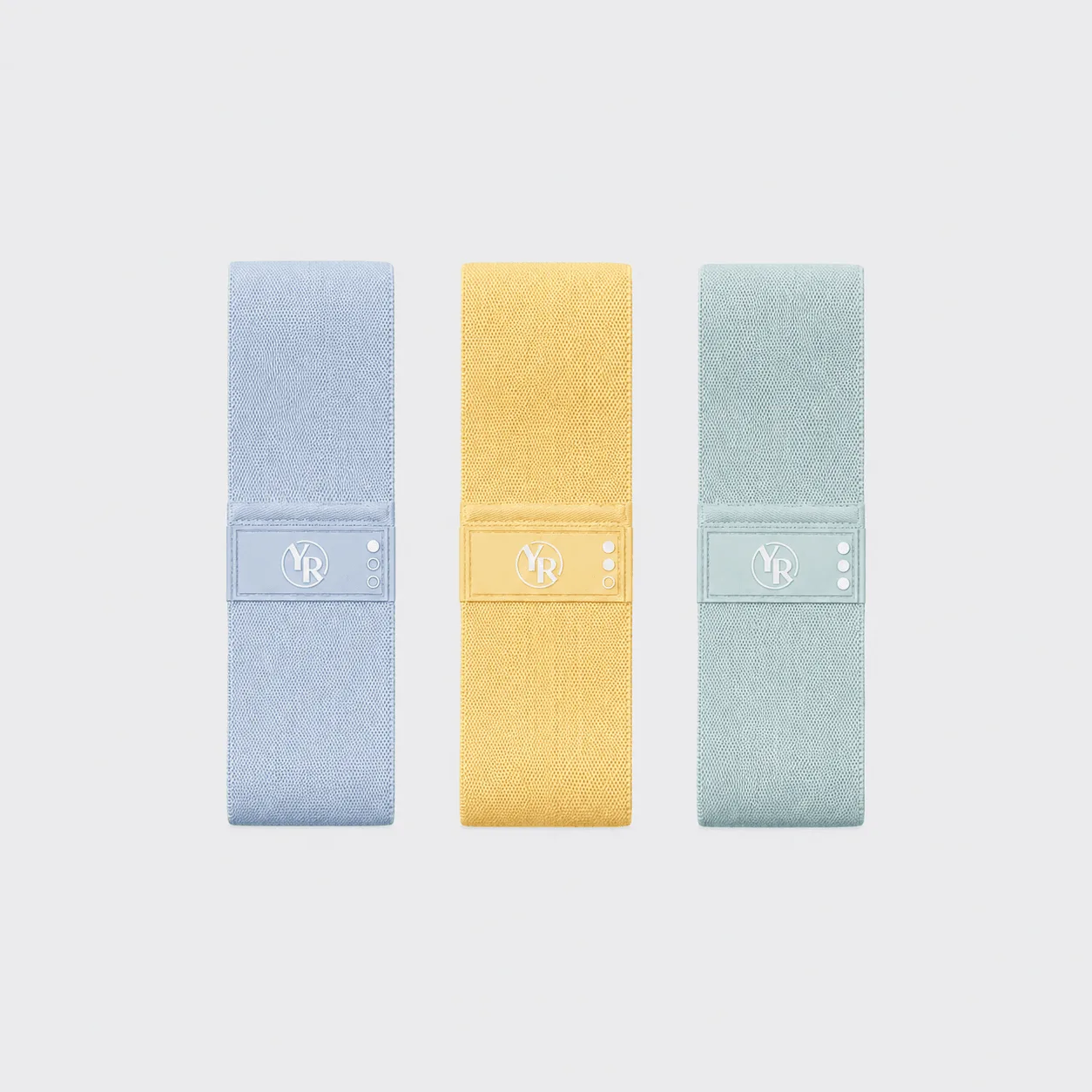
- Booty Bands Set: The Booty Bands Set includes multiple bands designed for glute-focused exercises, warm-ups, strength workouts, and rehabilitation routines, available in six color options. If your main goal is lower-body shaping, this set covers glute activation while curved weighted bands add load to the same movements.