Quick Answer
A curved yoga block helps you sink deeper into restorative poses by supporting your neck, back, and hips with its contoured edge, reducing strain and improving alignment.
Why a Curved Edge Works for Restorative Yoga
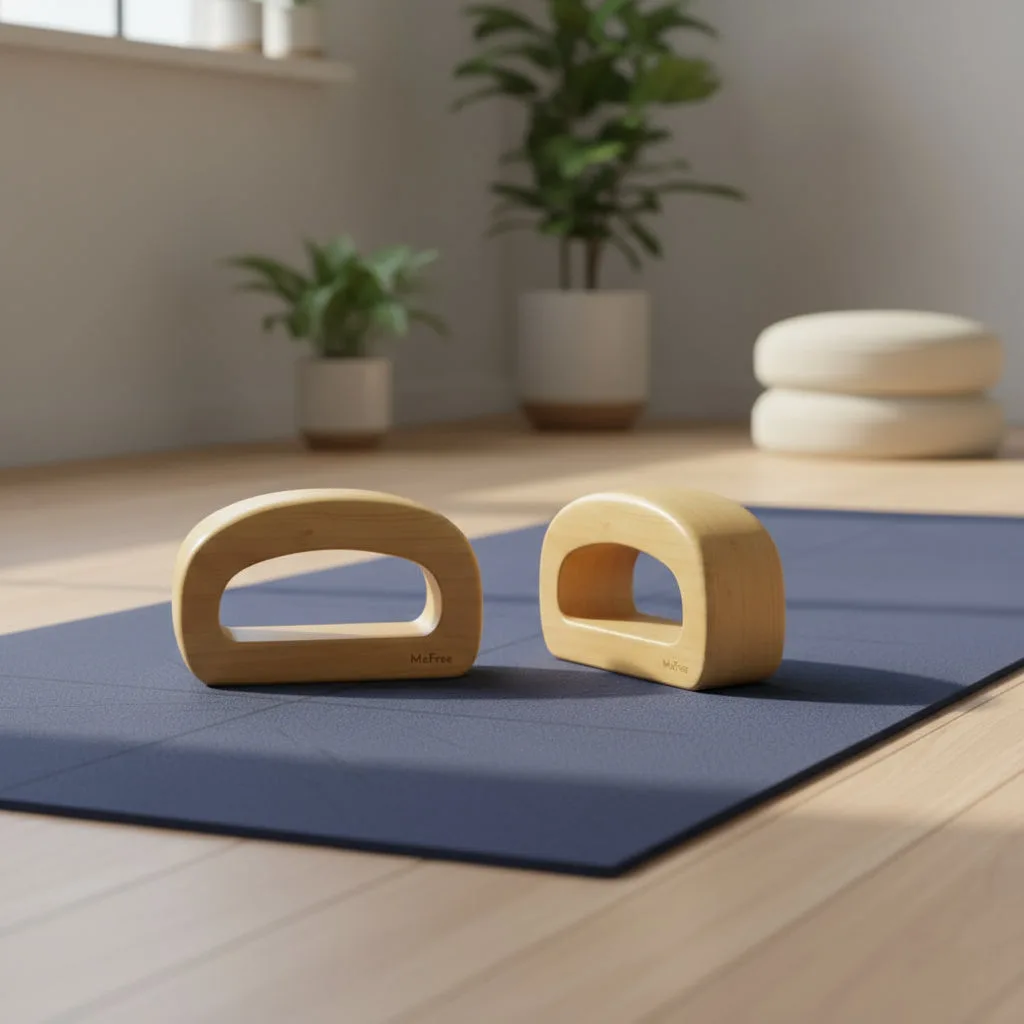
Restorative yoga relies on props to create passive, supported stretches. A curved yoga block’s rounded edge molds to the natural curves of your body, making it more comfortable under the neck, lower back, or knees than a standard rectangular block. This design lets you hold poses longer without tension, which is the goal of restorative practice.
When to Choose a Curved Block Over a Straight One
Use a curved block when you need gentle support for sensitive areas like the cervical spine or sacrum. The straight edge still works for traditional uses like under the hands in standing poses, but the curved side is what makes it special for restorative work. If you only practice dynamic flows, a standard block may be enough.
How to Use a Curved Yoga Block in Restorative Poses
- Supported Child’s Pose (Balasana): Place the curved block horizontally on your mat. Kneel and lower your torso so your belly rests on the block, with the curved edge cradling your lower ribs. Turn your head to one side and rest your cheek on the mat or a folded blanket. Hold for 3–5 minutes, breathing deeply. Common mistake: Placing the block too high under the chest. Keep it at belly height to avoid compressing the diaphragm.
- Reclining Bound Angle Pose (Supta Baddha Konasana): Sit with the soles of your feet together and knees open. Place the curved block vertically behind you, with the curved edge facing up. Slowly recline so your spine rests along the block, with the curve supporting your mid-back. Let your arms relax by your sides. Stay for 5 minutes. Checkpoint: If your lower back arches, slide the block slightly lower toward your sacrum for even support.
- Legs-Up-the-Wall (Viparita Karani) with Neck Support: Sit sideways against a wall, then swing your legs up. Place the curved block under your head and neck, with the curved edge cradling your cervical spine. Adjust the block so your forehead is slightly higher than your chin. Hold for 5–10 minutes. Common mistake: Using a block that is too tall. The curved block’s low profile is ideal here; if your chin juts up, remove the block or use a folded towel instead.
Product Facts
-
Curved Yoga Block - Almond: The Curved Yoga Block in Almond features a curved and straight edge for versatility, is lightweight and durable. You can use the curved side for neck or back support in restorative poses and flip to the straight side for traditional hand support, all in one prop.
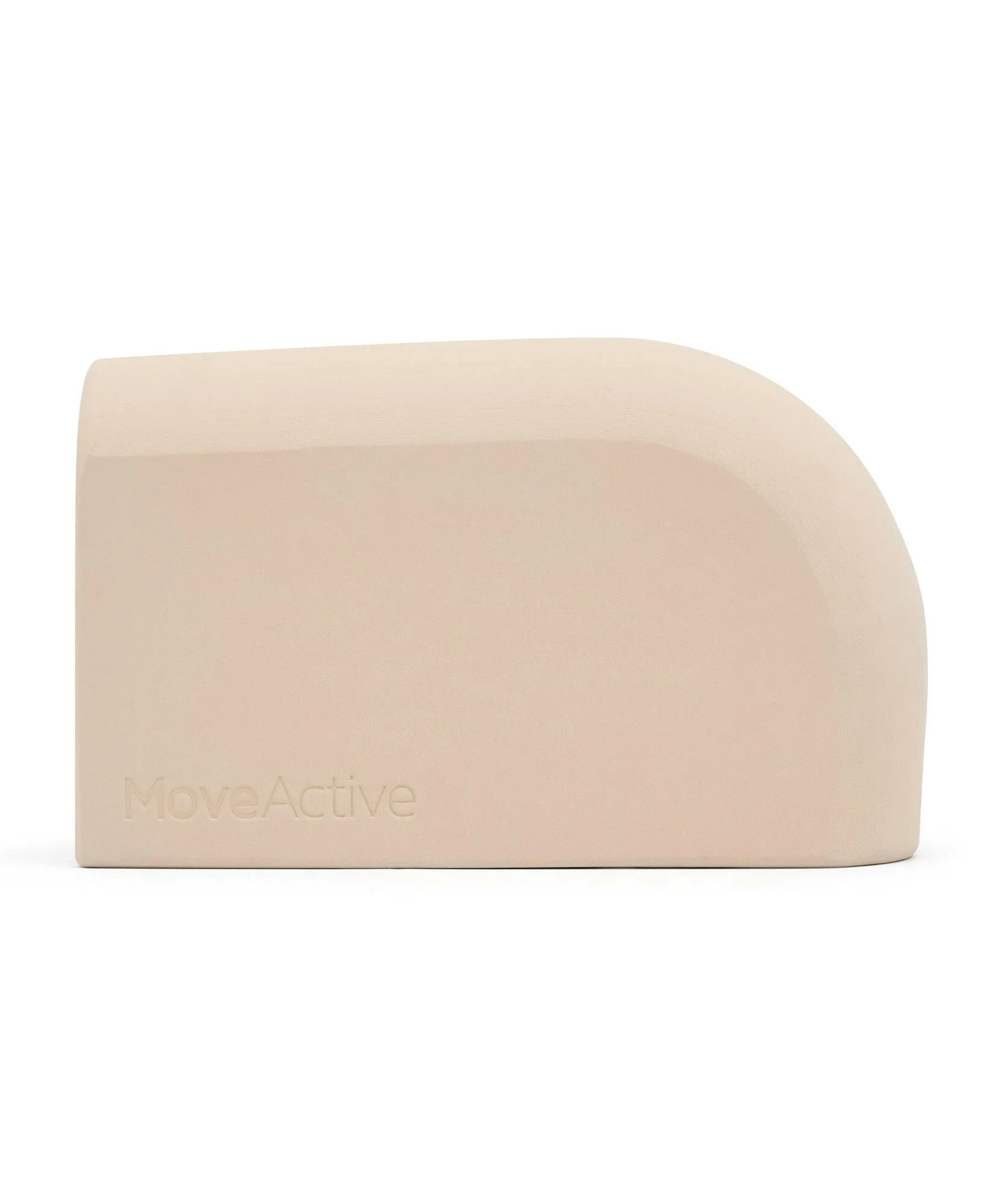
Curved Yoga Block - Almond