What to Look for in a Mini Lathe Cutting Oil
When you're tapping, threading, reaming, or turning on a mini lathe, the cutting fluid you choose directly affects tool life and part finish. General-purpose oils like 3-in-1 or WD-40 are easy to grab, but they lack the extreme-pressure additives that prevent galling and welding on ferrous metals. A dedicated cutting oil like Viper's Venom is formulated specifically for these operations.
This comparison focuses on the key differences: sulfur content, adhesion, cooling ability, and how each fluid behaves on ferrous workpieces. You'll see where a purpose-made oil earns its place on your bench.
Viper's Venom – What the Catalog Confirms
-
Cutting Oil, Vipers Venom, 12 oz.: Viper's Venom is a superior high-sulfur cutting oil specifically formulated for cutting all ferrous metals. It is fortified with sulfur and chlorine to reduce metal pick-up, galling, and welding. Sulfur and chlorine additives are what separate a true cutting oil from general lubricants. They chemically react with the fresh metal surface to prevent the chip from welding back onto the tool, which is critical during tapping and threading on a mini lathe.
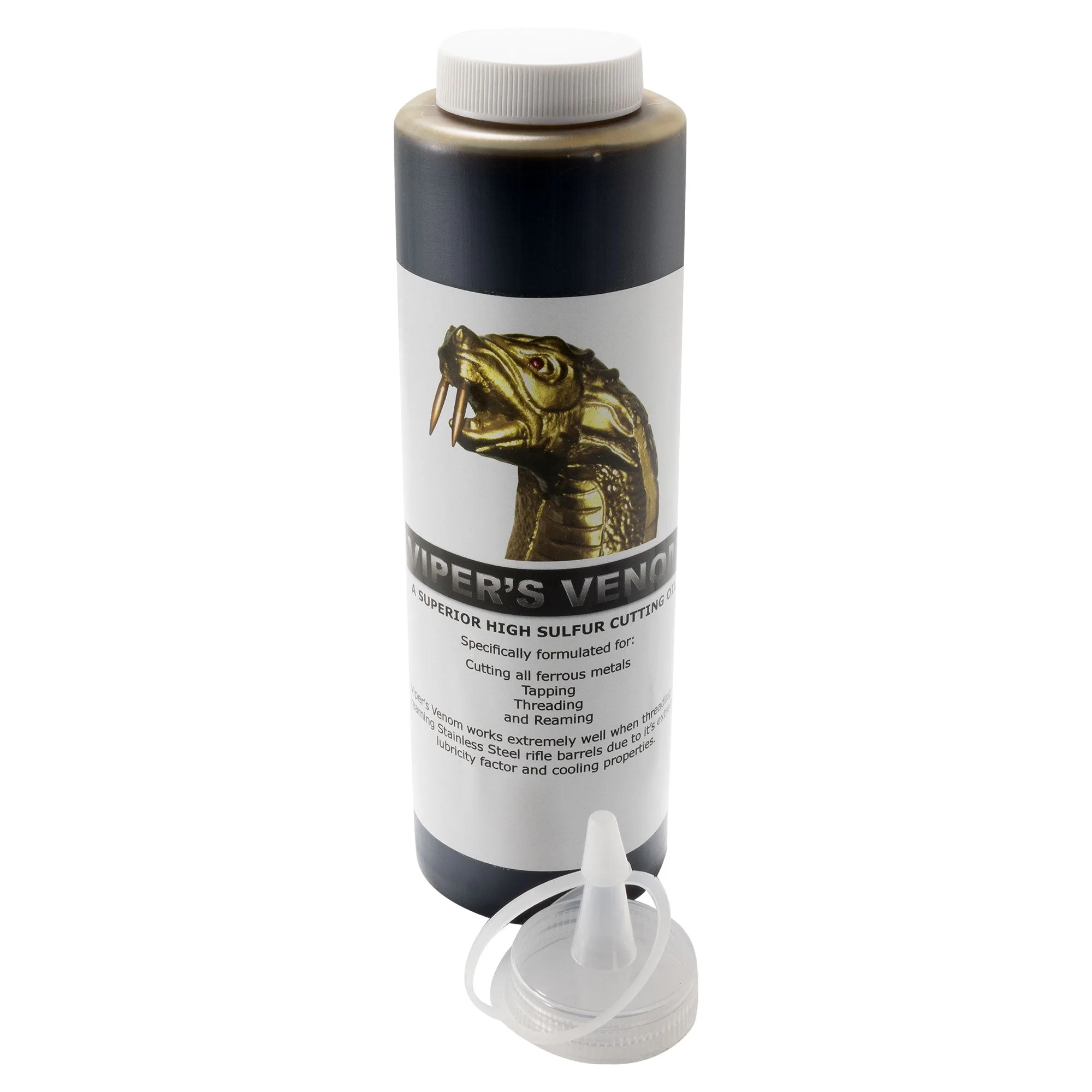
Cutting Oil, Vipers Venom, 12 oz.
-
Cutting Oil, Vipers Venom, 12 oz.: It contains saponifiables to promote adhesion to the work and tools, and to provide oiliness. It will not cause sticking or gumming. Adhesion keeps the oil where it's needed—on the cutting edge—instead of flinging off the workpiece. No gumming means you won't have to clean sticky residue off your lathe ways or tap holders.
-
Cutting Oil, Vipers Venom, 12 oz.: It has good cooling ability and works extremely well when threading or reaming stainless steel rifle barrels due to its extreme lubricity and cooling properties. Cooling is essential during any machining operation. General oils often lack the thermal capacity to keep the tool and work from overheating, especially on tougher alloys like stainless.
Viper's Venom vs General-Purpose Oils
The table below highlights the practical differences between Viper's Venom and common general-purpose oils. No numerical claims are made beyond what the catalog supports.
- Additives for extreme pressure: Viper's Venom is fortified with sulfur and chlorine to reduce metal pick-up, galling, and welding. General oils lack these additives, so they cannot prevent chip welding on ferrous metals.
- Adhesion and residue: Viper's Venom contains saponifiables for adhesion and will not cause sticking or gumming. General oils often drip off or leave a tacky film that attracts grit.
- Cooling ability: Viper's Venom has good cooling ability, as confirmed for stainless steel threading. General oils have no confirmed cooling performance for machining tasks.
- Ferrous metal compatibility: Viper's Venom is formulated for all ferrous metals and causes only slight staining. General oils may not protect against rust or may leave a heavier stain.
- Stability and rancidity: Viper's Venom is a stable product with good resistance to rancidity. Many general oils degrade over time, especially if stored in a warm shop.
When General Oil Might Still Work
If you're only cutting non-ferrous materials like aluminum or brass, or doing very light drilling, a general-purpose oil can be adequate. But for any operation on steel, stainless, or other ferrous metals—especially tapping and threading on a mini lathe—a dedicated high-sulfur cutting oil like Viper's Venom provides the extreme-pressure lubrication and cooling that general oils don't. The 12 oz bottle is a practical size for bench use, and its stable formula means it won't go bad between jobs.