Quick answer
For most cage setups, choose a screw-on cuttlebone holder like the JW Cuttlebone Holder over a clip. The holder grips the cuttlebone with a plastic barrier and tightens onto the bars, so the cuttlebone stays put while your bird works on it. A clip is only a better choice when you need to move the cuttlebone between cages or play areas several times a day.
Why stability matters more than convenience
A cuttlebone that shifts or drops can startle a bird and turn a calcium source into a toy to fling. The main difference between a holder and a clip is how they resist that movement. A screw-on holder clamps the cuttlebone against the cage bars; a clip relies on spring or friction pressure. For a bird that bites hard or grabs with a foot, the holder's fixed position is the safer default.
When a clip still makes sense
Clips win on portability. If you rotate cuttlebone between a sleeping cage, a play stand, and a travel carrier, a clip lets you move it without tools. The trade-off is that clips can loosen with repeated handling, and a loose clip can let the cuttlebone swing. Check clip tension every time you move it, and replace any clip that no longer grips firmly.
Cage bar orientation and holder fit
The JW Cuttlebone Holder is designed to mount on vertical or horizontal barred cages, which covers most standard cages. Before buying any holder, look at your cage bars: very thick bars or acrylic panels may not accept a screw-on bolt. In that case, a clip may be the only option, so confirm the mounting method against your cage before you choose.
Trade-offs at a glance
- Stability: A screw-on holder such as the JW Cuttlebone Holder clamps the cuttlebone against the bars with a plastic barrier, so it resists pulling and biting better than a clip. If your bird is a strong chewer, start with the holder.
- Setup and moving: A clip needs no tools and moves between cages in seconds. The holder screws on, so moving it takes a little more time. Choose a clip only if you relocate the cuttlebone daily.
- Cage compatibility: The holder fits vertical or horizontal barred cages. Clips vary; some need thin bars or a specific attachment point. Check your bar spacing before buying either. Measure your cage bars first; no holder or clip fits every cage.
- Wear and checking: With a clip, test the grip each time you reattach it and replace it if it loosens. With the holder, check that the plastic bolt stays snug and the barrier still presses the cuttlebone. A quick weekly wiggle test catches most problems before your bird does.
Product facts
-
JW Cuttlebone Holder: The JW Cuttlebone Holder uses a simple screw-on plastic bolt-on design and holds any type of cuttlebone. You can mount it on vertical or horizontal barred cages without wires, and it accepts the cuttlebone you already have.
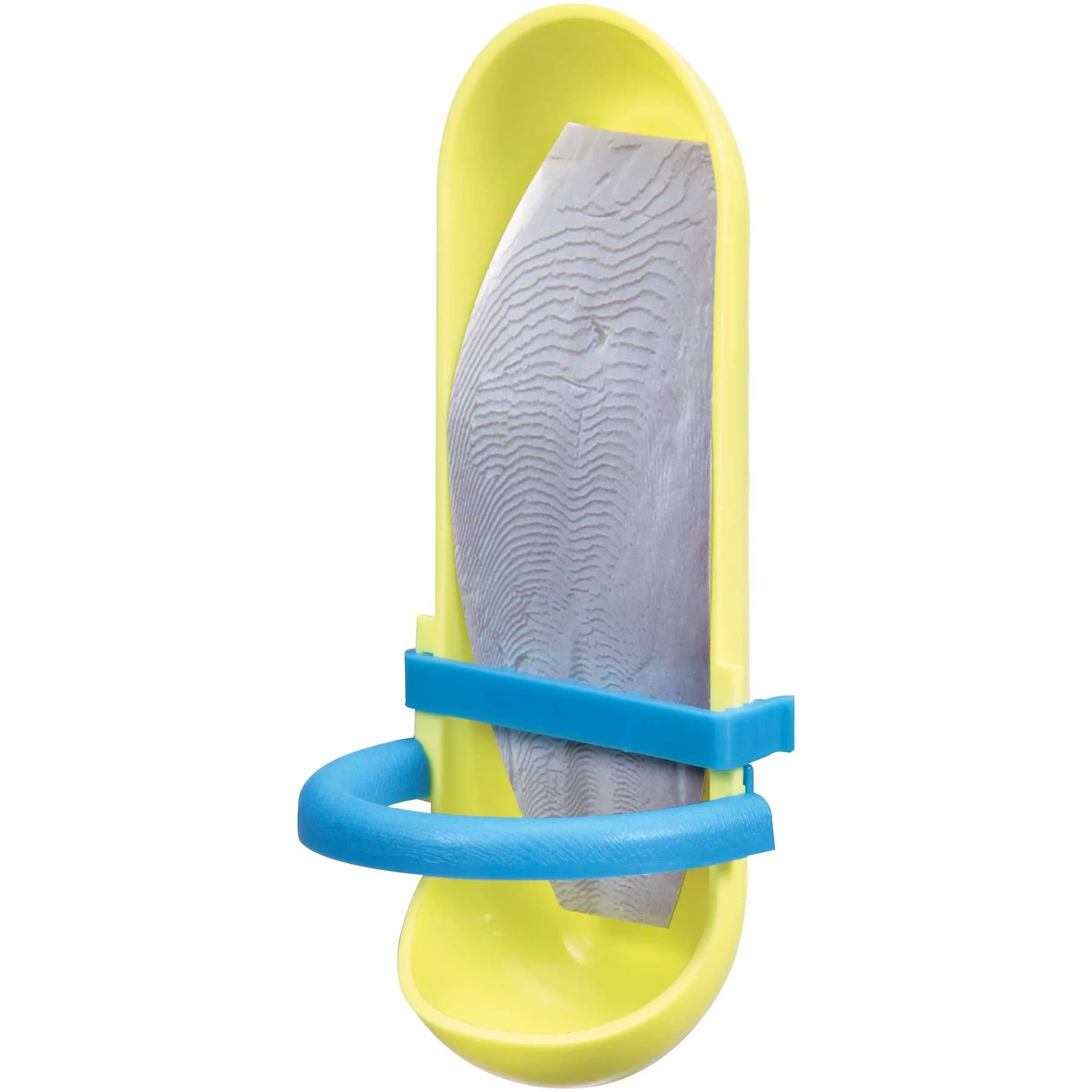
JW Cuttlebone Holder
-
JW Cuttlebone Holder: It holds cuttlebones in place with a plastic barrier to keep the cuttlebone from moving while your bird eats. That barrier reduces the chance of the cuttlebone slipping or dropping, which is the main safety concern with clips.
Which should you choose?
Choose the holder if
- Your bird bites or grabs cuttlebone hard and you want it to stay fixed
- You have a standard vertical or horizontal barred cage
- You prefer a set-and-check mount over daily repositioning
Choose a clip instead if
- You move cuttlebone between cages or play areas every day
- Your cage has thick bars or acrylic panels that cannot take a screw-on bolt
- You need a temporary mount while traveling