Quick answer
Start with Beginning to Read Puzzles for letter recognition and sound matching, then move to Unifix CVC Cubes for active word building and decoding practice. The puzzles build the sound-to-letter foundation; the cubes put that foundation to work.
Why the puzzles come first for most kindergartners
Beginning to Read Puzzles ask children to match letters to objects or words, which reinforces letter-sound connections before children are asked to blend sounds into words. That matching step is the prerequisite for decoding, so it gives you a low-pressure way to check who is ready for word building.
The puzzles are also self-checking in a way cubes are not: a wrong match does not fit, so children get immediate feedback without an adult correcting every attempt. That makes them easier to run as an independent early literacy center while you work with a small group.
When to skip ahead to the cubes
If your students already recognize most letter sounds and can blend simple words orally, the puzzles may be too easy and the cubes become the better first purchase. Unifix CVC Cubes let children physically connect consonant and vowel cubes to form words, which turns decoding into a hands-on task rather than a matching exercise.
The trade-off is that cubes require more teacher scaffolding at first: children need to know which cubes to choose and how to check whether the word they built is real. Plan to model a few words before expecting independent use.
The trade-off: matching versus building
Puzzles are better for recognition and for centers that run without direct supervision. Cubes are better for active decoding and for children who need to manipulate letters to see how words change. Neither replaces explicit phonics instruction; both are practice tools that support it.
If you can only buy one, choose based on where your group is: puzzles for children still solidifying letter sounds, cubes for children ready to build and read CVC words.
Trade-offs at a glance
- Skill focus: Beginning to Read Puzzles target letter recognition and matching; Unifix CVC Cubes target word building and decoding. Match the tool to the skill you are assessing this week.
- Teacher support needed: Puzzles are largely self-checking; cubes need modeling before independent use. Plan a short demonstration lesson before adding cubes to centers.
- Reusability across levels: The puzzles' two-sided design and activity guide support PreK through Grade 1; the cubes' uppercase/lowercase sides and color coding support K and up. If your group spans multiple levels, the puzzles cover a wider range out of the box.
Product facts
-
Unifix(R) CVC Cubes: Set of 90 single-letter cubes with lowercase on one side and uppercase on the other; blue consonants and red vowels, quantities based on frequency of use. The color coding helps children distinguish vowels from consonants as they build words, and the quantity supports repeated practice without running out of common letters.
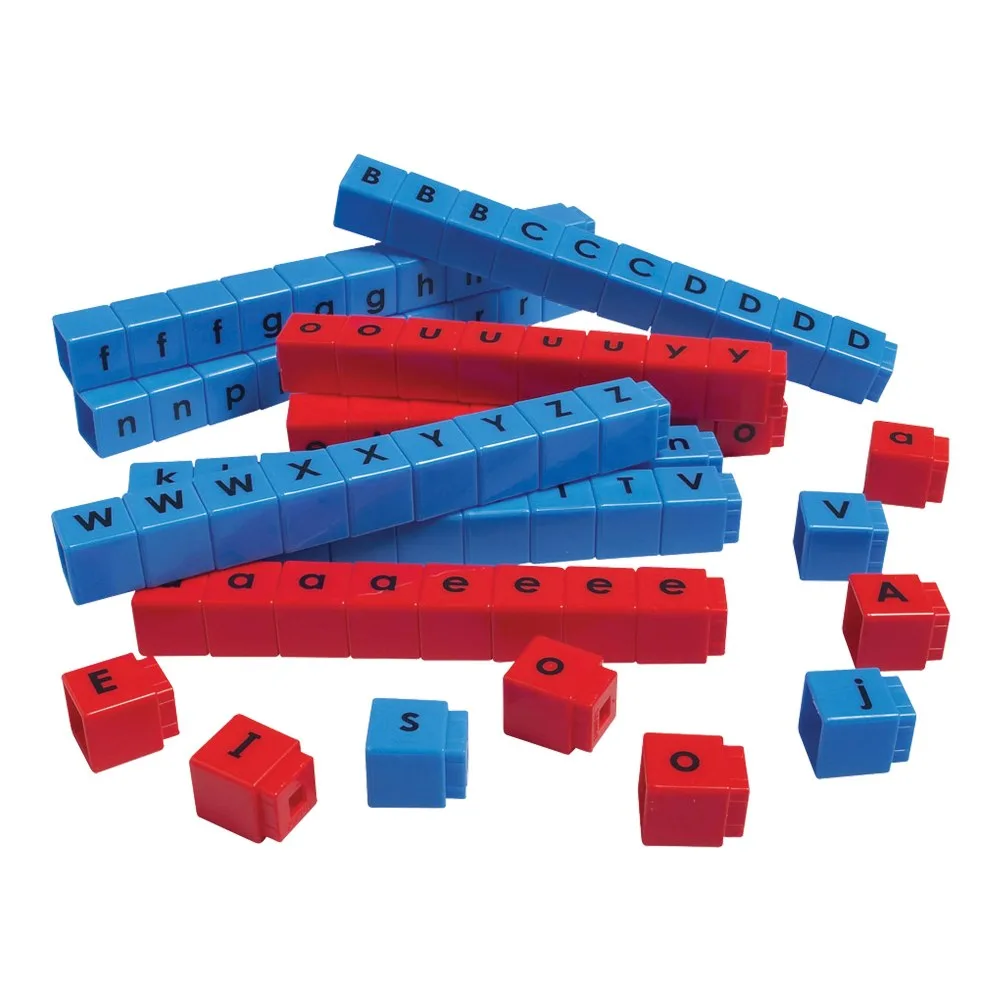
Unifix(R) CVC Cubes
-
Beginning To Read Puzzles: Each set contains 10 five-piece, two-sided puzzles with an included activity guide, for grades PreK through 1. The two-sided design and activity guide let you reuse the same puzzles for letter matching and word matching, which stretches one purchase across a wider range of skill levels.
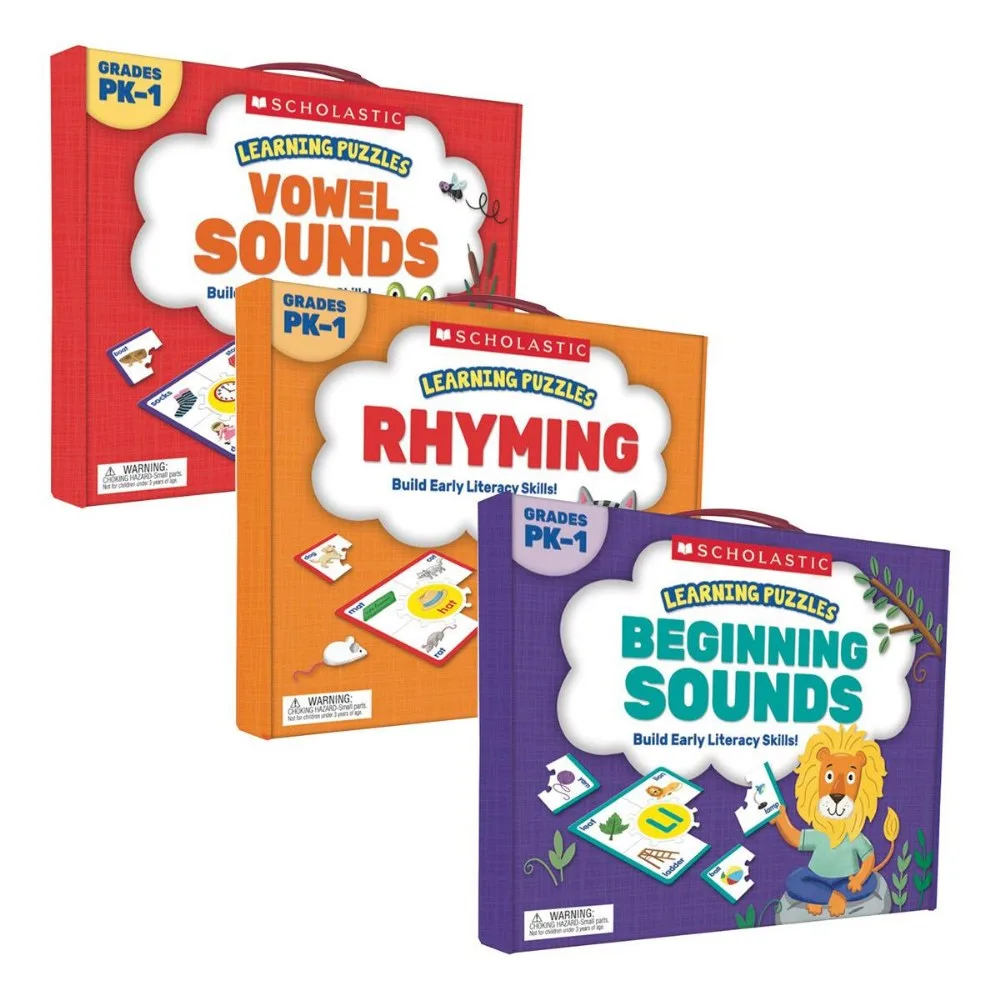
Beginning To Read Puzzles
Which should you choose?
Best for
- PreK and early kindergarten classrooms focused on letter recognition and sound matching
- Teachers who need an independent early literacy center that self-checks
Not for
- Children already blending CVC words who need active decoding practice
- Classrooms that want a single tool for word building across the year