Quick answer
Buy the D-Line Knife Set 4-pieces if you want one purchase that covers bread, meat, vegetables, and delicate produce. Buy a single D-Line Santoku Big, Chef Knife, or Tomato Knife only if you already own a knife you like for the other jobs.
Why the set usually wins for a first good knife purchase
A single knife forces compromises. The D-Line Knife Set 4-pieces gives you four different stainless steel blades for cutting, filleting, deboning, peeling, and slicing, so you are not using a chef's knife to saw through crusty bread or crush a tomato. The catalog price is USD 124.50 against a comparison price of USD 249.00, which makes the bundle cheaper than assembling separate blades at their individual catalog prices.
The trade-off is counter space and drawer clutter. If you already own a bread knife and a paring knife you trust, the set duplicates tools you have. In that case, one or two D-Line knives fill the real gaps.
Chef knife vs Santoku: pick by cutting motion, not by hype
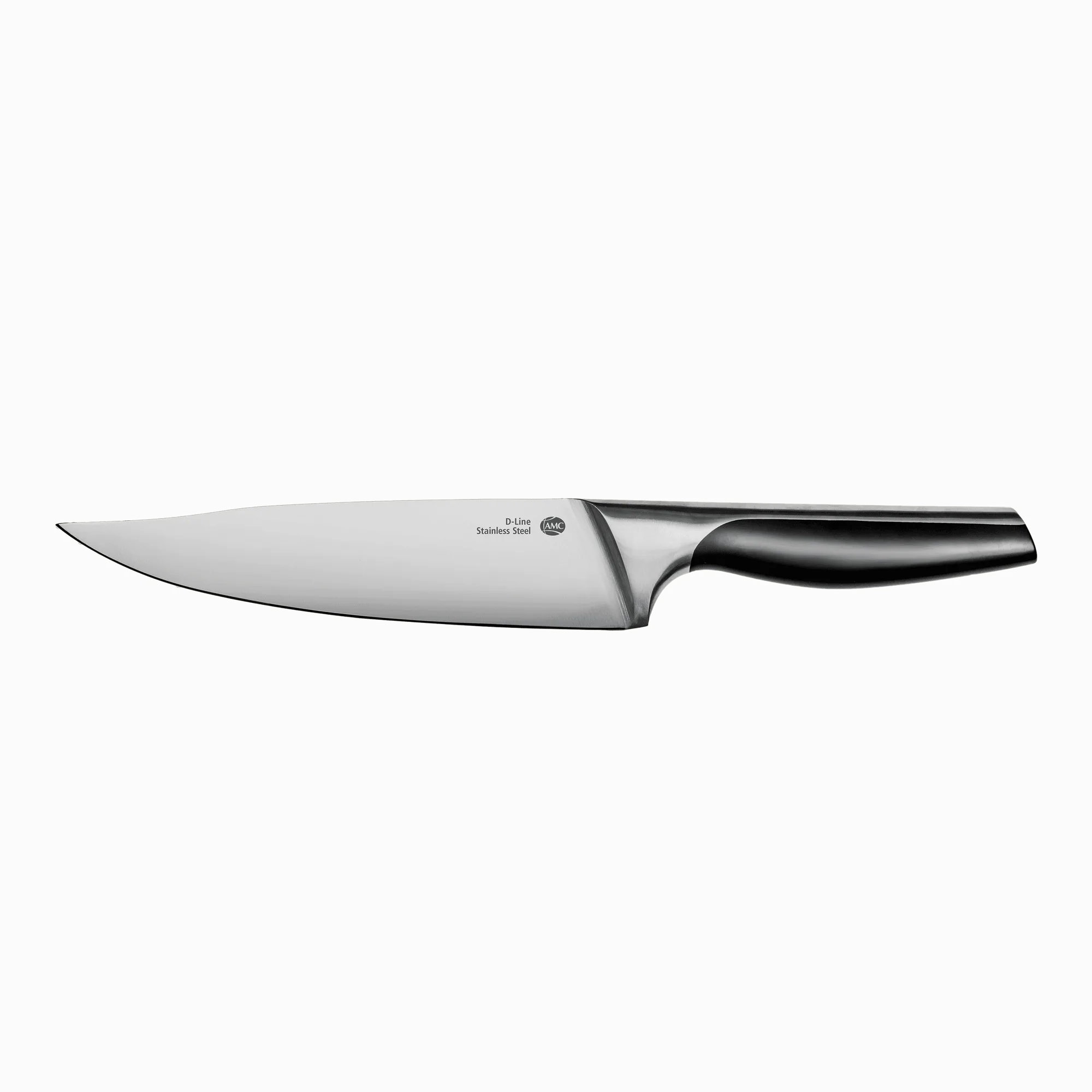
The D-Line Chef Knife has a wide, long blade and a sturdy handle balanced across its 15.2-inch total length. That shape suits rocking and chopping through meat, vegetables, and herbs. The D-Line Santoku Big uses a 7-inch precision stainless steel blade with Granton indentations, which reduce sticking and support thin, clean cuts. Its all-stainless steel handle is built for comfort and balance during high-volume prep.
Choose the Chef Knife if you rock the blade and want one workhorse for meat and dense vegetables. Choose the Santoku Big if you prefer clean downward slicing and dislike food clinging to the blade. Neither replaces a serrated knife for bread or tomatoes.
When a single Tomato Knife is enough
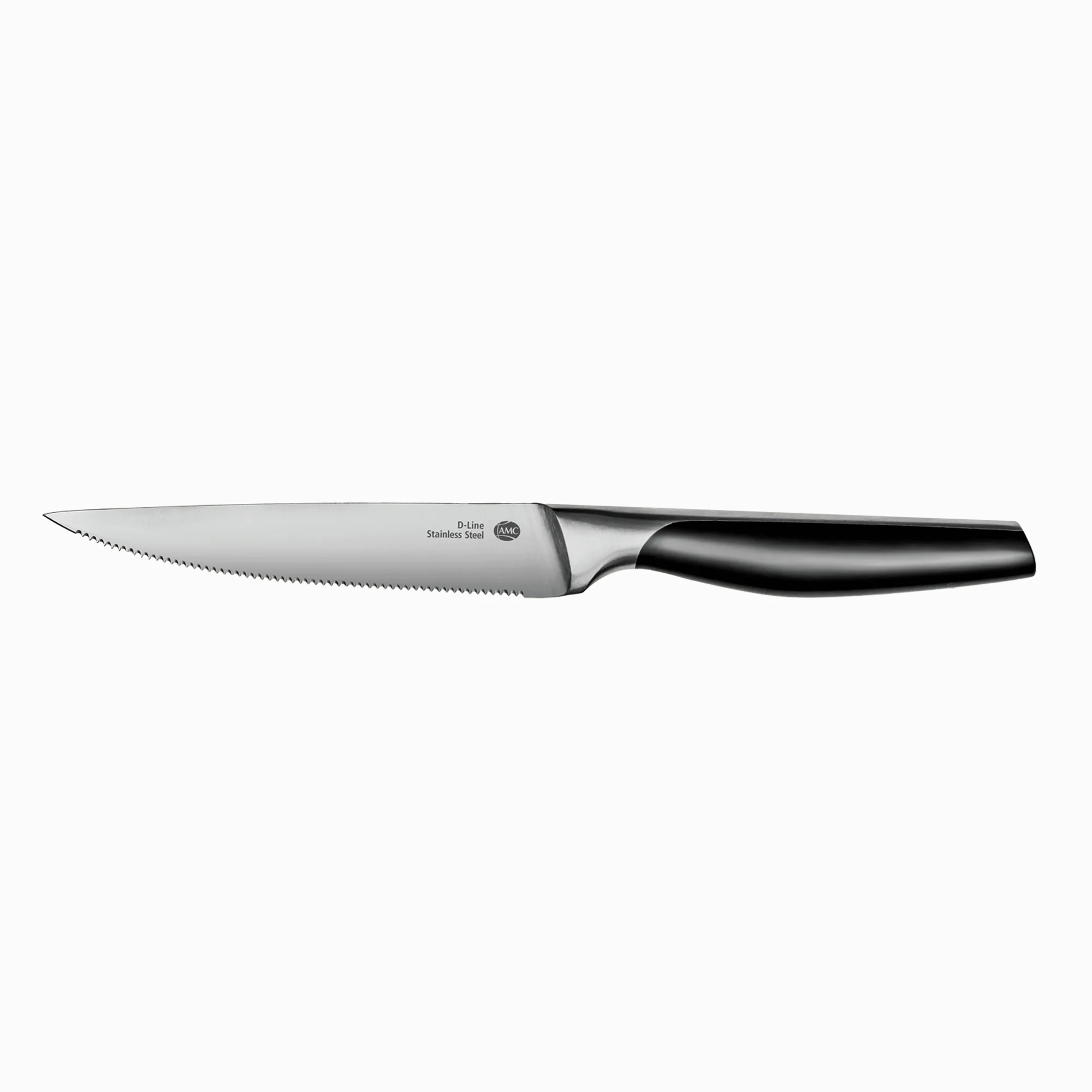
The D-Line Tomato Knife has a finely serrated stainless steel blade that glides through soft produce without crushing it. It also handles sandwich prep and small crusty baked goods. At USD 19.50 against a USD 39.00 comparison price, it is the lowest-cost way to add a serrated blade if your current set lacks one.
The limitation is obvious: a tomato knife cannot chop onions or carve a roast. Treat it as a specialist addition, not a replacement for a chef's knife or santoku.
Decision rules for choosing your D-Line knife
- You own fewer than three usable knives: Buy the D-Line Knife Set 4-pieces. It covers bread, meat, vegetables, and delicate produce in one purchase. Check your drawer first; count only knives you actually reach for.
- You already own a bread knife and paring knife: Skip the set and buy the D-Line Chef Knife or D-Line Santoku Big as your main blade.
- You rock the blade when chopping: Choose the D-Line Chef Knife for its wide, long blade and balanced 15.2-inch total length.
- You prefer clean downward slices and hate sticking: Choose the D-Line Santoku Big with its 7-inch Granton-indented blade.
- Tomatoes and citrus keep tearing: Add the D-Line Tomato Knife for its finely serrated blade, even if you already own a chef's knife.
D-Line knives at a glance
-
D-Line Knife Set 4-pieces: Four stainless steel knives cover cutting, filleting, deboning, peeling, and slicing. One purchase replaces the odd mismatched knives most kitchens accumulate.
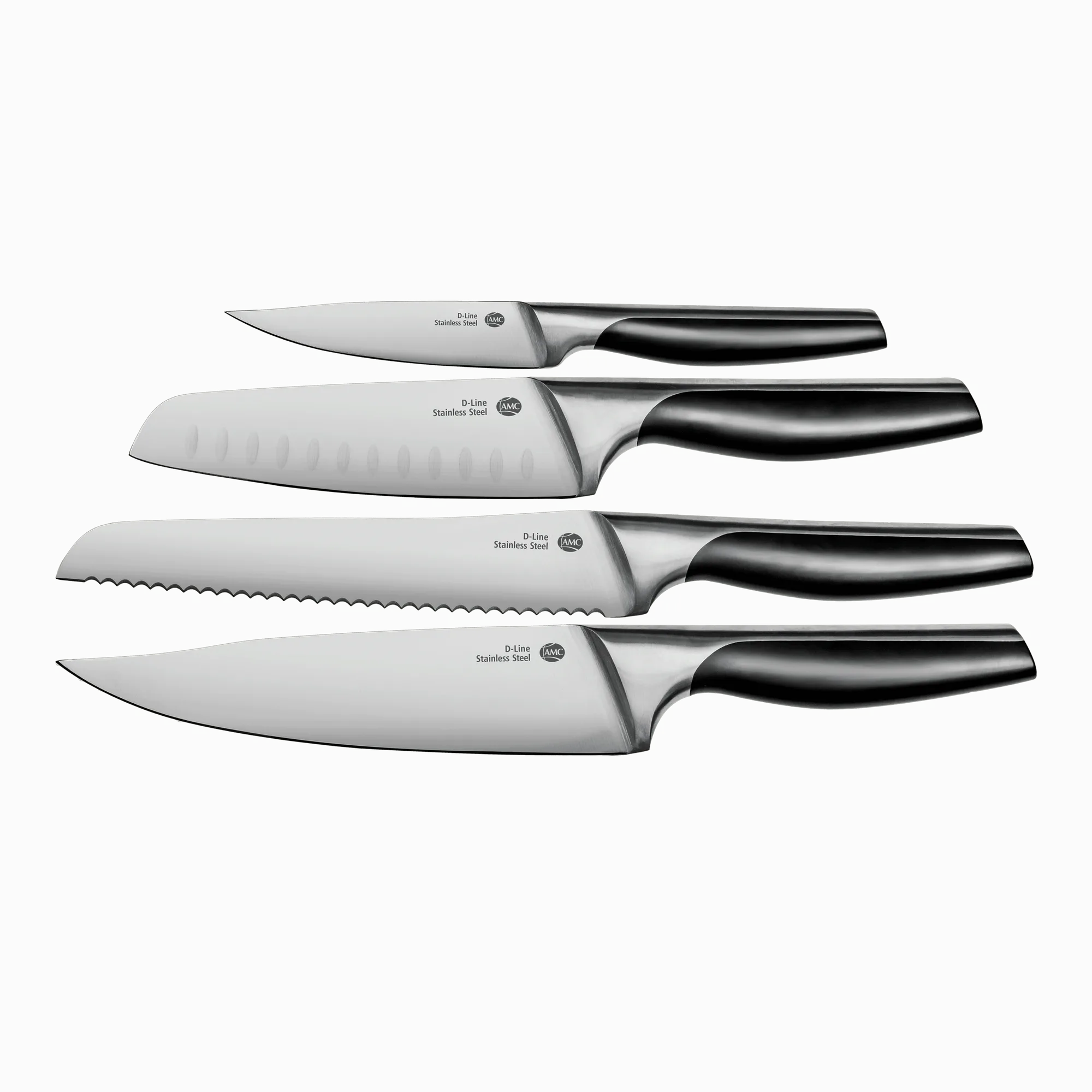
D-Line Knife Set 4-pieces
-
D-Line Santoku Big: 7-inch stainless steel blade with Granton indentations and an all-stainless handle. The indentations reduce sticking, so thin slices of wet vegetables and proteins come away cleanly.
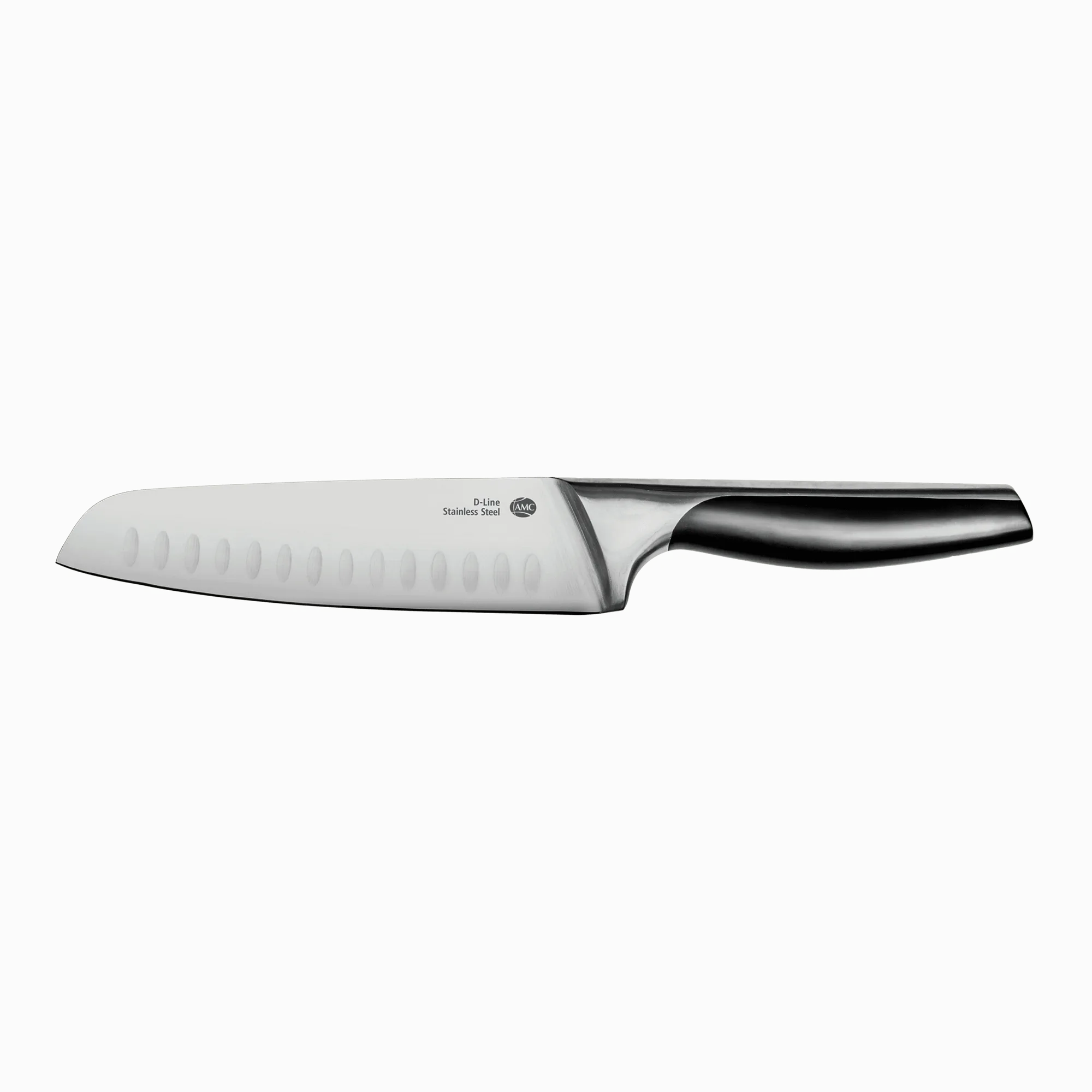
D-Line Santoku Big
-
D-Line Chef Knife: Wide, long blade with a sturdy handle balanced across a 15.2-inch total length. The length and balance support rocking chops through meat, vegetables, and herbs without wrist strain.
-
D-Line Tomato Knife: Finely serrated stainless steel blade designed for soft produce and small crusty baked goods. It slices tomatoes and citrus without crushing them, a job a smooth chef's knife struggles with.
Who should buy which
Best for
- First-time buyers setting up a kitchen from scratch
- Home cooks who want one purchase to cover bread, meat, vegetables, and delicate produce
- Anyone replacing a drawer of mismatched, dull knives
Not for
- Cooks who already own a bread knife and paring knife they like
- Buyers who want only one all-purpose blade and no extras