Quick answer
Clean your dachshund planter with mild soap and a soft brush, keep the drainage hole clear, and bring it under cover before hard freezes. Those three habits protect the painted polyresin finish better than any single deep clean.
Why painted polyresin needs a gentler routine than stone
Polyresin is molded and painted rather than carved, so the realistic coat detail sits in a thin surface layer. Abrasive pads, stiff wire brushes, and pressure washers can dull or chip that layer long before the body of the statue fails.
The same quality that makes painted resin convincing up close also makes it less forgiving of harsh chemicals. Skip bleach, solvent degreasers, and acidic lime removers; a pH-neutral soap does the job without attacking the paint.
When to move it instead of cleaning it
A resin planter left in constant soggy soil or full afternoon sun will age faster than one given a seasonal break. If you live where temperatures drop below freezing, empty the planter and store it in a shed or garage over winter; trapped wet soil expanding in cold can crack the shell.
In hot, exposed spots, shift the planter to partial shade during the hottest weeks. This is a placement decision, not a cleaning one, and it protects the paint as much as any wash.
Step-by-step dachshund planter care
- Empty and rinse the planter: Remove the plant and loose soil, then rinse the empty shell with plain water. Common mistake: scrubbing while soil is still inside, which grinds grit into the paint. Work on an empty planter, not a planted one.
- Wash with mild soap and a soft brush: Use a few drops of pH-neutral dish soap in a bucket of lukewarm water and a soft-bristled brush or cloth. Rinse thoroughly. Checkpoint: if the water beads oddly or the paint feels tacky, stop and let it dry before continuing. Lukewarm, not hot, water protects the painted surface.
- Clear the drainage hole: Turn the planter over and push out any compacted soil or root fragments from the bottom hole with a wooden skewer. Common mistake: assuming the hole is open because water drained slowly last season. Test drainage by pouring a cup of water through before replanting.
- Dry completely before replanting: Set the planter upside down in a shaded, airy spot until the inside feels dry to the touch. Checkpoint: if you see moisture in the bottom curve, give it another day; wet soil against wet resin invites mildew. Dry time matters more than wash time.
- Refresh the soil and replant: Use fresh, free-draining potting mix and leave an inch of space below the rim so water does not spill over the painted coat. Common mistake: packing soil tightly, which blocks the drainage hole you just cleared. Loose, fresh mix keeps the drainage hole working.
- Protect before extreme weather: Before the first freeze, empty the planter and move it under cover; in scorching sun, shift it to partial shade. Checkpoint: if the forecast shows a hard freeze, do not wait until the soil is already frozen. Seasonal relocation is part of routine care, not an emergency fix.
Product facts that shape the care routine
-
Dachshund Planter: The Dachshund Planter is made of polyresin with realistic painted detail and includes a drainage hole on the bottom. The drainage hole is your main defense against root rot, but it also means water passes through the painted interior, so check it often and never seal it.
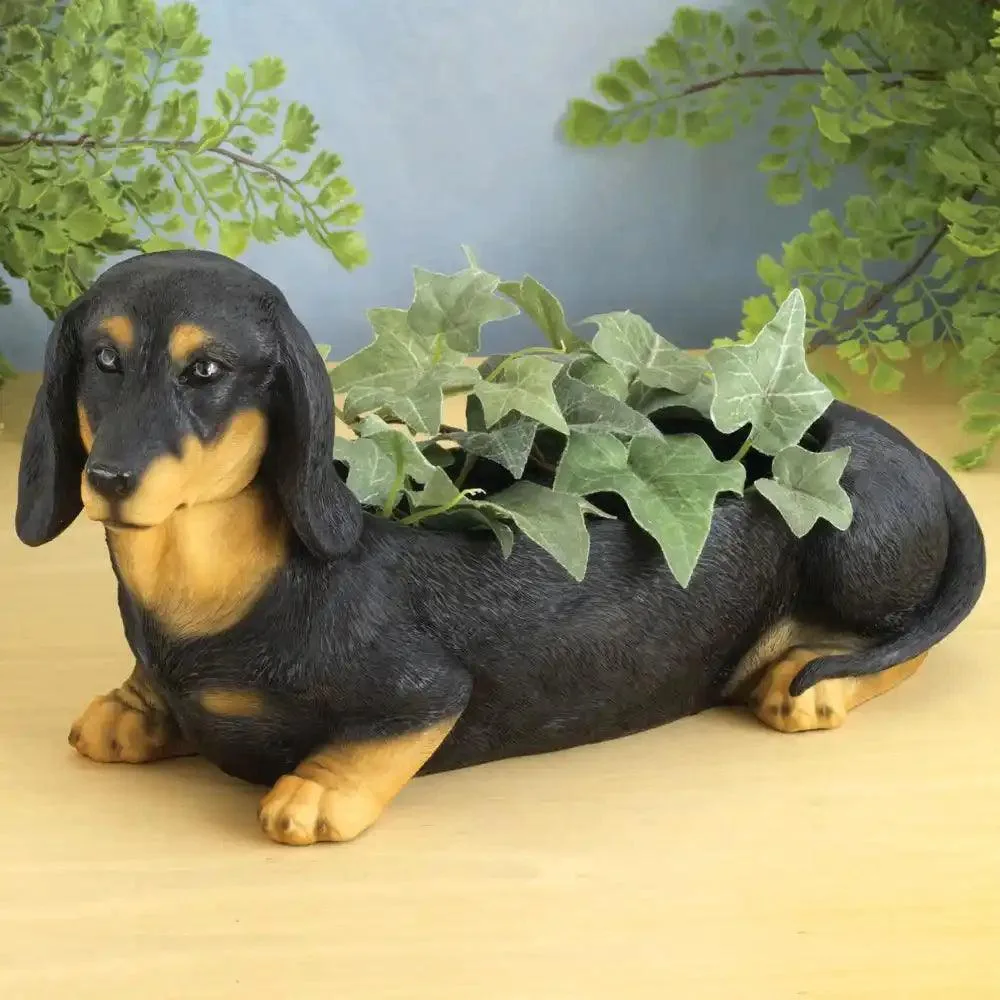
Dachshund Planter