Start with the outlet map, not the lamp
Before you move a single lamp, walk the room and note where outlets actually sit. The Darrich Lamp Set is a corded design: each lamp needs a nearby outlet and its 3-way switch is on the fixture. That means "without wires" in practice is about hiding or routing cords along walls and behind furniture, not about battery power. If a corner has no outlet within reach of the cord, treat it as a display spot rather than a primary light source.
This outlet-first check also tells you where the set will earn its keep. Two lamps give you more flexibility than one: you can light opposite ends of a sofa, a reading chair plus a console, or a dark hallway edge that a ceiling fixture misses.
What the Darrich Lamp Set gives you to work with
-
Darrich Lamp Set: Set includes metal bases with a distressed beige and white finish and modified drum hardback fabric shades. The neutral, slightly weathered finish blends into most living room palettes, so placement is driven by light needs rather than color matching.
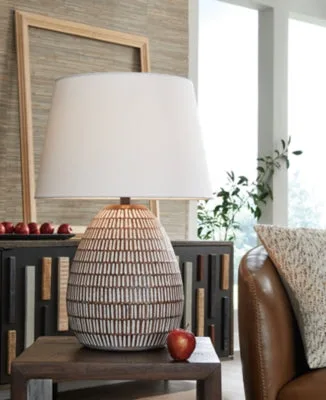
Darrich Lamp Set
-
Darrich Lamp Set: Each lamp has one E26 socket, takes a type A bulb (not included), and is rated for 150 watts max or LED equivalent; UL Listed. You choose the bulb, so you can tune brightness and warmth to the room instead of accepting whatever comes in the box.
-
Darrich Lamp Set: A 3-way switch lets you step through light levels. One lamp can serve as bright task light in the evening and dim ambient glow later, which is useful when a small room has few fixtures.
-
Darrich Lamp Set: Assembly is required, and the finishing process means some variation in the distressed finish may occur. Plan for assembly time before the lamps go into service, and expect the two bases to look similar rather than identical.
Place the pair for layered living room light
Work from the room's daily use outward. The goal is to put light where people sit, read, or gather, and to keep cords out of walkways.
- 1. Pick two anchor spots near outlets: Choose one spot beside the main seating (sofa end or reading chair) and one secondary spot such as a console, sideboard, or dark corner. Both need an outlet within cord reach. If only one outlet is practical, place both lamps on the same wall and treat the far side of the room as unlit.
- 2. Check surface height and stability: The supplied record does not list lamp dimensions, so measure your table or shelf before committing. A lamp should sit fully on the surface with the shade clear of eye level when you are seated. Avoid narrow or wobbly perches, especially in traffic paths.
- 3. Route cords along walls and behind furniture: Run cords behind the sofa, under a rug edge, or along baseboards rather than across open floor. This is the practical version of ambient lighting without outlets: the outlet still does the work, but the cord stays out of sight.
- 4. Choose bulbs for the mood you want: Because the bulb is not included, pick a type A bulb within the 150-watt max or LED equivalent. Use the 3-way switch to set a brighter level for tasks and a lower level for evening ambience. Keep both lamps on the same bulb type so the light reads as a pair.
- 5. Assemble and test before styling: Complete assembly first, then plug in and cycle the 3-way switch on each lamp. Once both work, adjust shade height and angle so light falls where you sit rather than into the room's center.
Cordless table lamp ideas that work alongside the Darrich pair
If part of the room truly has no outlet, the Darrich set cannot go there. Use these outlet-free options as supplements, not replacements, and keep the corded pair where they can do the heavy lifting.
- Battery-operated accent lamps: Small rechargeable or battery lamps can sit on a bookshelf or windowsill where no cord reaches. Treat them as accent light only; they will not match the output of a 150-watt-rated fixture.
- Puck lights or strip lights: Battery puck lights inside a cabinet or under a shelf add low-level glow without wiring. They suit display areas rather than reading light.
- Cordless candle-style lamps: These give a warm, dim pool of light on a side table. Use them for atmosphere in a corner the Darrich pair cannot reach, and accept that brightness is limited.
Corded pair vs cordless accents: what each can do
- Brightness and task light: Darrich Lamp Set: rated for 150 watts max or LED equivalent per socket, so it can light a reading chair. Cordless accents: typically low output, best for mood and display.
- Placement freedom: Darrich Lamp Set: needs an outlet within cord reach. Cordless accents: can go anywhere, including shelves and corners with no power.
- Switching and control: Darrich Lamp Set: 3-way switch on each lamp for stepped brightness. Cordless accents: usually simple on/off or a few preset levels.
- Upkeep: Darrich Lamp Set: bulb changes and cord dusting. Cordless accents: recharging or battery replacement. The supplied record does not include care instructions for the Darrich set, so follow the bulb and fixture guidance that comes with your purchase.
Small living room adjustments
In a small living room, two lamps can easily overwhelm the space if they are both set to full brightness. Use the 3-way switch to keep one lamp lower and one higher, which creates depth without adding furniture. Keep both shades at or below seated eye level so the light feels ambient rather than glaring.
If floor space is tight, put one lamp on a console behind the sofa and one on a side table, keeping both cords on the same wall. That arrangement gives you light at two heights and keeps the cord run short. The distressed beige and white finish is neutral enough to sit quietly against most wall colors, though the catalog notes that finish variation may occur, so inspect both bases on arrival.