Quick Answer
Use a dead center when you need extreme rigidity and precision for light cuts or when machining between centers; choose a live center for higher spindle speeds and heavier cuts to reduce heat and wear.
Precision vs. Convenience
Dead centers are machined from hardened steel and ground to a precise 60-degree included angle, ensuring a true pivot point. Because they are stationary, they offer maximum rigidity, which is essential for achieving tight tolerances and fine surface finishes.
Live centers, on the other hand, rotate with the workpiece, reducing friction and heat at the tailstock. This makes them ideal for higher-speed operations and heavier cuts, but the moving parts can introduce slight runout, which may affect precision.
Heat and Wear Considerations
A dead center does not rotate, so it generates significant friction against the workpiece. This heat can damage both the center and the workpiece, especially at higher speeds. You must use cutting fluid or lubricant and keep speeds moderate.
Live centers minimize friction, so they run cooler and last longer under demanding conditions. This makes them the safer choice for production work or when you need to maintain speed without constant monitoring.
Dead Center vs Live Center: Trade-Offs
- Rigidity: Dead centers are stationary and offer maximum rigidity, making them best for precision work with light cuts. Live centers have moving parts that can introduce slight runout. For tight tolerances, choose a dead center.
- Speed and Heat: Dead centers generate friction and heat, so they require lower speeds and lubrication. Live centers rotate with the workpiece, reducing friction and allowing higher speeds. For high-speed or heavy cuts, use a live center.
- Setup and Use: Dead centers are simple and inexpensive, but you may need to replace them if they wear. Live centers are more complex and costly but offer longer life and versatility. Weigh the cost against your typical workload.
Product Facts
-
Dead Center, 2MT Standard Length: This 2MT dead center is made from hardened steel and ground for accuracy, with a 60-degree included angle point. The hardened steel and precise angle ensure a stable pivot point for accurate turning between centers, ideal for bench lathe work.
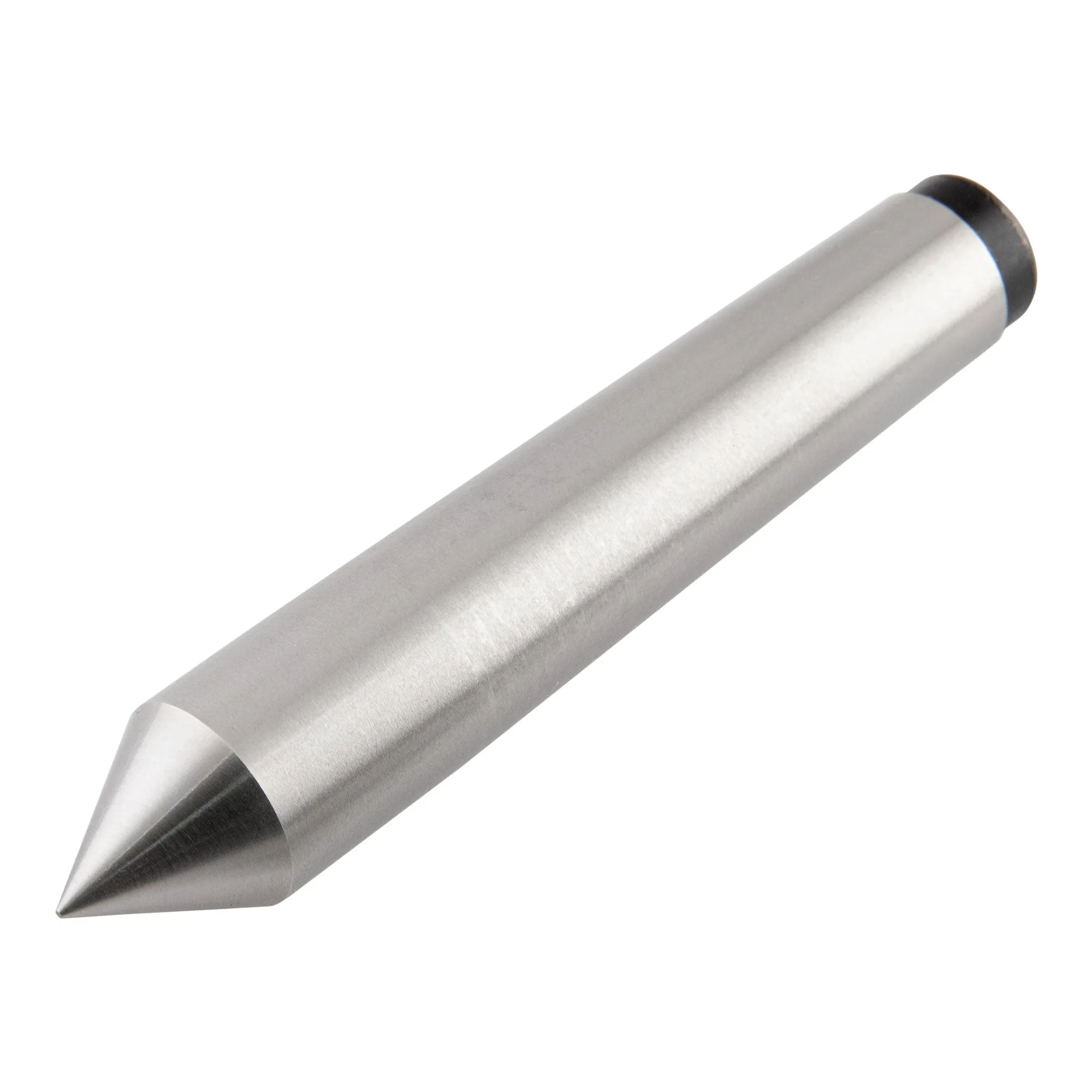
Dead Center, 2MT Standard Length
Which Should You Choose?
Best for
- Machinists who prioritize maximum rigidity and precision for light finishing cuts.
- Those working on smaller bench lathes where a standard 2MT dead center fits the tailstock.
Not for
- High-production or heavy-duty turning where friction and heat are a concern—consider a live center instead.