Two Clays, Different Strengths
Dead Sea mud and bentonite clay are both popular choices for homemade face masks, but they come from different sources and offer distinct benefits. Dead Sea mud is known for its rich mineral content and hydrating properties, while bentonite clay is prized for its deep-cleansing and oil-absorbing abilities. This comparison helps you decide which one fits your skin's needs, based on the product records available.
What the Dead Sea Mud Record Confirms
-
Dead Sea Mud Clay Powder: Pure Dead Sea Mud: Our mud powder is meticulously crafted from 100% pure Dead Sea mud, renowned for its exceptional mineral content. Free from additives and impurities, it delivers the full spectrum of minerals straight to your skin for maximum efficacy. This confirms the product is a single-ingredient, high-purity clay powder, which is ideal for those who want a natural mask without added fragrances or preservatives.
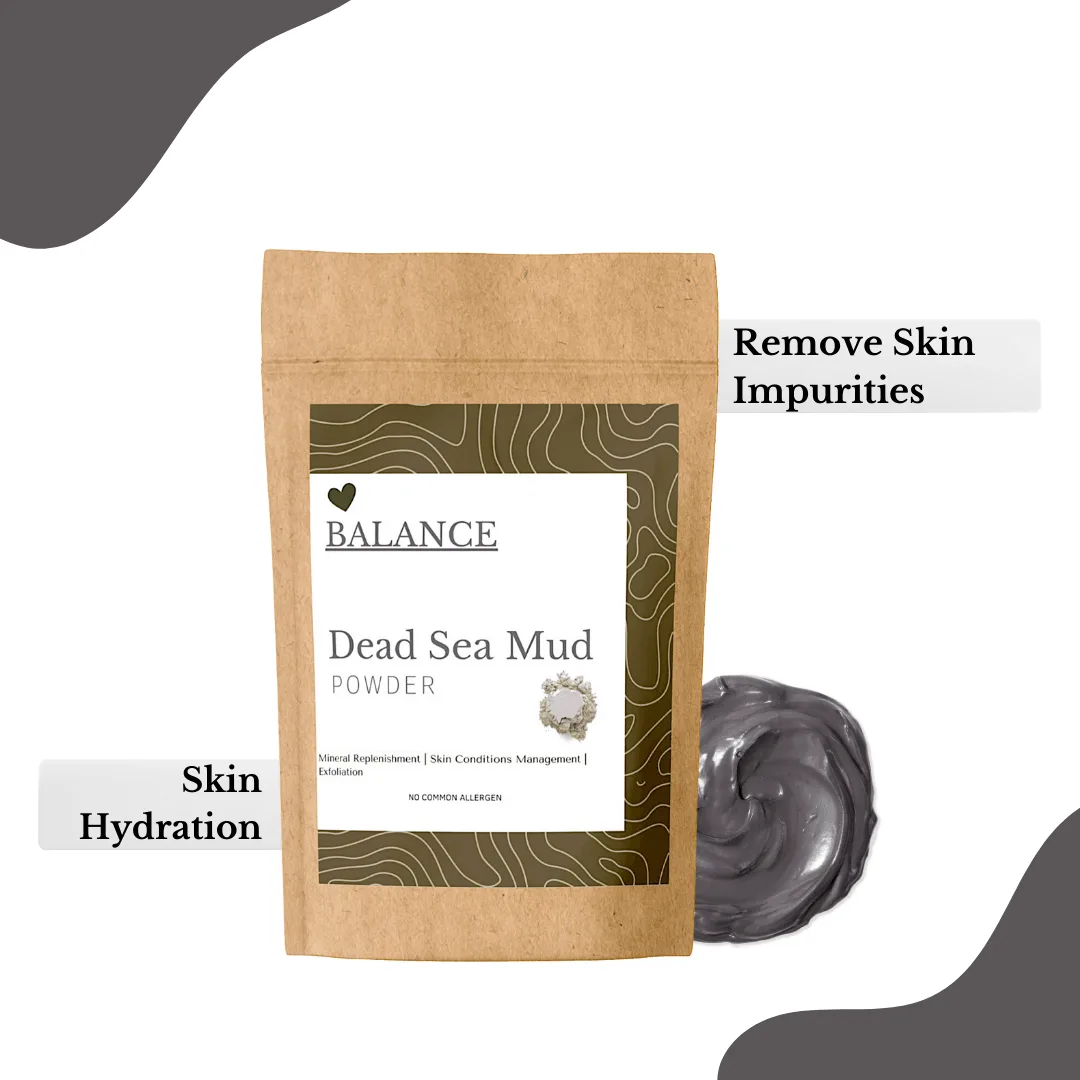
Dead Sea Mud Clay Powder
-
Dead Sea Mud Clay Powder: Hydration & Softness: Immerse your skin in deep hydration and softness. Dead Sea mud locks in moisture, leaving your skin feeling supple, smooth, and irresistibly touchable. This highlights a key difference from many clays: Dead Sea mud is described as hydrating rather than drying. It may suit normal to dry skin types better than a typical purifying clay.
-
Dead Sea Mud Clay Powder: Improves Skin Tone & Texture: Restore balance and harmony to your skin with regular use. Dead Sea mud helps to even out skin tone, minimize the appearance of pores, and refine texture. The record supports claims about improving skin tone and texture, making it a candidate for those seeking a more even complexion alongside hydration.
How Bentonite Clay Differs
Bentonite clay, typically derived from volcanic ash, is known for its strong negative charge, which helps draw out impurities and excess oil from the skin. It is often recommended for oily or acne-prone skin because of its deep-cleansing and tightening effect. While the product record for this specific bentonite clay is not provided here, general knowledge indicates it is less hydrating than Dead Sea mud and can be drying if used too frequently. For a fair comparison, we rely on the Dead Sea mud record and typical bentonite clay characteristics.
Choosing Based on Your Skin's Needs
If your primary concern is hydration, soothing, and improving skin texture without stripping moisture, Dead Sea Mud Clay Powder is the more suitable choice. Its record emphasizes moisture retention and a gentle, spa-like experience. On the other hand, if you struggle with excess oil, blackheads, or enlarged pores and prefer a more absorbent clay, bentonite clay is a classic option. The Dead Sea mud record does not mention strong oil-absorbing properties, so it may be less effective for very oily skin.
Quick Comparison at a Glance
- Dead Sea Mud Clay Powder: 100% pure Dead Sea mud, hydrating, improves skin tone and texture, minimizes pores, free from additives. Best for normal to dry skin or those seeking hydration and a spa experience.
- Bentonite Clay: Derived from volcanic ash, strong oil-absorbing and purifying properties. Best for oily or acne-prone skin. Can be drying; requires careful frequency of use.
What the Record Does Not Settle
The Dead Sea mud record does not include specific usage instructions such as how long to leave the mask on, how often to apply, or whether it can be mixed with other ingredients. For bentonite clay, similar details are absent from this comparison. When using either clay, start with a patch test and follow any general guidance provided on the packaging. Both clays are powders that need to be mixed with water or another liquid before application. Your personal skin sensitivity and reaction should guide the final choice.