What Makes This Winter Scene a Unique Puzzle Challenge
The Deer By The Covered Bridge jigsaw puzzle by Mary Thompson transports you to a snow-dusted countryside with a vivid red covered bridge, frolicking deer, and a host of woodland creatures. Birds flutter overhead while chipmunks and rabbits scamper among snowy pines. The scene is charming, but its mix of soft whites, earthy browns, and scattered greens can make sorting and assembly a distinct challenge.
This puzzle uses a random cut, meaning no two pieces are shaped alike. That adds a layer of difficulty because you cannot rely on standard grid patterns. The irregular piece shapes force you to focus on image details and color transitions rather than piece geometry.
Puzzle Specifications You Need to Know
-
Deer By The Covered Bridge Jigsaw Puzzle: Available in 300 Large Piece (18" x 24") and 500 Piece (18" x 24") options. The 300 Large Piece version is better for those who prefer bigger, easier-to-handle pieces or have limited table space. The 500 Piece version offers a more traditional challenge with smaller pieces.
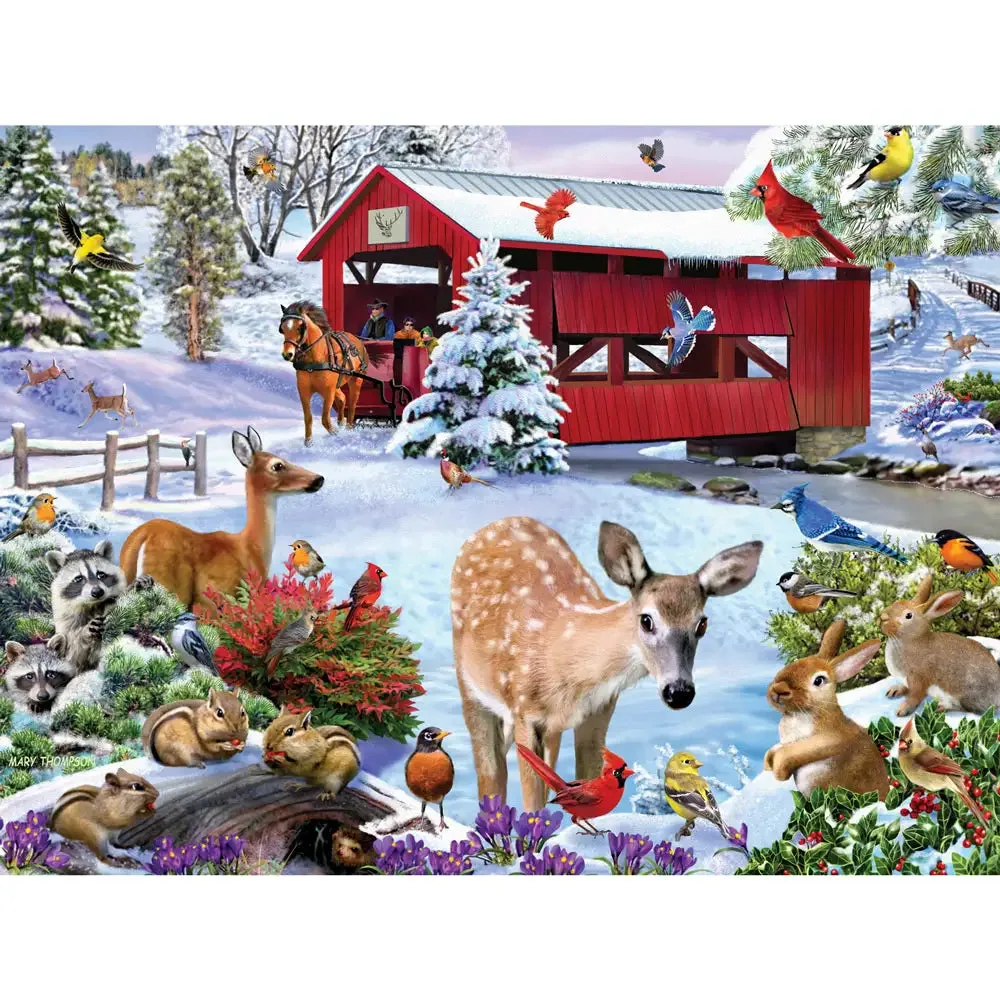
Deer By The Covered Bridge Jigsaw Puzzle
-
Deer By The Covered Bridge Jigsaw Puzzle: Random cut - No two pieces are alike. This cut style means you cannot sort by piece shape. Instead, you must rely on color, pattern, and the subject matter of each piece.
-
Deer By The Covered Bridge Jigsaw Puzzle: Made from recycled materials. The puzzle board is eco-friendly, which may be important for environmentally conscious buyers.
How to Approach the Scene: Sorting by Color Zones
Start by separating pieces into color groups. The red covered bridge is the most distinct element, so pull out all pieces with red or warm brick tones. Next, gather pieces with the bright white of snow and the soft blue-gray of the winter sky. The deer and other animals appear in browns and tans, while the pine trees and shrubs are dark greens and browns.
Once sorted, build the red bridge first. Its strong color and geometric lines make it a natural anchor. Then assemble the sky and snow sections separately. The deer and animals can be added last, using their unique shapes and subtle color shifts to find their place.
Tips for a Smoother Build
- Work on a flat, well-lit surface: Good lighting helps you see subtle color differences in the snow and sky areas.
- Use a puzzle mat or board: A mat lets you roll up the unfinished puzzle if you need to free up table space.
- Sort by piece shape as a secondary method: Even with random cuts, you can group pieces by general shape (tabs, blanks, or unusual profiles) once color sorting is done.
- Take breaks: The random cut can be mentally taxing. Stepping away helps you spot connections later.
Choosing the Right Piece Count for You
If you are new to puzzles or prefer a relaxing evening activity, the 300 Large Piece version offers bigger pieces that are easier to see and handle. The 500 Piece version provides a longer, more engaging challenge for experienced puzzlers. Both finish at the same 18" x 24" size, so the final image is identical in scale. The difference lies in the number and size of pieces you manipulate.
For a nature lover or someone who enjoys winter scenes, either version makes a satisfying project. The random cut adds a fun twist that keeps the build interesting without being frustrating.