Quick answer
Most problems in a Deroma Standard Pot trace back to three fixable mistakes: a blocked drainage hole, dense potting soil, or watering on a schedule instead of by feel. Check drainage first, then soil, then watering—and repot only if roots or clay are already failing.
Why terracotta changes the watering rules
Unglazed terracotta is porous, so water moves through the walls as well as the drainage hole. In a Deroma Standard Pot, that means the clay pulls moisture away from the root ball faster than a glazed or plastic pot would. Plants in small terracotta pots can dry out within a day in wind or full sun, while large pots hold moisture longer than you might expect.
The practical mistake is treating terracotta like plastic. Watering on a fixed weekly schedule often leaves plants either bone-dry or sitting wet after a rainy stretch. Instead, lift the pot or push a finger into the top inch of soil before watering. If the soil is still cool and damp, wait.
When the pot is not the problem
Some symptoms look like pot mistakes but are really plant or placement issues. Yellow leaves after a cold night, scorched leaves on a heat wave, or wilting that reverses in the evening are usually environmental, not drainage failures. Before you repot, move the plant to a more suitable spot and watch for three days.
Also check the saucer or base. A pot that drains freely can still sit in a puddle if the saucer is too shallow or clogged with grit. Empty standing water after heavy rain, and raise the pot on small feet if the surface stays wet.
Diagnosis: symptom, cause, fix, and stop point
- Water pools on the surface and drains slowly: Likely cause: the drainage hole is blocked by a shard, root, or compacted soil. Corrective action: tip the pot, clear the hole with a bamboo stake, and flush with water. If the hole is clear but water still sits, the soil is too dense—repot with a coarse, free-draining mix. If water still pools after clearing and repotting, stop using that soil batch.
- Soil pulls away from the pot wall and water runs down the gap: Likely cause: the root ball has dried out and shrunk, often from underwatering in porous terracotta. Corrective action: soak the pot in a basin of water for 20 minutes, then water normally. Repeat only if the gap returns. If the gap returns within two days, check whether the plant is root-bound and needs a larger pot.
- White crust on the clay and stunted growth: Likely cause: fertilizer salts or hard-water minerals accumulating on the porous surface. Corrective action: scrub the rim with a stiff brush and plain water, then flush the soil thoroughly. Avoid harsh cleaners that can soak into the clay. If crust returns within a month, switch to rainwater or reduce fertilizer strength.
- Leaves wilt every afternoon even though the soil is damp: Likely cause: heat stress or root damage, not a drainage problem. Corrective action: move the pot to afternoon shade and check roots for rot before watering again. Do not add more water to already damp soil. If wilting continues after three days in shade, unpot and inspect the roots.
Product facts
-
Deroma Standard Pot: The Deroma Standard Pot has a plain tapered body with a rolled collar and no other surface interruption. A smooth, uninterrupted wall makes it easier to see salt buildup and moisture lines, so you can spot drainage or watering problems early.
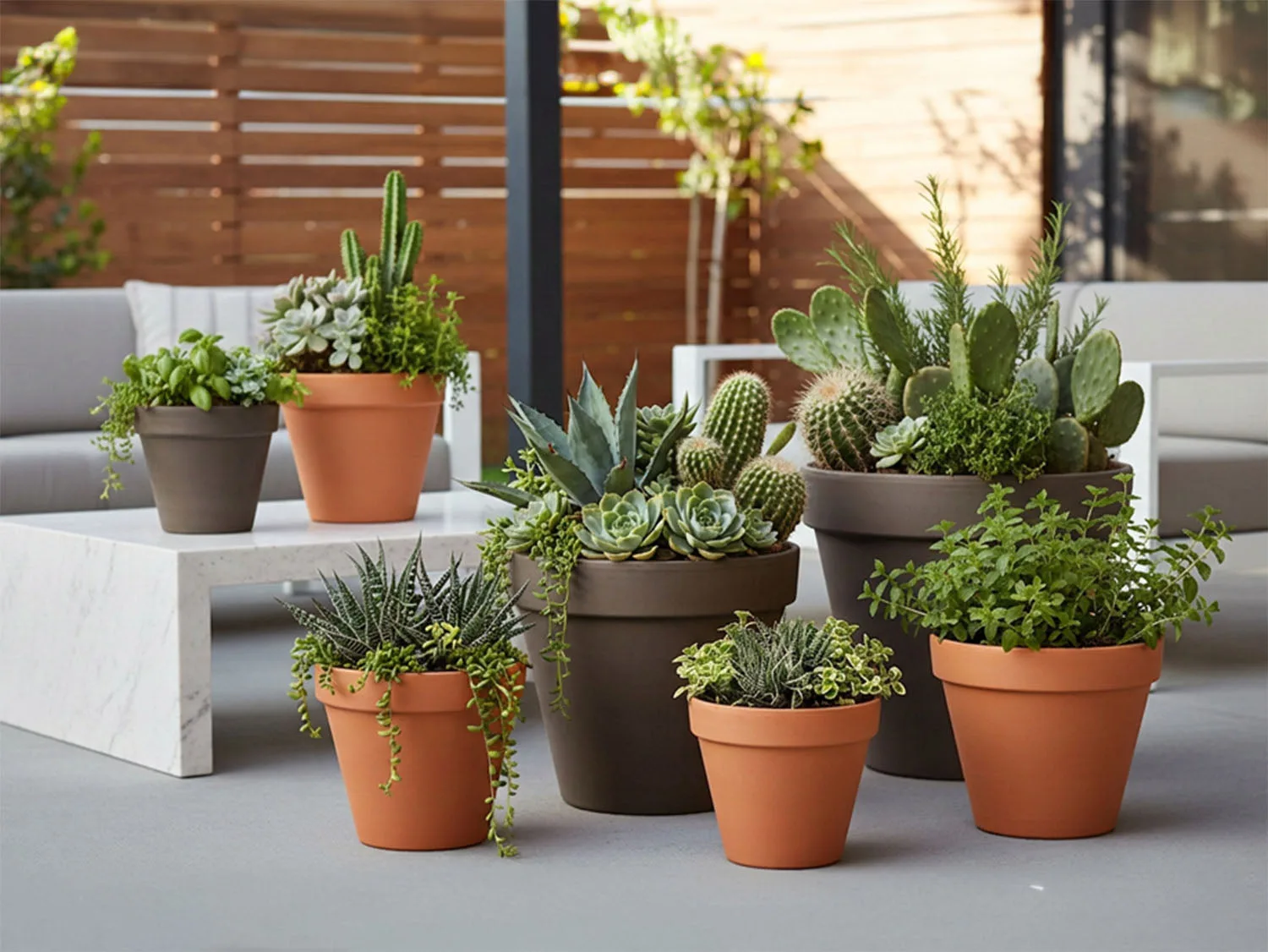
Deroma Standard Pot