Quick Answer
Choose a detangling brush when you want fast, all-over smoothing on straight, wavy or fine hair, wet or dry. Choose a wide tooth comb when you are working through 3C-4C curls and coils and want the least pulling. Many people with textured hair use both: comb first to open the hair up, brush only where the pattern allows.
How Each Tool Actually Moves Through Hair
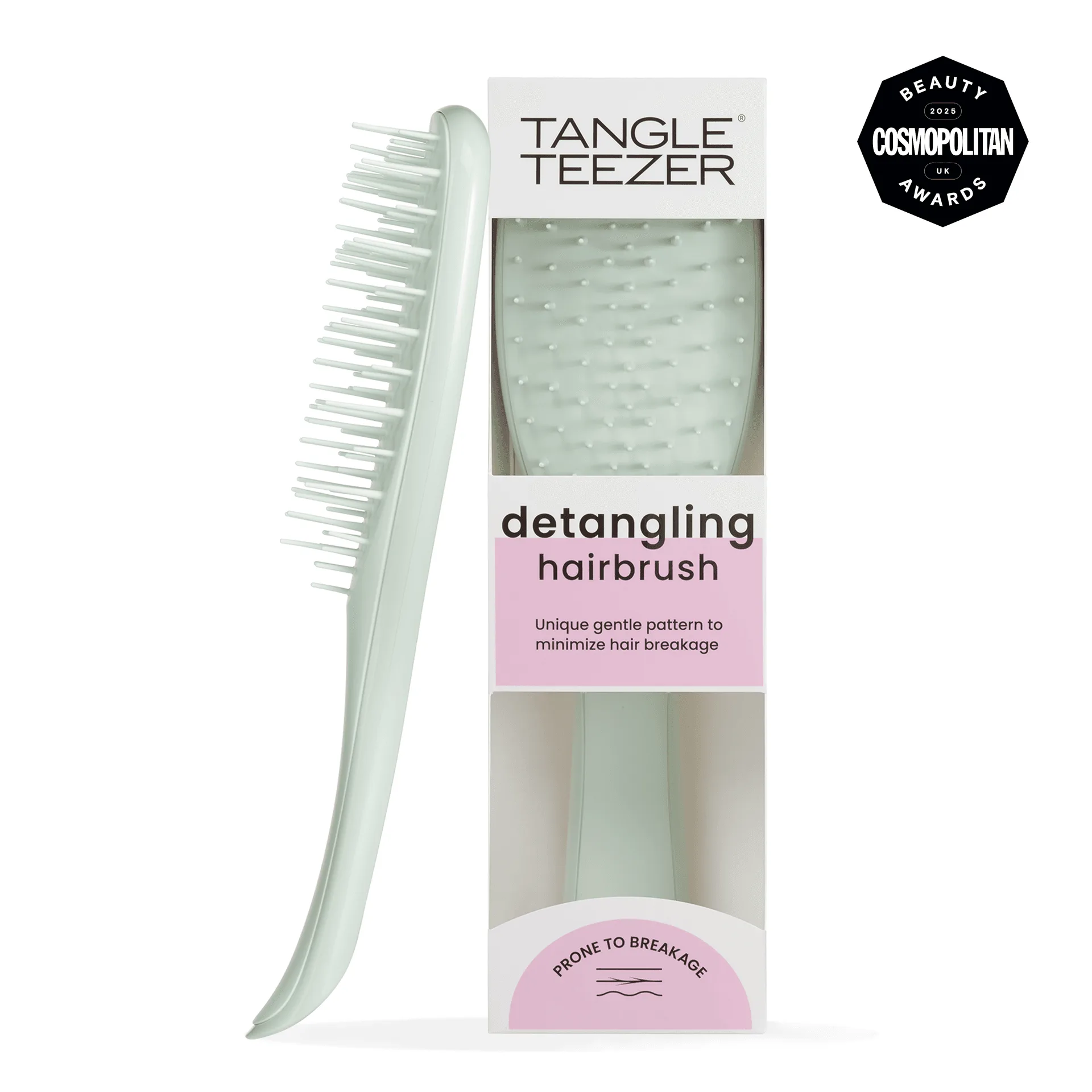
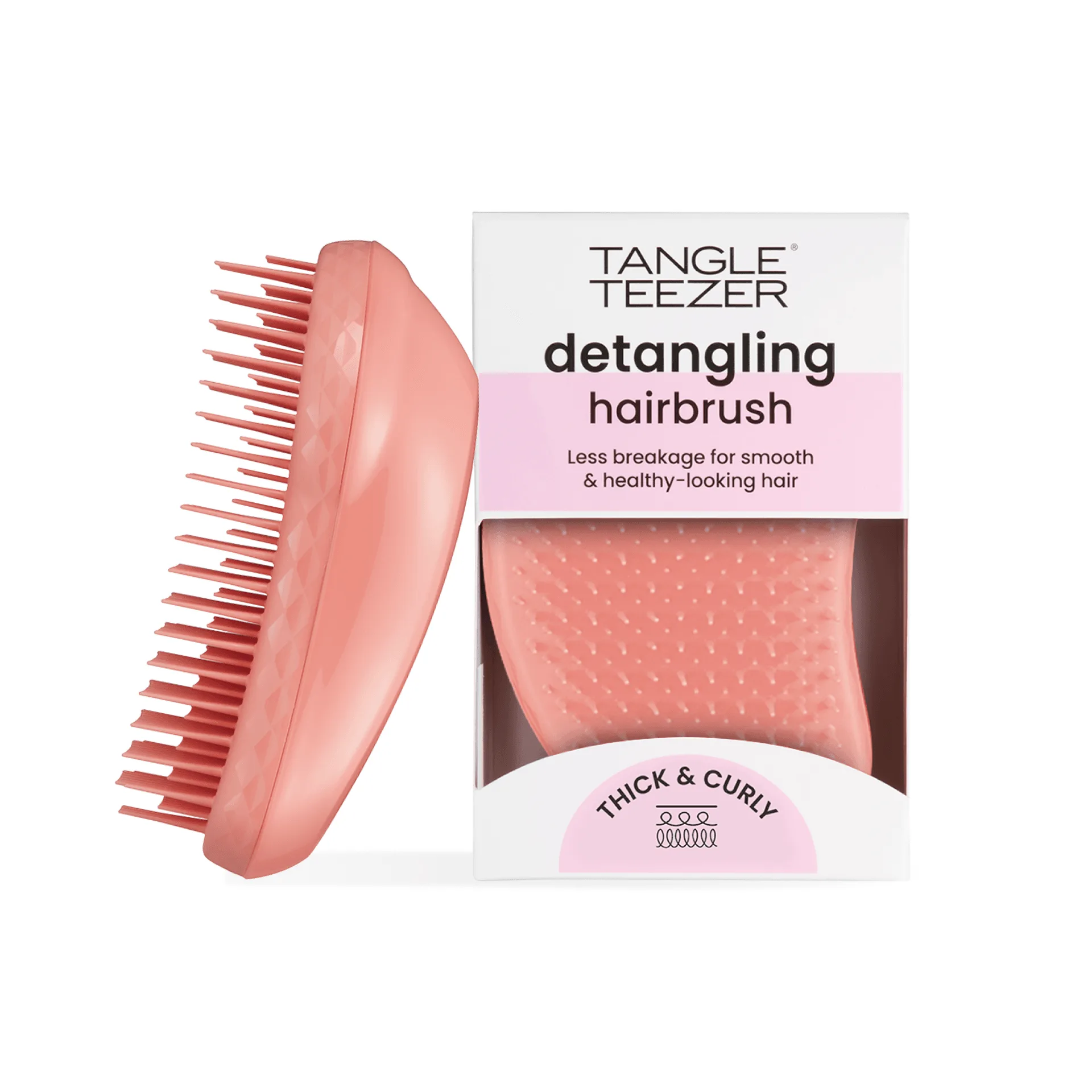
A detangling brush spreads tension across many flexible teeth at once, so a large knot releases in one pass instead of being picked apart strand by strand. That is why it feels quicker on straight, wavy and fine hair. The trade-off is that a brush covers more surface area per stroke, so if your curl pattern clumps tightly, a brush can disturb the clumps you want to keep.
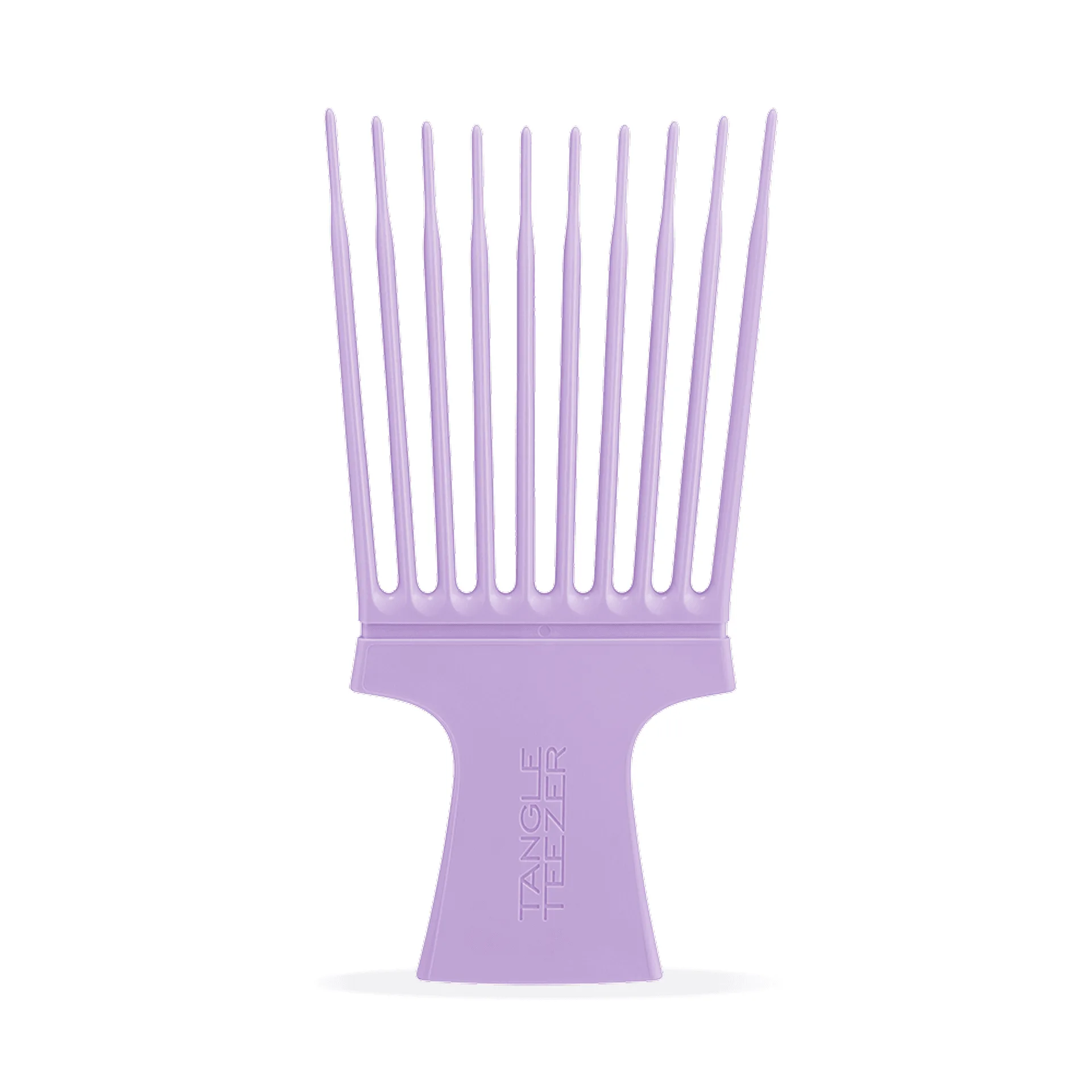
A wide tooth comb works the opposite way. Fewer, longer teeth mean each section is separated with less surface contact, which suits 3C-4C hair where preserving clumps matters as much as removing knots. It is slower, and on very fine or straight hair a comb can slide past small tangles a brush would catch.
Wet, Dry or Somewhere in Between
Wet hair stretches and is more fragile, so the tool you reach for matters more in the shower than at your dressing table. A detangling brush designed for wet or dry strands lets you work on conditioner-coated hair without switching tools. If you only detangle on dry hair, a comb is often enough and gives you more control over small sections.
For coily hair, start on damp, conditioned hair with a comb, then decide whether a brush belongs in your routine at all. Some people with looser 3C waves brush after combing; tighter 4C coils usually stay with the comb.
Where the Teeth Are Made Matters Too
The Wide Tooth Comb is dual-sided: long, sturdy teeth with soft, rounded tips glide through hair with less pulling, while a flexible two-tiered set of teeth reaches deeper to help remove shed hair and product build-up. That two-tier design is the reason it can handle both a quick surface pass and a more thorough detangle in one tool.
Brushes use a similar two-tier idea in a different shape. On the Detangling Dog Grooming Brush, long teeth reach down to the undercoat while shorter teeth smooth the top layer and protect against matting, and it can be used on wet or dry hair. It is a useful reminder that 'brush' covers a wide range of tooth layouts, so read the design rather than the label.
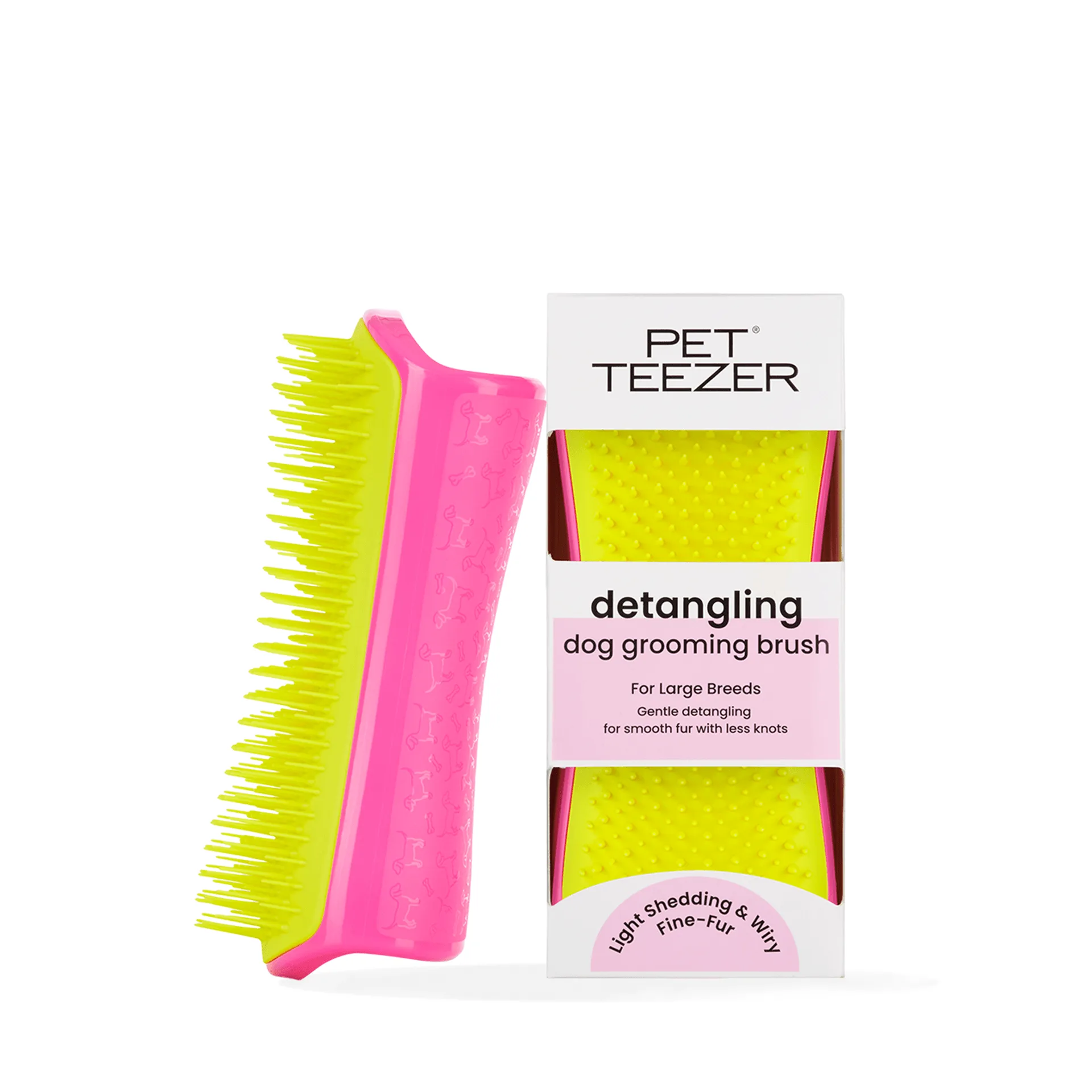
Detangling Dog Grooming Brush
A Simple Order of Operations
If you are unsure which to use, work from gentlest to most thorough. Finger-detangle large knots first, then comb section by section, then brush only the areas that still feel rough. Stop as soon as the tool starts tugging; that is your signal to take a smaller section, not to push harder.
Keep the comb for the shower and the brush for styling and finishing if you have straight or wavy hair. If you have 3C-4C hair, keep the comb as your primary detangler and treat any brush as an optional finishing step.
Trade-Offs at a Glance
- Speed vs curl preservation: A detangling brush clears a whole section in fewer passes, which is faster on straight and wavy hair. A wide tooth comb is slower but keeps 3C-4C clumps intact. Pick speed for straight and wavy hair, clump preservation for coils.
- Wet-hair safety vs dry-hair control: Wet or dry brushes let you detangle in the shower without swapping tools. A comb gives you finer control on dry hair, especially on small sections. Shower detanglers should choose a wet-or-dry brush; dry-hair detanglers can stay with a comb.
- Two-tier teeth vs single-row teeth: Two-tier designs like the Wide Tooth Comb and the Detangling Dog Grooming Brush separate surface smoothing from deeper work in one pass. Single-row tools ask you to do those jobs in sequence. Two-tier tools save time; single-row tools give you more deliberate control.
Tools That Match Each Job
- Wide Tooth Comb: Developed with the curly-haired community, the Wide Tooth Comb is a dual-sided comb designed to detangle 3C-4C hair, with long, sturdy teeth with soft, rounded tips and flexible two-tiered teeth for a deeper detangle. If your main struggle is coily hair that breaks during detangling, this is the tool built for that job rather than a brush adapted to it.
- The Devil Wears Prada and Tangle Teezer The Ultimate Detangler™: The Ultimate Detangler in The Devil Wears Prada limited-edition red metallic finish is designed for use on wet or dry strands for quick, drama-free detangling. A good pick if you want one brush that works in the shower and on dry hair, and you like a limited-edition finish rather than a plain handle.
- The Ultimate Detangler Plant Brush™: The Ultimate Detangler Plant Brush uses the same Ultimate detangling design but is made from 85% sustainably sourced castor beans. Choose this over the standard Ultimate Detangler if material sourcing matters to you and you still want the same detangling performance.
Which Should You Buy?
Best for
- Straight, wavy or fine hair that tangles quickly and needs fast wet-or-dry detangling
- Anyone who wants one brush for both the shower and dry styling
- Shoppers who want a limited-edition finish rather than a standard handle
Not for
- Tight 3C-4C coils where preserving curl clumps matters more than speed
- Anyone who prefers to detangle dry hair in small, controlled sections
- People who want a single tool for both detangling and finishing styled hair