Why the Detangling Tool Matters
Wet hair is at its most vulnerable state and tends to tangle. The tool you choose to work through those tangles can either protect your strands or cause unnecessary breakage. This comparison looks at a detangling comb versus a brush, focusing on gentleness and practical use.
The Case for a Detangling Comb
A detangling comb, especially one with extra-wide teeth like the Philip B. Detangling Comb, is designed to separate strands without pulling or snapping. The wide spacing allows hair to glide through with less resistance, which is particularly important when hair is wet and elastic. The hand-polished finish on a quality comb further reduces friction, making it a strong choice for gentle detangling.
Detangling Comb at a Glance
-
Detangling Comb: Combing is an important aspect of a proper hair care regime. Our extra-wide-tooth Detangling Comb enables you to gently detangle during and after your hair care regime. This confirms the comb is intended for use both during washing (on wet hair) and after, when hair is most fragile.
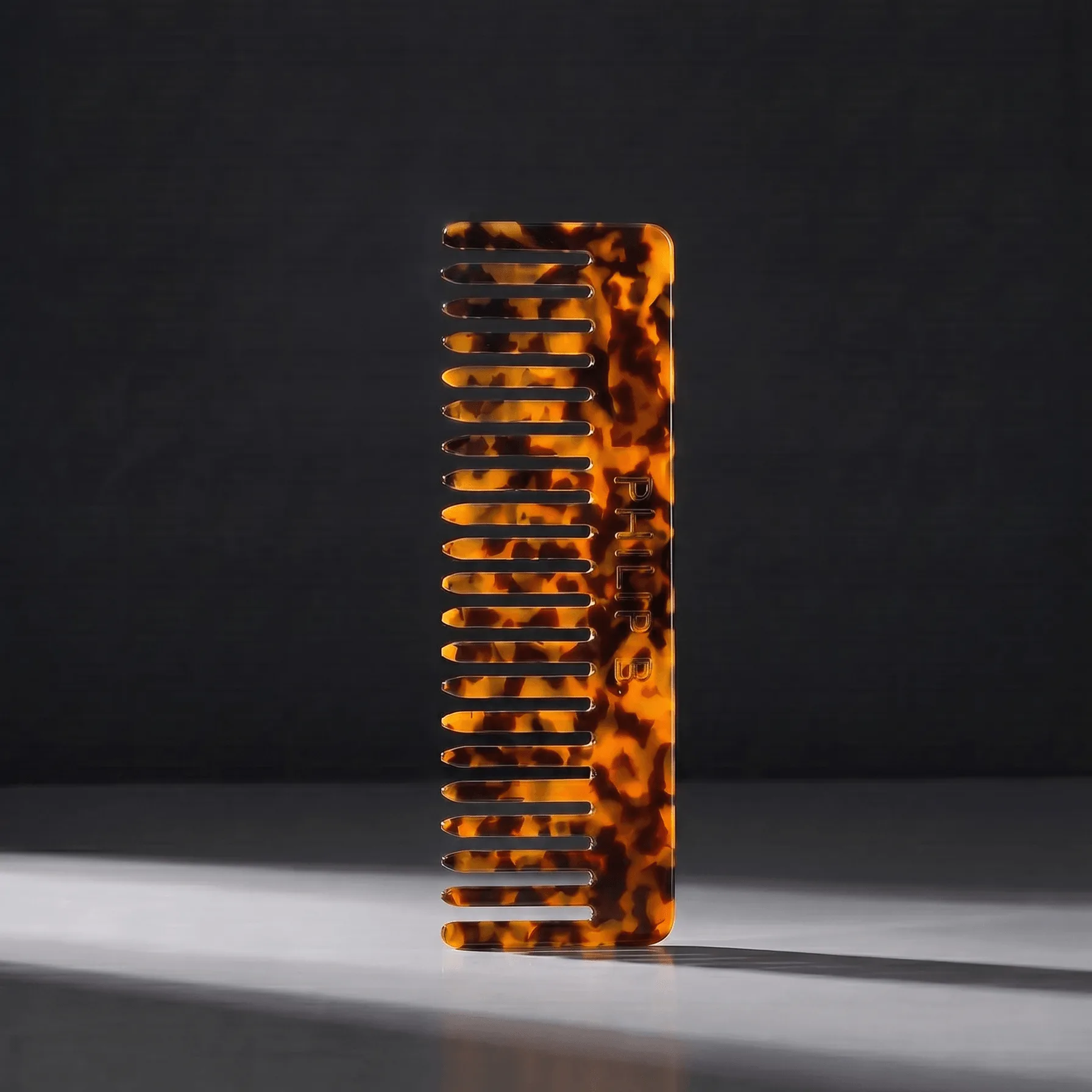
Detangling Comb
Detangling Comb vs Brush: Key Differences
- Best time to use: A detangling comb is ideal on wet, conditioned hair. A brush is typically used on dry hair to smooth and style.
- Tooth / bristle spacing: A wide-tooth comb has larger gaps, reducing tugging. Brushes often have densely packed bristles that can snag knots.
- Risk of breakage: Combs with smooth, wide teeth and polished edges minimize stress on the hair shaft. Brushes can cause more friction, especially on wet hair.
- Best for hair types: A detangling comb works well for fine, fragile, or curly hair that tangles easily. Brushes may suit thicker, straighter hair for daily styling.
When a Brush Might Still Work
Brushes are not inherently bad, but they are better suited to dry detangling or smoothing already detangled hair. If you prefer a brush, use it on dry hair and start from the ends, working upward. However, for the most vulnerable stage — wet, tangled hair — a wide-tooth detangling comb is the gentler option.
Choosing the Right Tool for Your Routine
If your priority is minimizing breakage and handling tangles gently, especially after washing, a detangling comb is a practical investment. The Philip B. Detangling Comb is designed specifically for this purpose, with extra-wide teeth and a hand-polished finish. For those with fine or fragile hair, this tool can make a noticeable difference in how much hair stays on the comb versus on the floor.