Quick answer
For a small load (about 3–5 pounds or a quarter to a third of a full drum), use one-half to one full detergent sheet. For hand washing, use a quarter to a half sheet in 1–2 gallons of water. Always check your sheet's packaging for the manufacturer's recommended dosage, and adjust up only if clothes come out dingy or smelly.
Match the sheet to your load size, not the machine
Detergent sheet dosage is based on the weight of the laundry and the soil level, not the size of the washing machine drum. A small load in a large machine still needs a small dose. Weigh your dry laundry if you want a reliable reference: a typical small load is 3–5 pounds (about 6–10 t-shirts). Medium loads run 6–10 pounds, and large loads 11–15 pounds. If you don't have a scale, estimate by how full the drum is: a small load fills roughly one-quarter to one-third of the drum.
Soil level matters too. Lightly worn clothes may need only a half sheet in a small load, while sweaty gym clothes or kitchen towels may need a full sheet even in a small load. When in doubt, start with the lower amount and increase only if you see residue, lingering odor, or dull fabrics after drying.
- Small load (3–5 lb): ½–1 sheet
- Medium load (6–10 lb): 1–2 sheets
- Large load (11–15 lb): 2–3 sheets
- Heavily soiled small load: 1 full sheet
How to place the sheet so it actually dissolves
Put the sheet in the empty drum before adding clothes. This gives it direct contact with water and prevents it from getting trapped inside a folded shirt or a pillowcase, where it can leave a sticky residue. If your machine has a detergent dispenser drawer, check the sheet manufacturer's instructions first—most sheets are designed for the drum, not the drawer, and a drawer may not provide enough water flow to dissolve the sheet completely.
For front-loaders, tear the sheet into smaller pieces if you are using a half sheet. Tearing also helps in high-efficiency machines that use less water. Never place a sheet on top of dry clothes and walk away; it needs to be in the drum before the clothes go in.
Hand washing with detergent sheets
Tear off a quarter to a half sheet and drop it into 1–2 gallons of warm water. Agitate the water with your hand until the sheet dissolves—this usually takes 30–60 seconds. Submerge the clothes, gently knead them for 2–3 minutes, then let them soak for 10–15 minutes if they are noticeably soiled. Rinse with clean water until no suds remain. If you see foam after two rinses, use less sheet next time.
For delicate items like silk or wool, use cool water and no more than a quarter sheet. Hot water can set stains and damage fibers, and too much detergent can leave a stiff finish.
Apartment laundry: shared machines and small loads
Shared apartment machines often have a smaller drum than a standard home washer, so a half sheet may be enough for a typical load. If the machine is a high-efficiency (HE) top-loader or front-loader, use the lower end of the dosage range because HE machines use less water. If you are washing in a communal sink or a portable countertop washer, treat it as a hand-washing situation and use a quarter sheet.
One advantage of sheets in apartment laundry: no bulky jug to carry. Pre-tear sheets at home into halves or quarters and store them in a small tin. That way you are not fumbling with a full sheet in a shared laundry room, and you avoid overdosing when you are in a hurry.
Step-by-step: how to dose detergent sheets for a small load
- Weigh or estimate your load: A small load is 3–5 pounds or about one-quarter to one-third of the drum. If you skip this, you may use a full sheet for a tiny load and leave residue. Checkpoint: if you can easily lift the pile with one arm, it is small.
- Tear the sheet to size: Use half a sheet for a lightly soiled small load, a full sheet for sweaty or stained items. Tear along the perforation if your sheets have one. Common mistake: using a whole sheet 'just in case'—more detergent does not mean cleaner clothes.
- Place the sheet in the empty drum first: Add the sheet before the clothes so water can dissolve it immediately. Do not put it in the detergent drawer unless the package says it is safe. Checkpoint: after the wash, look for any undissolved sheet pieces stuck to clothes.
- Choose the right water temperature: Warm or hot water dissolves sheets fastest. Cold water works too, but tear the sheet into smaller pieces and consider adding it to a small cup of warm water first to pre-dissolve. If you see residue after a cold wash, switch to warm or pre-dissolve.
- Run the cycle and check the results: After the cycle, smell a wet item. If it smells clean, your dose was right. If it smells sour or feels stiff, increase to a full sheet next time. Adjust by half-sheet increments, not full sheets.
Product facts
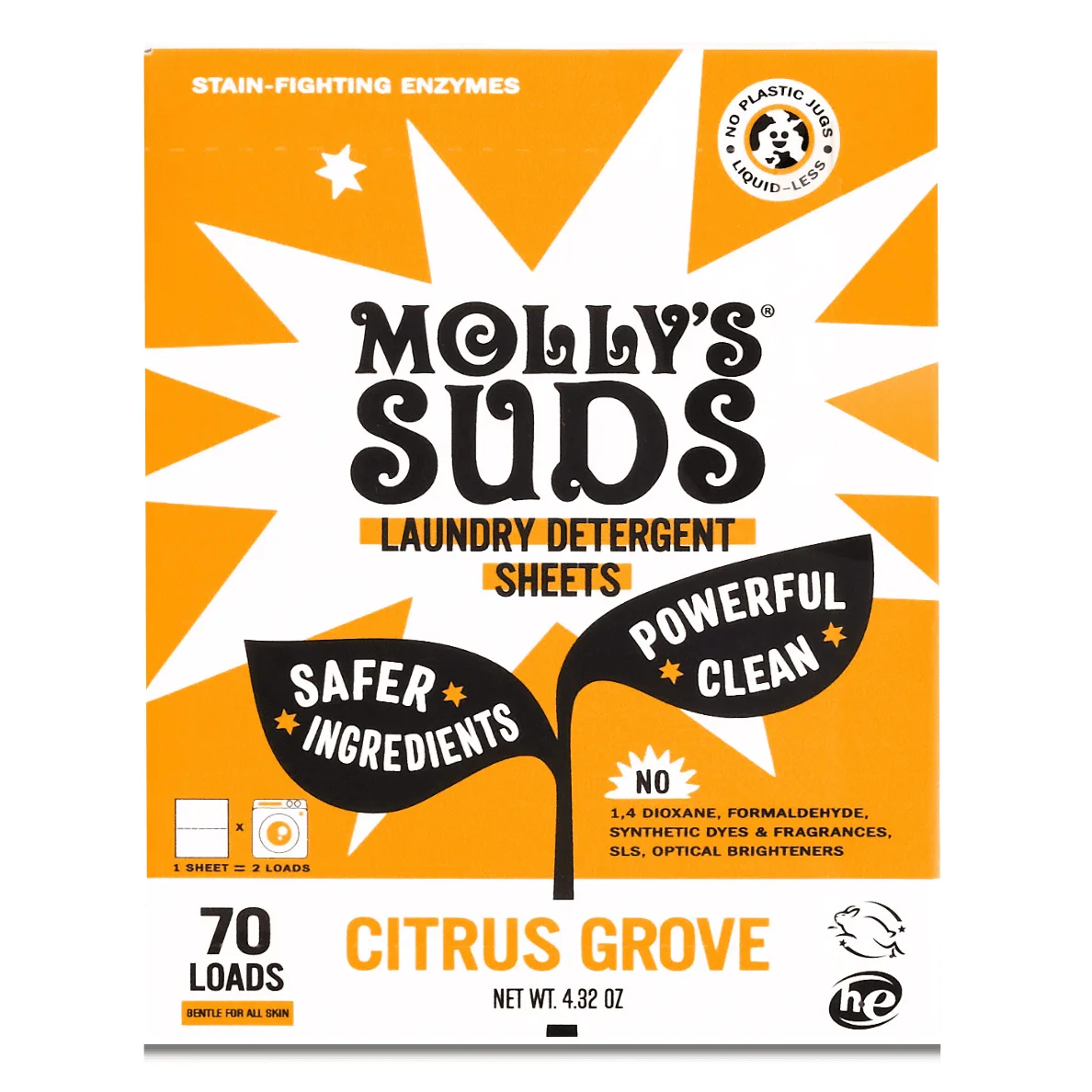
- Laundry Detergent Sheets: Molly's Suds Laundry Detergent Sheets are liquid-less, low-waste, and come in scent and size options. Because they are pre-measured, you can tear them to match a small load without guessing with liquid or powder.
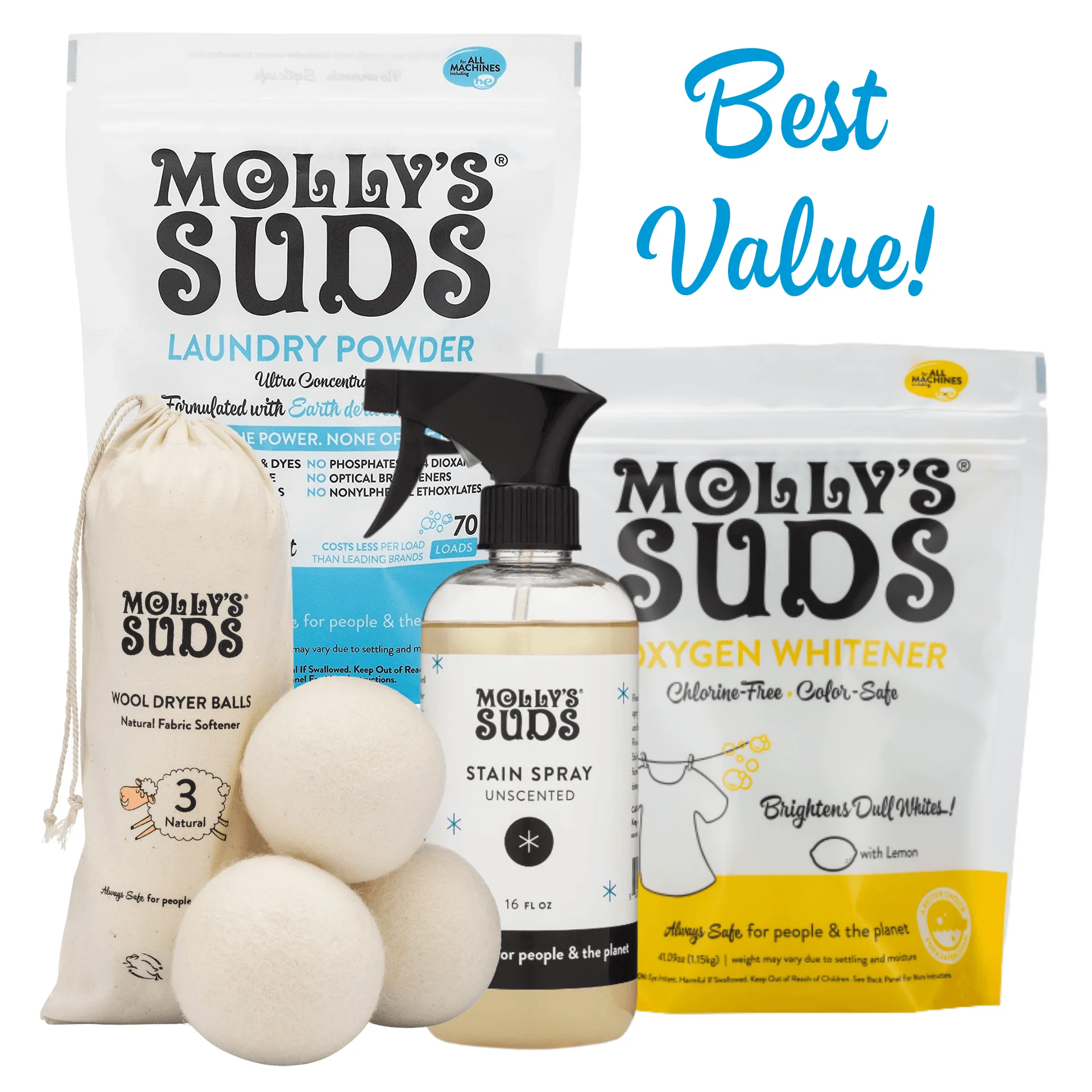
- Clean Laundry Starter Kit: The Clean Laundry Starter Kit bundles Original Laundry Powder (70 loads), Stain Remover Spray, Oxygen Whitener, and a Wool Dryer Ball Set. If you prefer powder for small loads, the kit gives you a full system, but you will need to measure powder by weight or volume rather than tearing a sheet.