Start with the caddy's role, not the contents
A diaper caddy works best when it has one job: keeping the changing situation orderly and portable. The Diaper Caddy OCS Lierre is designed for diapers and other essentials for changing, to create order on the changing table and to move easily around the house or when going out. Before you fill it, decide whether it will live mainly on the changing table or travel between rooms. That choice shapes what you put inside.
The catalog describes the caddy as practical for diapers and other essentials, easy to move around the house, and available in brown and white shades. It does not list internal dividers, exact dimensions, or a maximum load, so treat the setup below as a sensible starting point rather than a manufacturer specification.
What the catalog confirms about the OCS Lierre
-
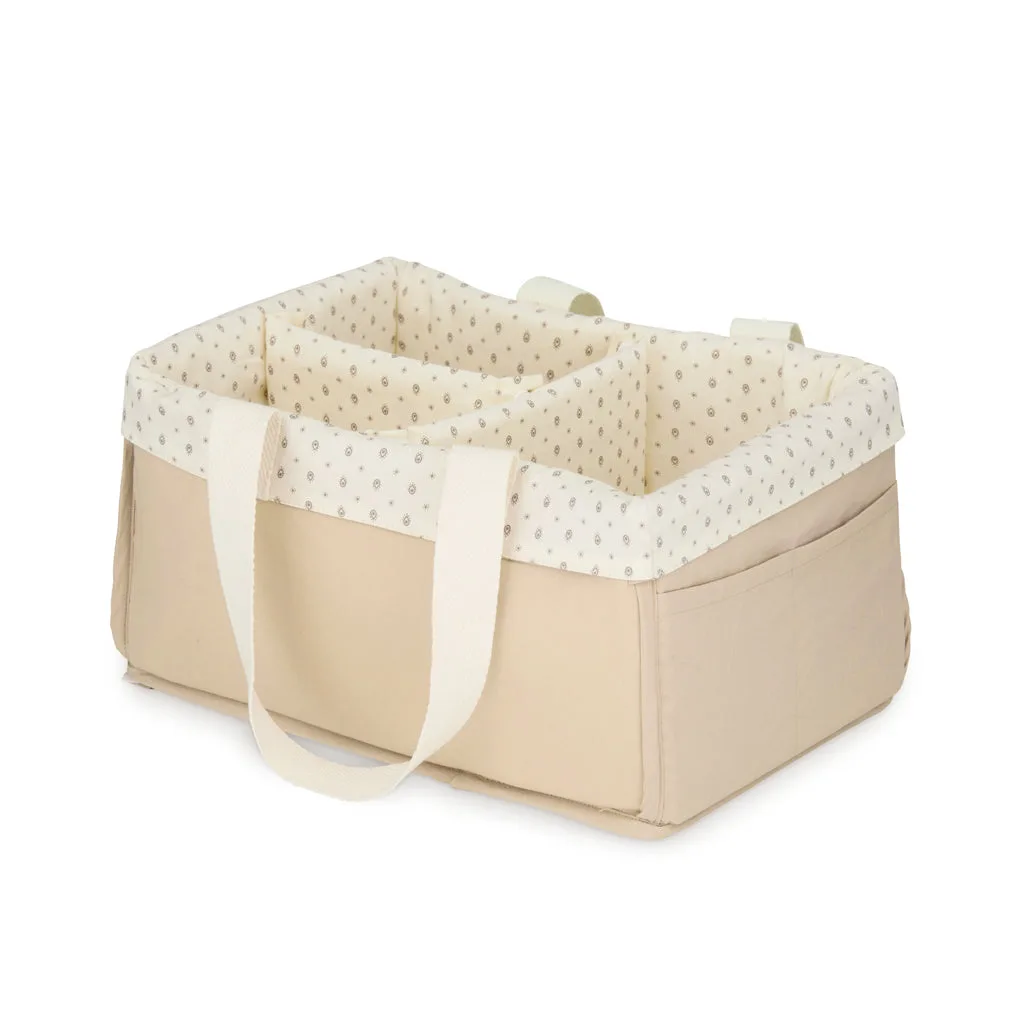
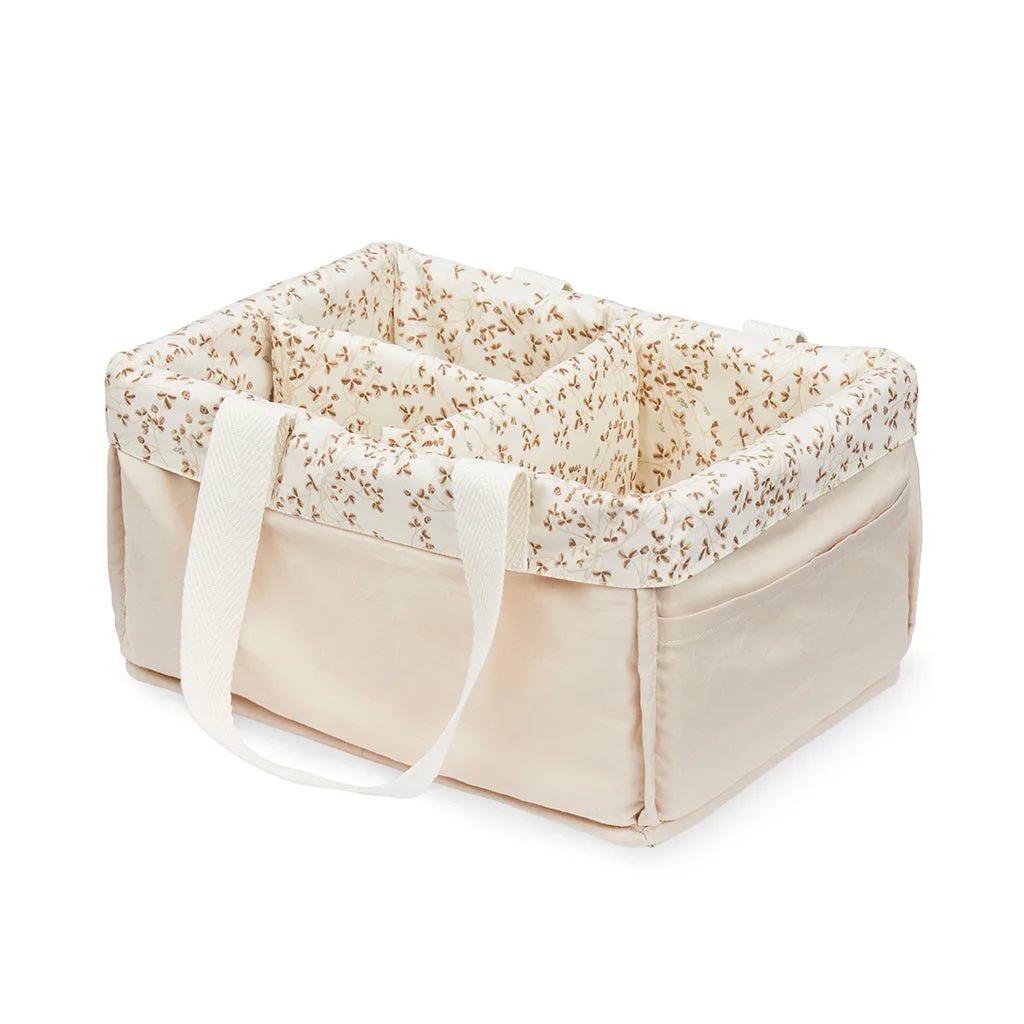
Diaper Caddy - OCS - Lierre: Practical Diaper Caddy for diapers and other essentials for the changing situation. This confirms the caddy's intended use, so you can plan around diapering essentials rather than general nursery storage.
Diaper Caddy - OCS - Lierre
-
Diaper Caddy - OCS - Lierre: Perfect to create order on the changing table and super easy to move around the house and bring along when going out or to the summer house. This supports both a stationary changing-table setup and a portable kit, depending on how you pack it.
-
Diaper Caddy - OCS - Lierre: Available in a selection of bestselling Cam Cam prints. Diaper Caddy in brown and white shades. The print and brown-and-white colorway are style choices; they do not change what the caddy can hold.
A simple setup for the changing table
Use this sequence to build a caddy that supports a calm change rather than a scavenger hunt. Adjust quantities to your baby's needs and the caddy's actual capacity once you have it in hand.
- 1. Clear the changing surface: Set the caddy on a stable, flat spot within reach of the changing area. The catalog does not specify a mounting method or safety attachment, so keep it on the surface rather than hanging it.
- 2. Group by task: Keep diapers together, then a small pouch for wipes or cloths, then a separate area for a change of clothes or a burp cloth. Grouping by task makes one-handed reaching easier.
- 3. Pack only what the change needs: The caddy is intended for diapers and other changing essentials. Resist adding toys, feeding items, or heavy bottles that turn it into a general tote.
- 4. Leave room to grab: Avoid packing the caddy so full that you cannot lift items out quickly. The catalog does not state a capacity, so let easy access be your guide.
- 5. Do a trial change: Before relying on the setup, run through a change and notice what you reach for first. Move the most-used items to the most accessible spot.
What to put in a diaper caddy
The catalog names diapers and other changing essentials but does not provide a packing list. The items below are common changing-table needs; choose only what suits your routine and fits the caddy.
- Diapers: The caddy's stated purpose. Keep a small stack rather than the whole pack so the caddy stays light and easy to move.
- Wipes or cloths: Keep them in a separate small pouch or container so they do not dampen other items.
- A change of clothes: One spare bodysuit or pair of trousers is usually enough for a changing-table caddy; bulky outfits are better stored elsewhere.
- Burp cloth or muslin: Useful for spills and quick cleanups during a change.
- Small waste bags: A few folded bags take little space and help manage soiled items when you are away from a bin.
Make it portable without overpacking
The OCS Lierre caddy is described as easy to move around the house and to bring along when going out or to the summer house. That portability is a packing constraint: the more you add, the less easy it is to carry. For travel, strip the caddy back to diapers, wipes, one change of clothes, and a small waste bag. Keep a second, fuller setup at home if you use the caddy mainly on the changing table.
Because the catalog does not list dimensions, weight limits, or closure type, check the caddy in person before relying on it for a long trip. If you need to carry bottles, feeding equipment, or your own items, use a separate bag rather than stretching this caddy beyond its changing-essentials role.
Organization habits that keep the caddy useful
A diaper caddy only stays organized if it is restocked and edited regularly. These habits are general practical advice, not manufacturer instructions.
- Restock after each change: Return diapers and wipes to their spots immediately so the next change starts with a full caddy.
- Edit weekly: Remove outgrown clothes, empty packaging, and anything that has migrated into the caddy from elsewhere.
- Keep one caddy per zone: If you change diapers in more than one room, a second caddy or a small refill pouch can save carrying the whole caddy back and forth.
- Wipe the caddy surface: The catalog does not supply care instructions for the OCS fabric, so check the product label or Cam Cam Copenhagen's care guidance before cleaning. Do not assume it is machine washable.
What the catalog does not confirm
The supplied product information does not include internal divider configuration, exact dimensions, material composition, closure type, or washing instructions. It also does not state a maximum weight or a safety attachment for the changing table. These are genuine gaps in the available evidence, not flaws in the product. If any of these details matter for your setup, confirm them with the retailer or the product label before buying or using the caddy in a particular way.
The OCS Lierre caddy is a changing-essentials organizer, not a substitute for a safe sleep space or a car seat accessory. Keep it on the changing surface and out of the crib.