Quick Answer
If your dice keep rolling off the table, the fix is almost always a contained rolling surface rather than different dice. A lipped dice tray solves most cases immediately. If dice still escape, the tray is too small for your throw style or your table surface is too slick, and you should size up or add a mat underneath.
Dice rolling off the table is one of those small problems that quietly ruins a session. You lose momentum, someone crawls under the table, and a d4 disappears into a carpet forever. The good news is that the cause is usually easy to identify, and the fix rarely costs more than a few dollars.
This guide separates the symptom from the cause so you can stop guessing. You will find the three most common reasons dice leave the table, the corrective action for each, and the point where you should stop troubleshooting and simply change how you roll.
Diagnose the Cause Before You Buy Anything
Most players assume their dice are the problem, so they buy heavier or sharper-edged sets. That rarely helps. A die leaves the table because of momentum, surface friction, or throw style, and those three factors interact. A lightweight d6 on a polished wood table will slide far even with a gentle toss, while the same die on a felt mat stops almost immediately.
Start by watching one round of rolling without changing anything. Note whether dice leave from the side of the throw, bounce off other dice, or simply slide across the whole table. Side exits point to throw direction. Long slides point to surface friction. Wild bounces point to throw force. Each has a different fix.
- Roll on the same surface for one full session before deciding what to buy.
- Ask whether the problem happens for one player or everyone at the table.
- Check whether dice leave in the same direction every time.
Cause 1: No Contained Rolling Area
If your group rolls directly on the table, dice have unlimited runway. This is the most common cause and the easiest to correct. A dice tray with raised walls gives every roll a boundary, which means the die stops on its own instead of traveling until gravity or a table edge intervenes. Even a shallow tray changes the physics enough to matter.
The tradeoff is space. A tray takes up table room, and a very small tray can cause dice to bounce out if you throw hard. Choose a tray wide enough that your normal throw lands in the middle rather than against a wall. If you play on a large table with several players, one shared tray in the center often works better than individual trays.
- A lipped tray is the single most effective fix for dice rolling off the table.
- Size the tray to your throw, not to your storage space.
- One central tray reduces clutter if your group rolls in turn.
Cause 2: Slick or Uneven Table Surface
A polished table, glass topper, or bare plastic folding table gives dice almost no friction. Dice slide rather than tumble, and they keep sliding until something stops them. A textured mat or a tray with a fabric or leather-lined interior adds friction and shortens every roll.
This matters more for small dice than large ones. A standard d6 has less mass and less surface contact than a d20, so it glides farther on smooth surfaces. If your table is the problem, a mat under a tray solves it completely. If you cannot use a mat, a tray with a soft interior is the next best option.
- Glass and polished wood are the worst offenders for sliding dice.
- A soft tray interior slows dice without changing your throw.
- Small dice benefit most from added surface friction.
Cause 3: Throw Force and Style
Some players roll with a hard flick, and no tray will contain that reliably. If dice consistently hit the far wall of the tray and bounce out, the issue is throw force, not equipment. Ask the player to drop rather than throw, or move to a larger tray with higher walls.
This is also where dice shape matters. Sharp-edged polyhedrals tumble unpredictably and can climb low walls, while rounded d6s tend to stay put. If your group mixes both, a deeper tray helps. At some point, though, the honest answer is that a player who wants to throw hard needs a bigger rolling area than a tray can provide.
- Drop dice from a low height instead of throwing them.
- Higher walls help, but only up to a point.
- If dice still escape a deep tray, the throw is the problem.
When to Stop Troubleshooting and Change the Setup
You have reached the limit of small fixes when dice escape a properly sized, lipped tray on a matted surface. At that point, stop buying accessories and change the rolling setup instead. Options include rolling into a dedicated bowl, using a shared rolling station, or switching to a digital roller for high-volume games.
There is no universal answer here. A group that rolls six dice at once for a wargame has different needs than a table rolling a single d20 for a skill check. Match the solution to the volume of dice, not to the loudest complaint at the table.
- If a lipped tray on a mat still fails, the setup is wrong, not the tray.
- High-volume rolling favors larger trays or bowls.
- Single-die rolling is the easiest case to solve.
Problem Diagnosis Checklist
- Dice slide across the table and stop slowly: This is a friction problem. Add a mat or a tray with a soft interior to slow dice down. Fix the surface before buying new dice.
- Dice leave the table in one direction: This is a throw-direction problem. Reposition the rolling area or ask the player to roll toward the center. A tray in the right spot solves this without any other change.
- Dice bounce out of a tray that already has walls: The tray is too small or the throw is too hard. Size up or switch to dropping dice from a low height. If this still fails, stop buying trays and change the rolling setup entirely.
Dice That Work Well in a Tray
- Reanimator 12d6 Set: This set contains twelve d6s with swirling layers of bone white, toxic green, and deep red, plus iridescent glitter and a metallic red Reanimator symbol on the six face. Twelve dice means you will often roll several at once, which is exactly the situation where a tray earns its keep. A set this size is hard to contain on an open table.
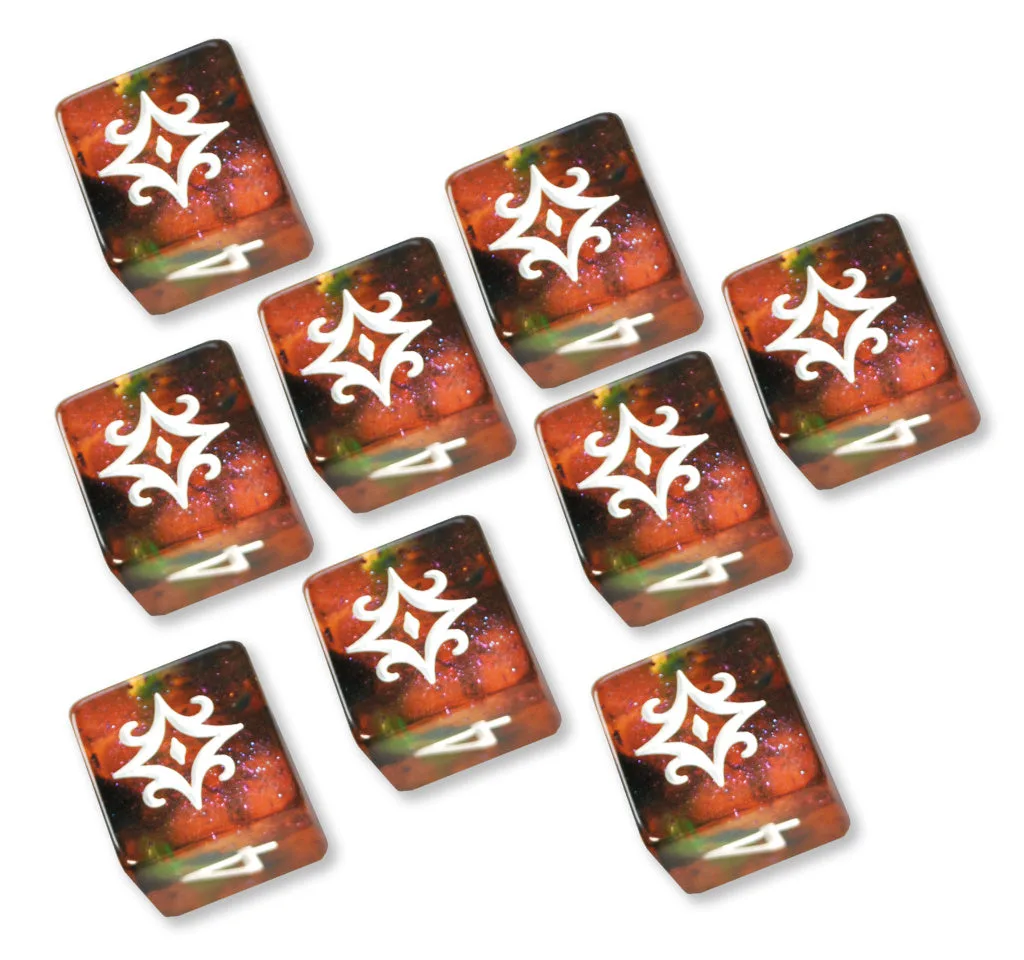
- Seer's Eye Elder Dice: Mythic Glass and Wax d6 Set: Each tube contains 9 six-sided dice, and the Seer's Eye symbol replaces the 6 on each die. Nine d6s is a common pool size for many games. If you regularly roll this many, a tray with enough floor space prevents the scatter that comes with fistfuls of dice.
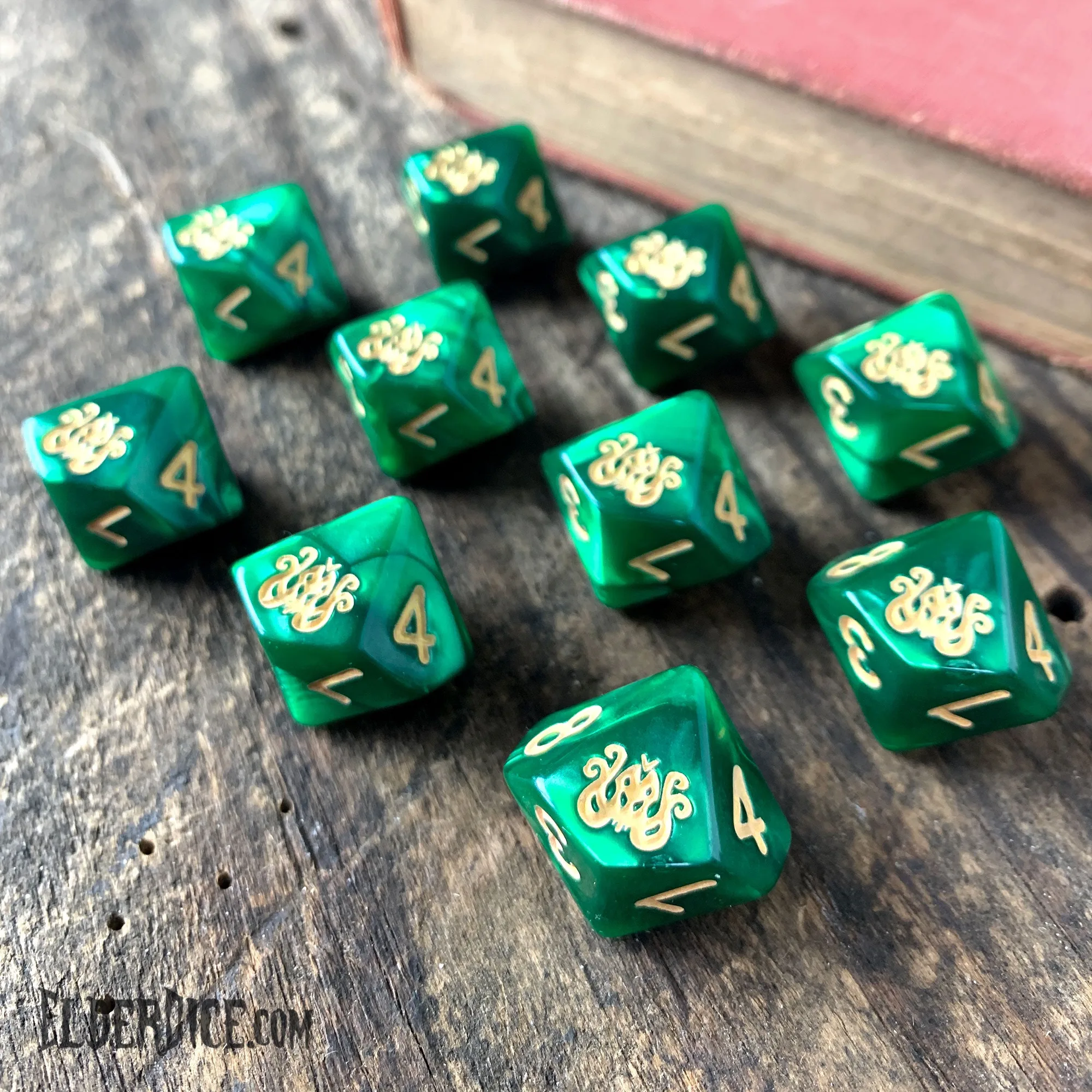
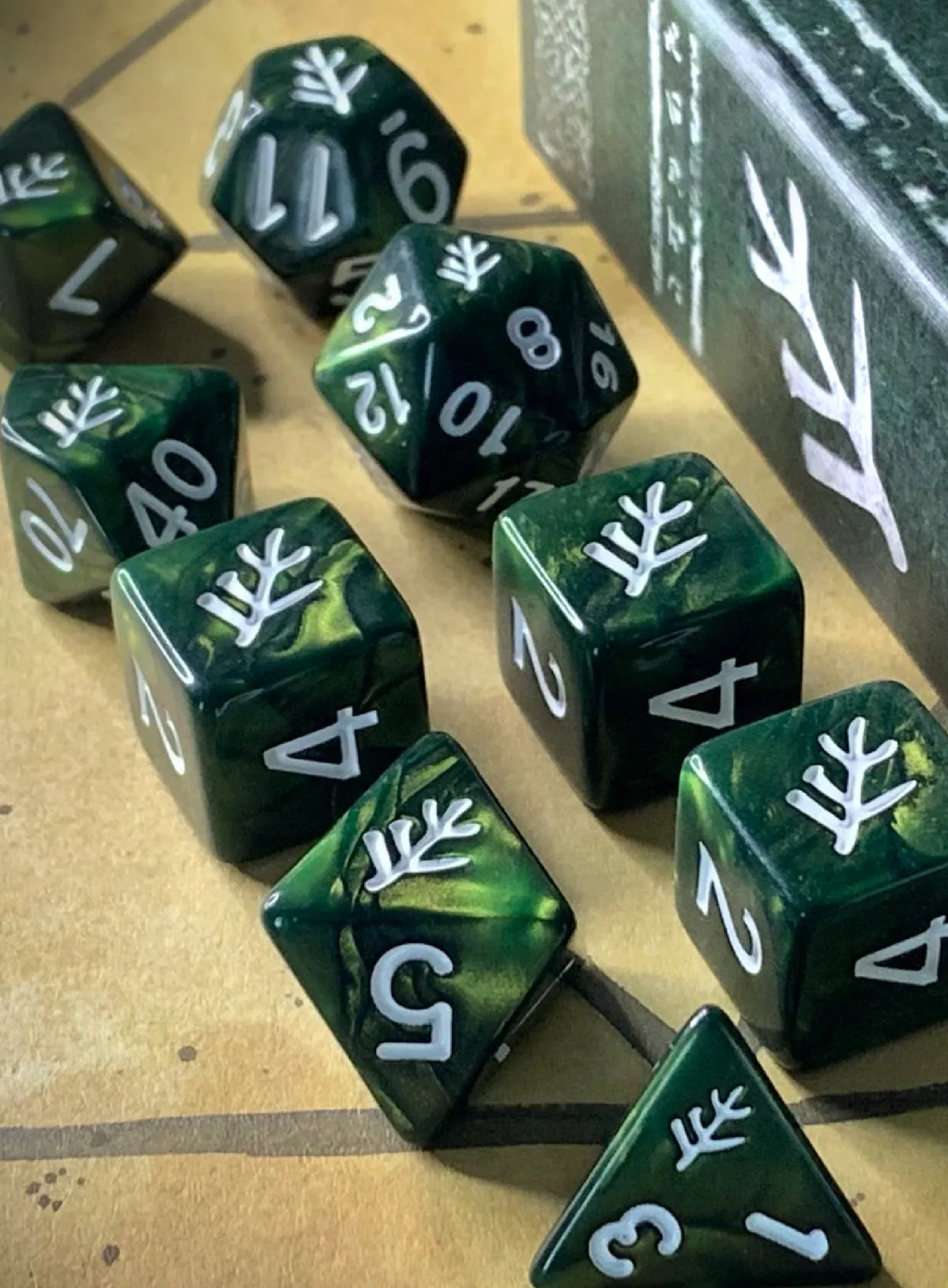
- Yellow Sign Dice - Purple and Green Masked edition Polyhedral Set: The Yellow Sign symbol replaces the highest value of each die in this polyhedral set. Polyhedral sets include d4s and other shapes that tumble unpredictably. If your group uses a full set, choose a tray with higher walls rather than a shallow one.
Dice rolling off the table is a solvable problem, and the solution is almost never a new set of dice. Diagnose the cause, add a contained rolling surface, and adjust the throw if needed. If you have done all three and dice still escape, change the setup rather than the accessories.