Quick answer
Buy a dice box if you carry a large collection and want rigid protection; buy a bag if you want light, cheap portability for one or two sets; buy a tray if your main problem is dice rolling off the table and you want a defined rolling surface. Most players end up with a bag for transport and a tray for play, not one product that does both.
Dice storage is not one product category. A box, a bag, and a tray solve three different problems: protection, portability, and play surface. If you search for a dice storage buying guide, you are probably trying to decide which one to spend money on first.
This guide compares the three options on the things that actually matter at the table: how well they protect resin and metal dice, how much they hold, how they feel to use mid-session, and when a premium option like a handcrafted wooden tray is worth it over a simple pouch.
What each storage type actually does
A dice bag is soft fabric or leather with a drawstring or zip. It is the lightest and cheapest way to move dice, and it squashes into any backpack pocket. The tradeoff is that soft walls do not stop dice from rubbing against each other, so sharp-edged resin and metal sets can pick up scuffs over time.
A dice box is a rigid container, usually wood, metal, or hard plastic, often with foam or felt inserts. It protects better and can double as a display case, but it is bulkier and heavier. A dice tray is a shallow open vessel with a raised rim and a soft rolling surface. It is not really storage; it is a play surface that may also hold dice between sessions.
- Bags win on weight and price; boxes win on protection; trays win on table use.
- If your dice never leave home, a tray plus a shelf may be all you need.
Dice box vs bag: the real decision
The dice box vs bag choice comes down to how you transport dice and how much you care about scratches. If you bike to game night or toss dice into a crowded bag, a rigid box prevents the crush damage a soft pouch cannot. If you drive and keep dice on a shelf, a bag is enough.
Capacity is the second factor. A single drawstring bag comfortably holds one to two polyhedral sets. A box with compartments can hold several sets plus loose D6s, but check the internal dimensions before buying, because oversized D20s and chunky metal dice often do not fit standard slots. Neither option is wrong; they just fail in different ways.
- Soft bag plus metal dice equals scratched numbers over months of use.
- Measure your largest die before buying any box with fixed compartments.
When a dice tray is the better buy
A tray solves a problem boxes and bags ignore: dice rolling off the table mid-combat. A raised rim keeps rolls contained, and a leather or felt inlay gives a softer landing and a more consistent sound than bare wood or plastic. That matters if you roll sharp-edged resin dice that chip on hard surfaces.
Trays also work as semi-storage. Many players leave their current set sitting in the tray between sessions, which means the tray becomes the everyday home for dice in active use while a bag or box holds the rest of the collection. If you only buy one thing and you play at a table with limited space, a tray often improves the session more than a fancier bag.
- Check the tray footprint against your table space before committing.
- A leather inlay protects dice edges and reduces noise.
Materials, fit, and what to check before buying
Material drives both price and feel. Fabric bags are inexpensive and flexible. Wood boxes and trays are heavier, more durable, and often handmade, which explains the price gap. Leather inlays cushion dice; bare wood does not. If a listing does not state the wood species or lining material, treat that as a missing specification and ask before buying.
Fit is the most common regret. For bags, check the drawstring opening and whether the fabric is lined. For boxes, check compartment depth against your tallest die. For trays, check the rolling area, because a tray that is too small forces you to roll against the rim and skews results. When a product page omits dimensions, that is a decision limitation, not a detail you can assume.
- Ask for internal dimensions if they are not listed.
- Buy for your largest and heaviest dice, not your average set.
Decision rules for choosing dice storage
- You carry dice to someone else's table every week: Choose a rigid box or a lined bag. If your dice are resin or metal, skip the unlined drawstring bag, because soft fabric lets dice grind against each other in transit. Transport protection first, display second.
- You roll on a small or crowded table: Choose a tray with a raised rim and a leather or felt inlay. Measure the footprint against your available table space before buying, since a tray that overhangs the edge defeats the purpose. If dice hit the floor more than once a session, buy the tray before the box.
- You own one set and play at home: A single bag plus a modest tray covers you. Do not buy a large compartment box until your collection actually outgrows the bag, because empty compartments are wasted money. Match capacity to your current collection, not a hypothetical future one.
- You want a gift for a dedicated Dungeon Master: A handcrafted wooden tray with a leather inlay reads as a keepsake rather than a utility purchase. Check whether it is made to order, because that affects delivery timing. For gifting, prioritize craftsmanship and materials over capacity.
Products that show the tradeoffs
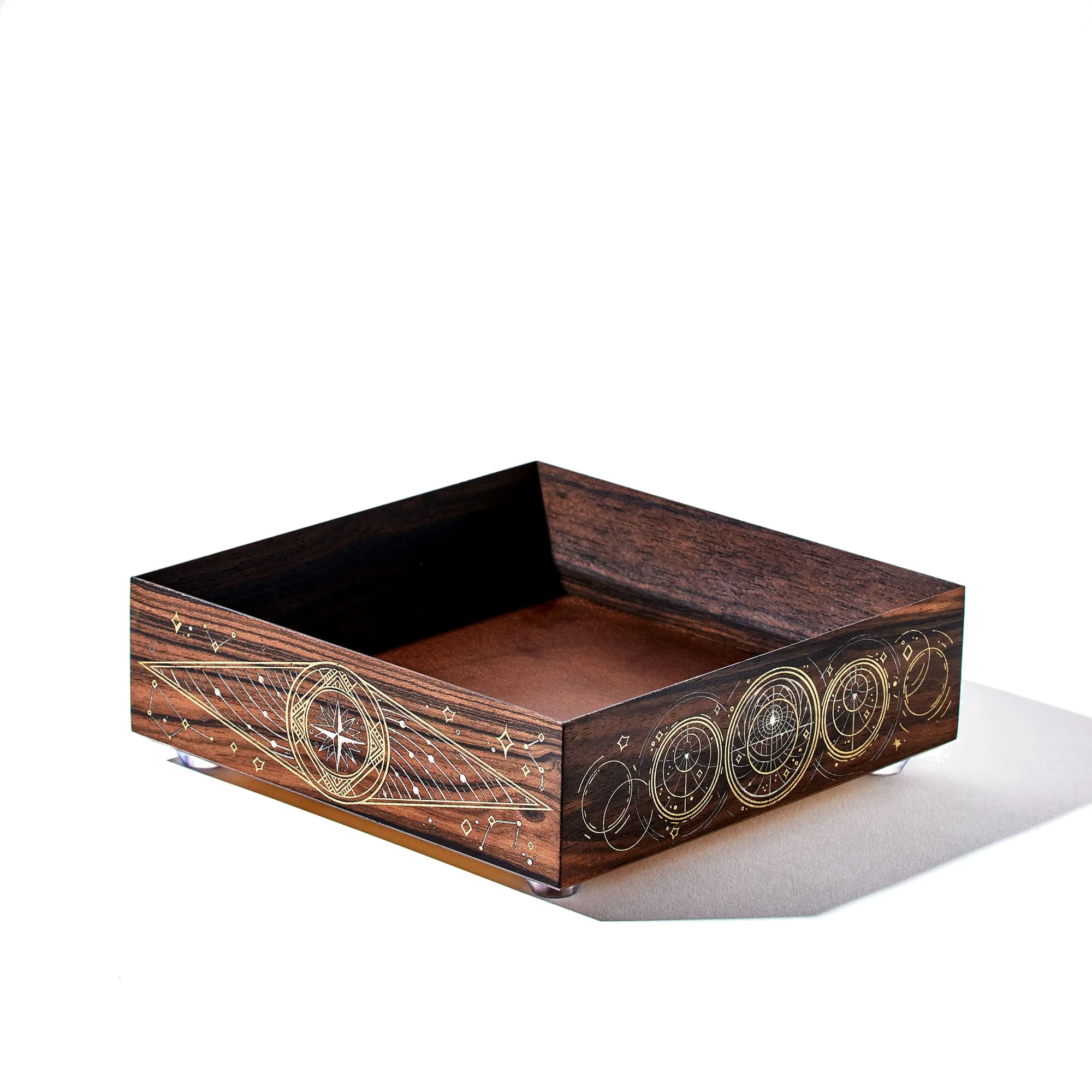
- Dispel Dice x LaserOx Endless Horizons Tray: Handcrafted in Ziricote wood with opalescent and gold effect resin inlay, lined with leather, and made to order by a craftsman. This is the premium end of dice tray storage: the leather inlay gives dice a smooth landing and a satisfying sound, while the made-to-order process means you should plan for a longer wait than an off-the-shelf tray.
- Dispel Dice x Laserox "Be Not Afraid" Dice Tray in Zircote Wood: Made of Ziricote wood with ash embellishments in the corners, etched biblically accurate angel designs, and handmade craftsmanship featuring weapons and floral embellishments. Same wood and handmade construction as the Endless Horizons tray, but the etched angel design makes it a display piece as much as a rolling surface, which suits players who leave their tray out between sessions.
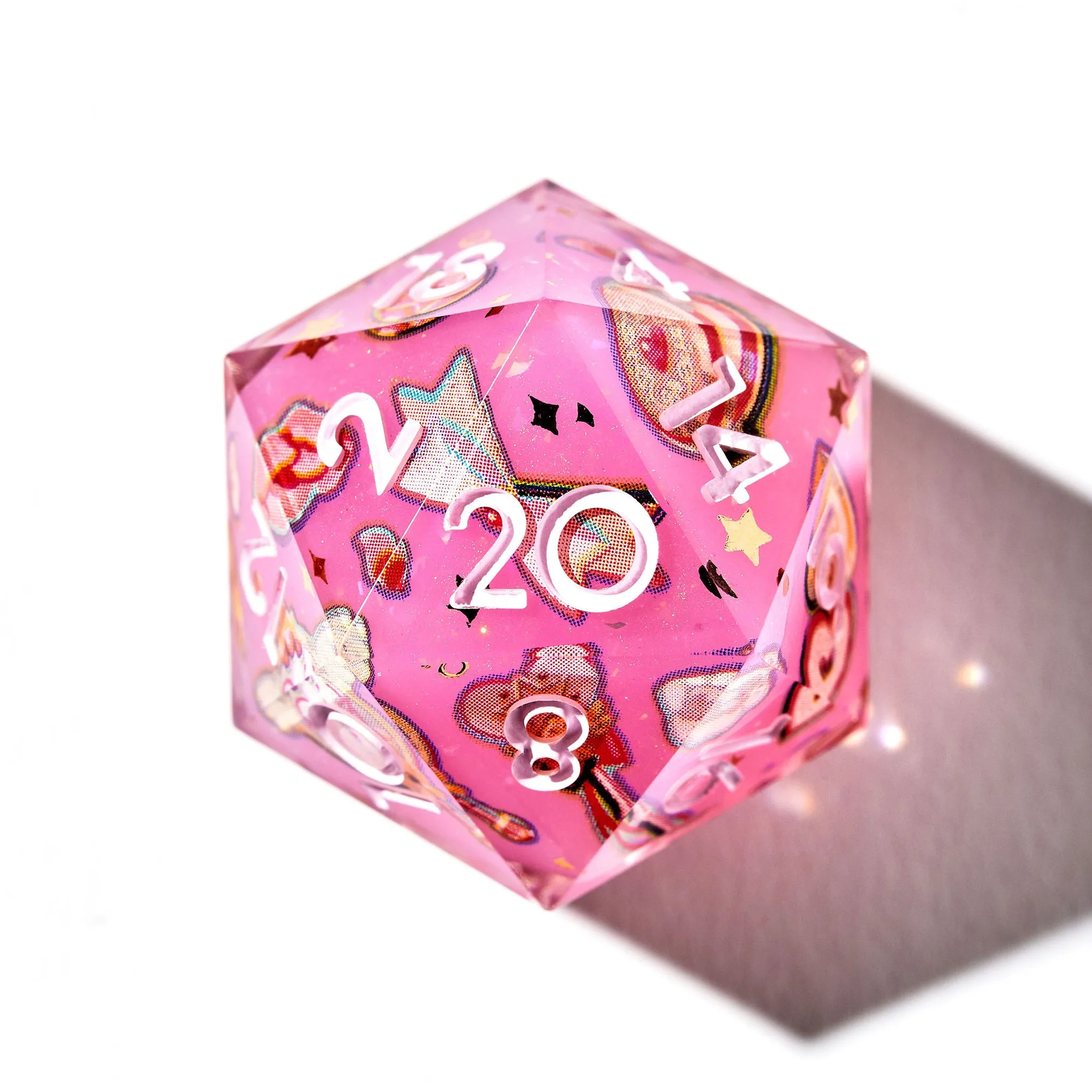
- Magical Girl Iconic 7-Piece Dice Set: Sharp-edged construction allows for more randomized rolls, and each set includes one D4, D6, D8, D10, D%, D12, and D20. Sharp edges are exactly the dice most likely to chip, so this set is a good reason to choose a leather-lined tray or a padded box over a loose bag.
Who this storage advice fits
Best for
- Players deciding between a dice box, bag, and tray for the first time
- Dungeon Masters who transport several sets and want to avoid scratched dice
- Players with sharp-edged resin or metal dice that need a padded surface
Not for
- Collectors who only need display shelving and never transport dice
- Players looking for a single product that both carries a large collection and serves as a full rolling surface
- Buyers who need exact internal dimensions that are not published; ask the seller first
Pick the storage type that matches your biggest problem: scratches, transport, or dice on the floor. A bag is the cheap start, a box is the protective upgrade, and a leather-lined tray is the one you will actually use every session. Buy for the dice you own now, and add the next piece when your collection earns it.