Quick answer
Buy a dice tray and storage bundle only when it covers three jobs: a full set of dice you will actually roll, a tray that keeps them on the table, and a case or box that protects them between sessions. If you already own dice you like, skip the bundle and add storage separately. If you are starting from zero, a bundle saves you from buying mismatched pieces one at a time.
The three jobs a dice starter kit has to do
A dice starter kit is not just dice plus a bag. It has to solve rolling, carrying, and protecting. Rolling means the dice land on a defined surface instead of under the couch. Carrying means the set travels to game night without spilling. Protecting means edges and finishes survive being tossed in a backpack week after week.
Most beginner dice bundles fail on one of those jobs. They include dice and a pouch but no tray, so rolls scatter. Or they include a tray but no rigid storage, so the dice get crushed in transit. Before you buy, name which of the three jobs you already have covered.
What to include in a dice kit, in priority order
Start with a complete polyhedral set: one each of D4, D6, D8, D10, D%, D12, and D20. That covers the vast majority of tabletop RPG rolls. If your game leans on D6 pools, a dedicated D6 set matters more than a full polyhedral spread.
Second, add a tray with a raised lip. A tray is the cheapest upgrade that improves every session because it stops dice from knocking miniatures over or rolling off the table. Third, add storage that matches how you travel. A stackable display box works at home. A pouch works in a bag. A hard case works if you fly or bike to games.
- Complete polyhedral set: D4, D6, D8, D10, D%, D12, D20
- Tray with a raised lip and a soft or felted rolling surface
- Storage sized to the number of sets you actually own
- A way to separate sets so you are not digging for a D20 mid-turn
When a bundle beats buying separately
A bundle wins when the included pieces share a theme or a system, and when the combined price is lower than buying each item alone. Themed bundles also do something separate purchases cannot: they make the set feel like one object, which matters if you are buying a gift or building a character-specific kit.
A bundle loses when it forces you to pay for a piece you will not use. If you already have a tray you love, a bundle that includes a second tray is dead weight. Check the catalog comparison price against the sum of the individual items before you commit.
How many dice and how much storage
One polyhedral set is enough to play. Two sets is the practical sweet spot because you stop passing dice around the table. Beyond three sets, storage becomes the limiting factor, not dice count.
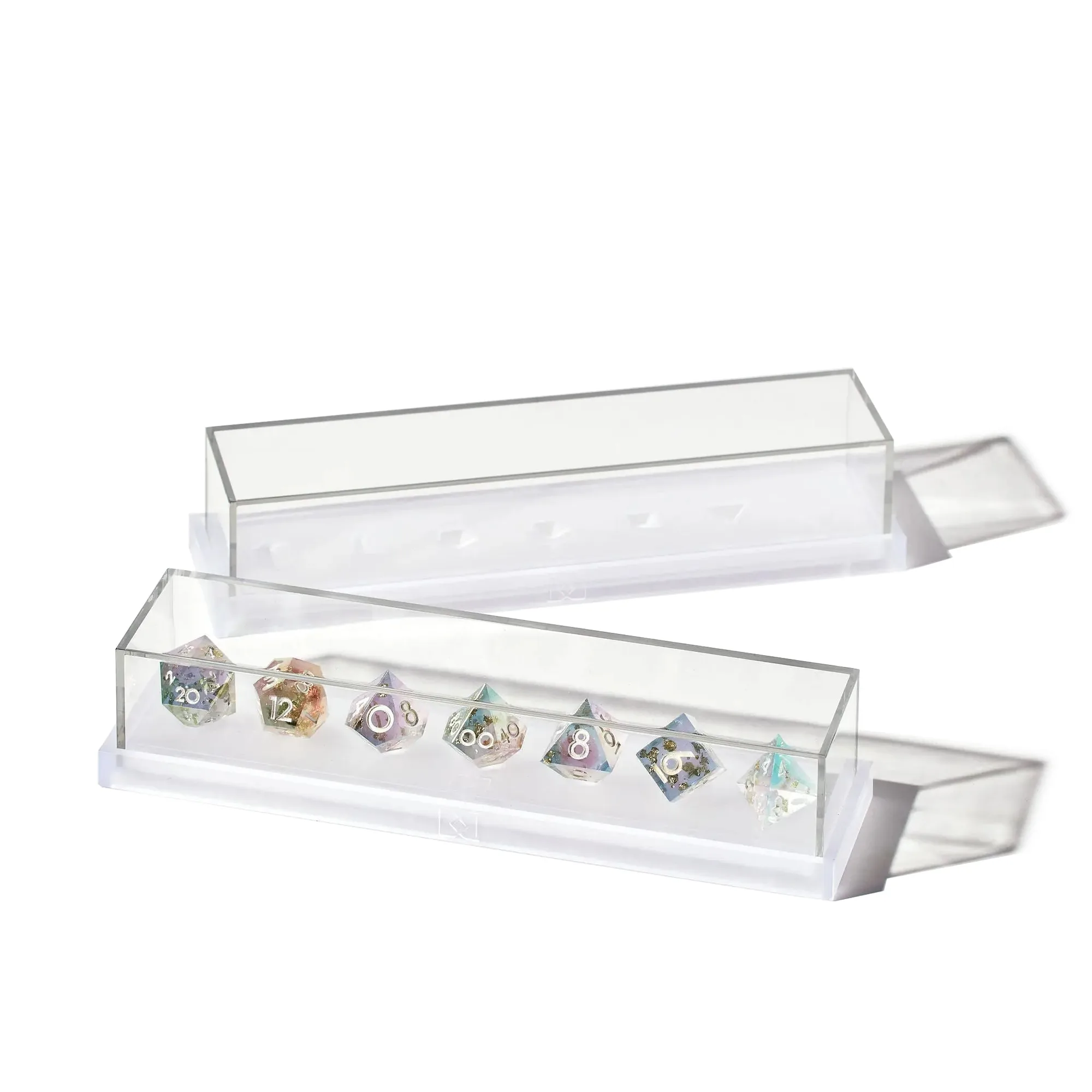
Match storage capacity to that number. A display box made for a single 7-piece set keeps one set clean and visible. If you own four sets, you need either four boxes or a different storage format. Buying a large case for one set wastes space and lets dice rattle.
Sharp-edged versus rounded dice in a starter kit
Sharp-edged dice have flat faces and crisp corners. Manufacturers state that this construction allows for more randomized rolls compared to traditional rounded-edge RPG dice. Rounded dice feel smoother in the hand and roll further, but they can also slide off a tray more easily.
For a starter kit, sharp-edged dice pair well with a lipped tray because the tray contains the longer roll. If you mostly roll on an open table, rounded dice are more forgiving. Neither is wrong; pick the one that matches your table.
Decision rules for a tray and storage bundle
- Rule 1: Buy the bundle if you own zero dice: Starting from nothing means every piece is useful, and a bundle removes the guesswork of matching tray size to dice size. Checkpoint: list the pieces you already own before buying.
- Rule 2: Skip the bundle if you already have a tray: A second tray rarely gets used. Buy the dice and storage you are missing instead. Checkpoint: a bundle should replace a purchase, not duplicate one.
- Rule 3: Match storage to set count, not to ambition: One display box per 7-piece set is the simple rule. Buying capacity for ten sets when you own two wastes shelf space. Checkpoint: count your sets, then buy that many storage units.
- Rule 4: Let your game pick the dice: Dice-pool games need multiple D6 sets. Standard RPG play needs one full polyhedral set. Do not buy a D6 bundle for a game that runs on a D20. Checkpoint: confirm the dice type your system rolls most.
Catalog facts that affect the decision
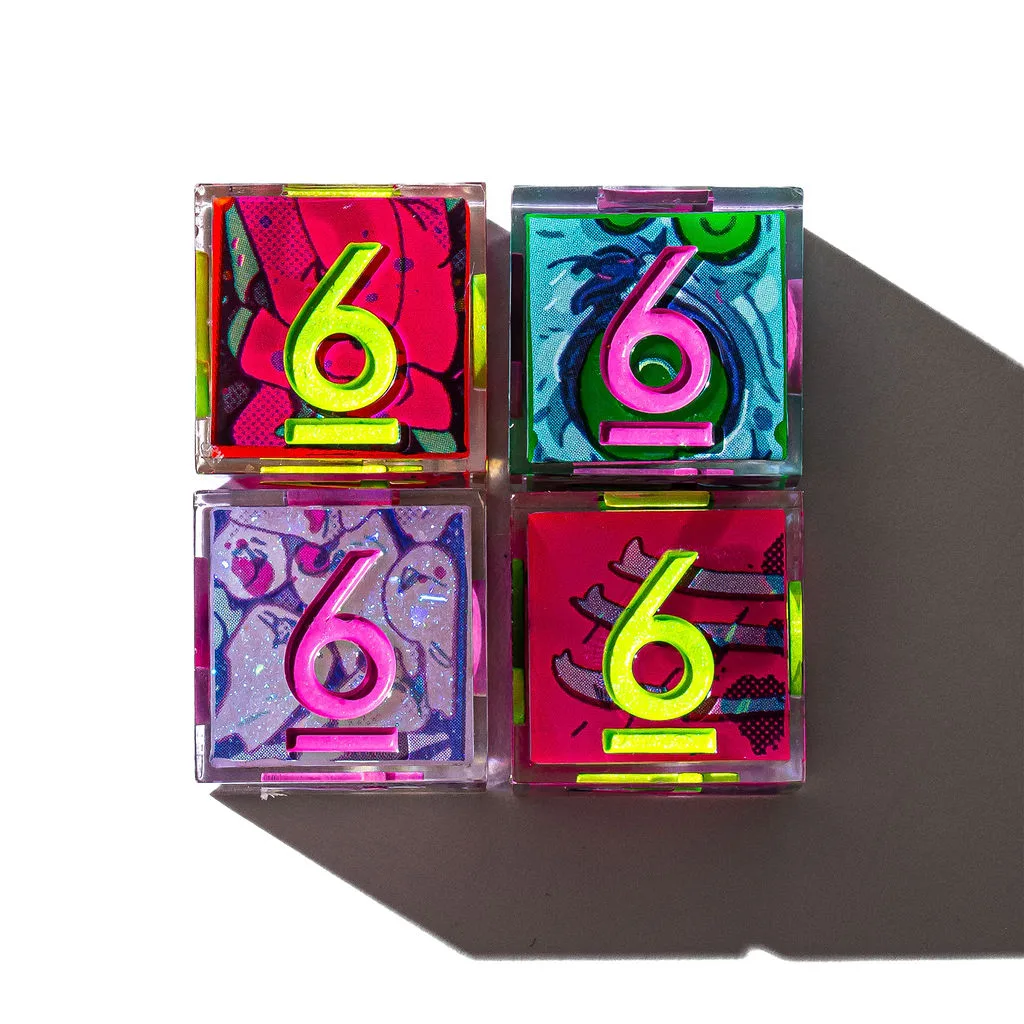
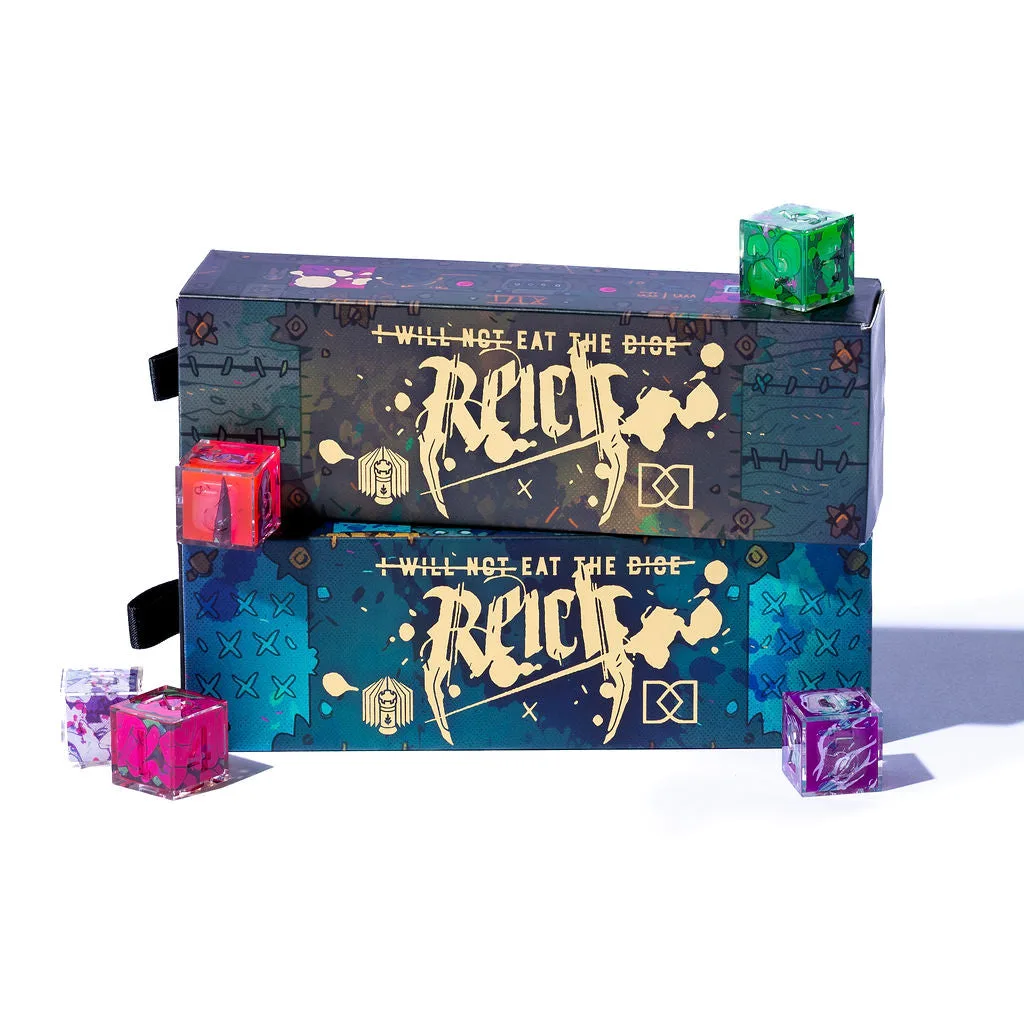
- Dispel x Eat the Reich 2-Set Bundle: This 2-set bundle contains one 4-piece Iconic D6 set in Neon Rot and one 4-piece Iconic D6 set in Fluorescent Flesh, themed after a neon 1940s France setting. It is a D6-pool bundle, not a full polyhedral kit, so it suits dice-pool games and collectors rather than players who need a D20.
- Dispel x Eat the Reich "Fluorescent Flesh" 4-Piece Iconic D6 Dice Set: This 4-piece D6 set uses neon designs with green and pink numbers and sharp-edged construction. Buying it alone is the better move if you only want one themed set and already own a tray and storage.
- Modular Dice Display Box: The Modular Dice Display Box is stackable and made to fit any 7-piece polyhedral set. It solves the storage job for one set at a time and expands vertically, so it fits a collection that grows slowly.
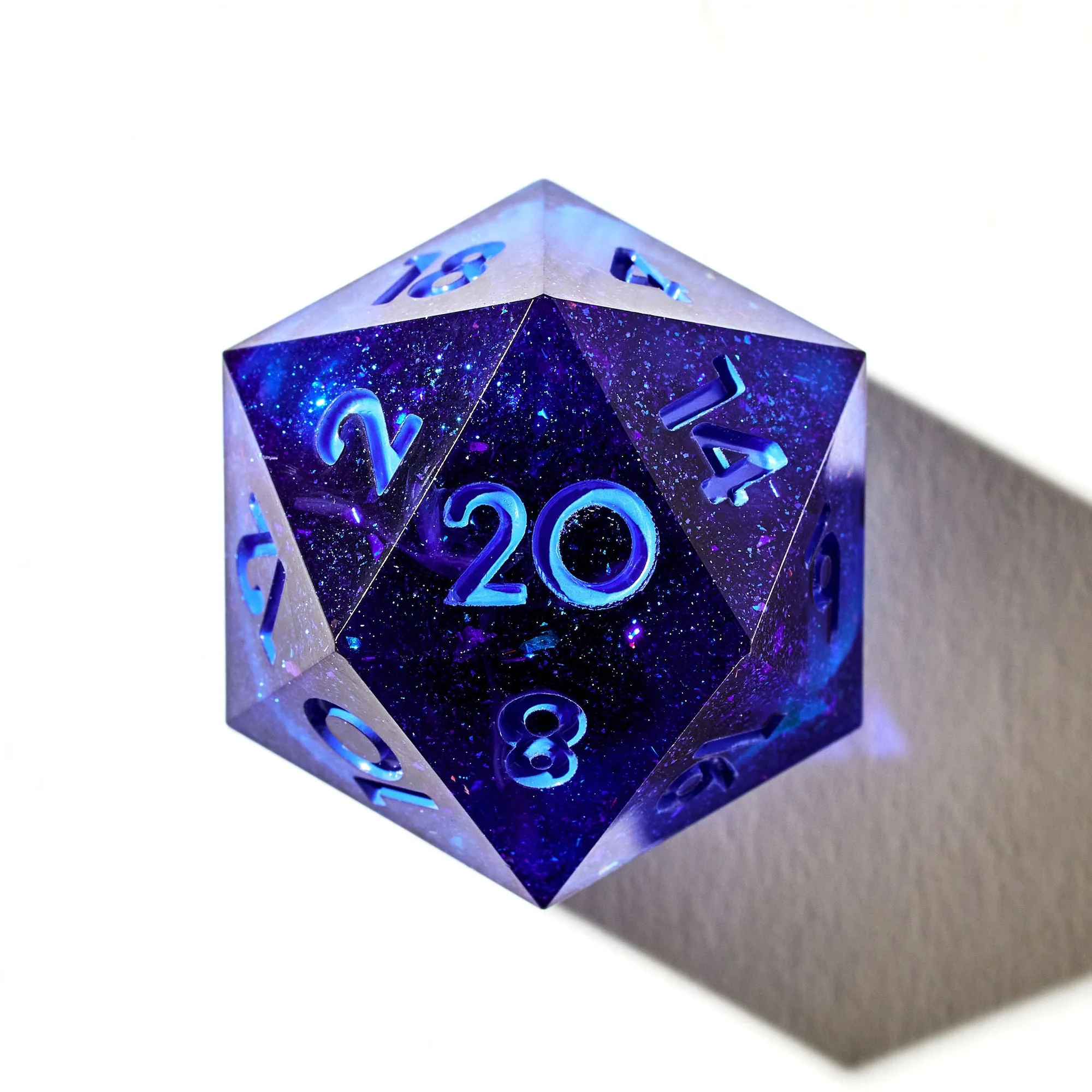
- Deep Blue Sea 7-Piece Polyhedral Set: This 7-piece set includes one D4, D6, D8, D10, D%, D12, and D20, with a deep blue glittery resin base and swirls of white, and sharp-edged construction. It is the complete polyhedral half of a starter kit, so pair it with a tray and storage rather than buying a second full set.
Who should buy a dice tray and storage bundle
Best for
- New players building a first kit from zero
- Gift buyers who want one coherent, themed package
- Players who want a tray and storage matched to their dice in one purchase
Not for
- Players who already own a tray they like
- Groups that only need one specific die type
- Collectors who prefer to choose every component individually