Quick answer
Match the car to how your child plays. For rough, crash-heavy play, choose a durable toy car with a die-cast body and oversized wheels, like the Majorette Monster Rockerz. For kids who want speed and control, a small R/C die-cast such as the Maisto Mini Metal Diecast R/C Car delivers more play value per dollar than a shelf model.
What scale actually changes for kids
Scale is the ratio between the toy and the real vehicle, and it drives three things kids notice immediately: how the car feels in the hand, how it rolls on the floor, and whether it fits the playsets and tracks you already own. Smaller scales suit collectors and older kids who handle toys carefully; larger scales suit younger kids who grip hard and push fast.
Before buying, check the scale printed on the box against the cars your child already plays with. Mixing scales is fine for pretend play, but it looks wrong on track sets and can cause jams. If a listing does not state a scale, treat that as a limitation and buy in person or choose a line that clearly labels its size.
Durability: what survives real play
Die-cast bodies resist dents and cracks better than plastic shells, but durability is a system: body, axles, wheels, and paint all matter. Oversized suspension wheels and a chunky stance absorb landings better than thin racing wheels, which is why monster-truck styles tend to outlast low sports models in the hands of a 4-year-old.
Paint is the first thing to show wear. Bold graphics chip at edges and corners, so expect cosmetic scuffs even on well-built cars. That is normal, not a defect. If your child is bothered by scratches, choose simpler liveries rather than avoiding die-cast altogether.
Play value: push, race, or collect
Ask what the car will do on a typical afternoon. Push-along cars reward floor space and imagination; R/C cars reward open space and battery patience; collector models reward careful handling and display. Buying a display-grade car for a crash-happy kid wastes money, and buying a simple push toy for a child who wants speed leads to boredom.
Accessories multiply play value more than another car does. A car carrier turns a handful of die-cast cars into loading, hauling, and road-trip stories, and it gives kids a reason to put cars away when play ends.
R/C die-cast: the battery and control trade-off
Radio-control die-cast cars combine the feel of metal with steering, but they add setup steps: charging, pairing, and a controller that kids must learn. Bluetooth-enabled models pair with a device, which appeals to older kids but adds one more thing to charge and keep track of.
For a first R/C car, keep the model small and the controls simple. Small metal R/C cars work well indoors on smooth floors and are less painful when they hit furniture. They are not suited to grass or gravel, so be honest about where your child will drive before paying for the feature.
Decision rules for buying diecast cars for kids
- Rule 1: Match the car to the play surface: Carpet and grass favor big wheels and suspension; smooth floors favor small, low cars and R/C models. Check where your child actually plays before choosing scale or style. If play happens on carpet and pavement, start with a monster-style die-cast.
- Rule 2: Buy one R/C car, not a fleet: R/C adds charging, pairing, and controller management. One well-chosen Bluetooth or radio-controlled model teaches the skills; several at once create clutter and dead batteries. Add a second R/C car only after your child manages the first independently.
- Rule 3: Spend on the collection, not the single car: One car gets old fast; a carrier or a small set of cars keeps play going. A carrier that holds multiple cars and unfolds ramps turns individual cars into a system. Budget for a carrier or multi-car set before buying a premium single model.
- Rule 4: Treat paint wear as expected: Bold graphics chip at edges with real play. Judge durability by body, axles, and wheels, not by a flawless finish. If cosmetic wear is unacceptable, choose a simpler livery or a display-only model.
Product facts that guide the decision
- Majorette Monster Rockerz Diecast Car: Oversized monster trucks with bold graphics, huge suspension wheels, and durable die-cast bodies built for jumps, crashes, and rough-and-tumble play; ages 3+. This is the pick when durability under crash play matters more than realistic detail; the big wheels and stance suit carpet, driveway, and indoor jumps.
- Maisto Mini Metal Diecast R/C Car: Bluetooth-enabled die-cast R/C assortment including a vintage Volkswagen van, Bugatti Chiron, Mercedes-Benz G-Class, and Ferrari FXX K Evo, with die-cast metal bodies. Choose this when your child wants to drive rather than push; the metal body adds heft, and the model choice lets you match a child's interest.
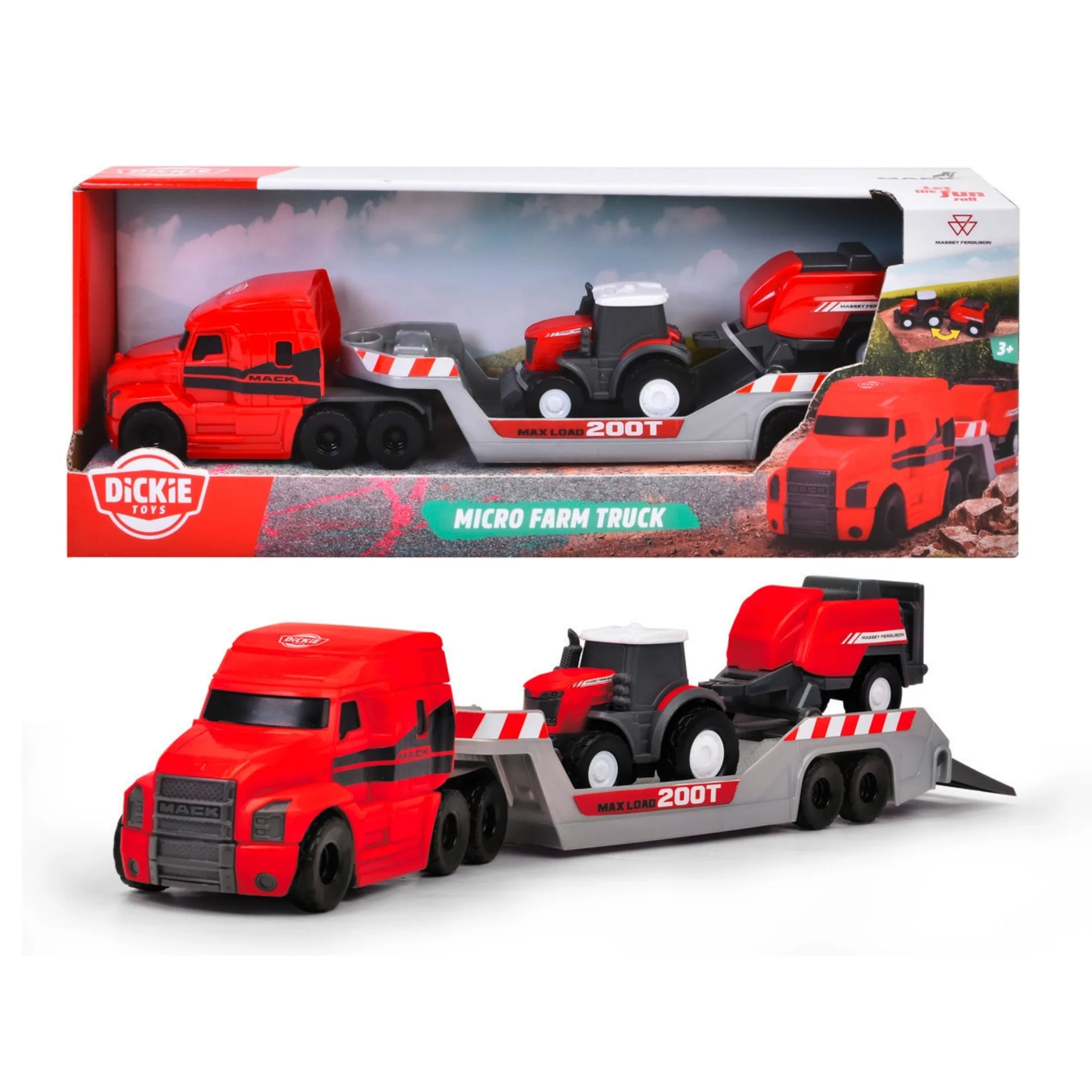
- Dickie Toys Car Carrier: Red two-storey car carrier that holds multiple cars, unfolds ramps, and has realistic loading and unloading mechanics; ages 3+. A carrier extends play across a whole die-cast collection and gives younger kids a loading task that does not depend on driving skill.
- Toysmith Push N' Go Monsters: Press, release, and watch them go; silly characters combined with speedy push-and-go action. A low-cost add-on for very young kids who are not ready for die-cast weight or R/C controls.
Who each option fits
Best for
- Kids ages 3+ who crash, jump, and push cars hard (Majorette Monster Rockerz)
- Older kids ready to steer and charge a model (Maisto Mini Metal Diecast R/C Car)
- Families building a die-cast collection that needs a hauling and loading centerpiece (Dickie Toys Car Carrier)
- Toddlers who need a simple press-and-go first car (Toysmith Push N' Go Monsters)
Not for
- Collectors who need a stated scale and display-grade finish; check the box or choose a collector line
- Kids who only want realistic racing detail rather than stunt play
- Outdoor use on grass or gravel, which small R/C and low die-cast cars are not built for
- Children under 3, since the die-cast and R/C options are rated ages 3+