What each tea is designed to do
When bloating strikes, choosing the right herbal tea can make a real difference. Ayudra offers two blends that address digestive discomfort from different angles: Digestion Tea and Constipation Tea. While both aim to support gut comfort, their ingredient profiles and intended effects are distinct. Knowing the difference helps you pick the one that matches your specific symptoms.
Digestion Tea focuses on easing bloating, heaviness after meals, and supporting daily digestive balance. Constipation Tea, on the other hand, is formulated to encourage regular bowel movements and gentle cleansing, which can also relieve bloating caused by irregularity. Let's look at what each blend contains and how that matters for your choice.
Quick look at the blends
-
Digestion Tea: Digestion Tea is a soothing herbal blend designed to support healthy digestion, gut comfort, and daily digestive balance. Crafted with green tea, triphala, mint, and licorice, this tea helps ease bloating, improve digestion, and refresh the system naturally. If your primary concern is bloating after meals or general sluggish digestion, this blend targets those symptoms directly with herbs like mint and triphala.
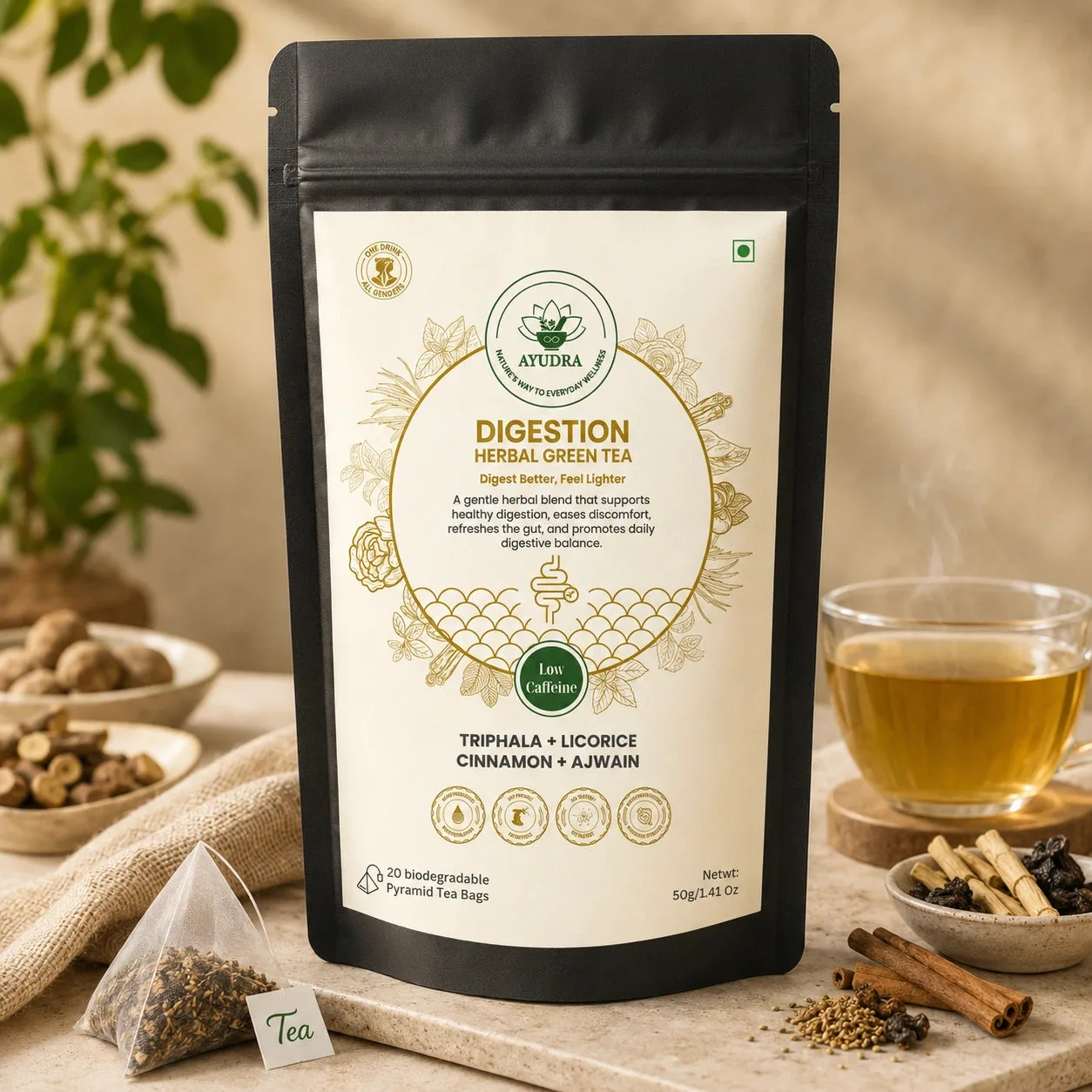
Digestion Tea
-
Constipation Tea: Constipation Tea is a carefully balanced herbal infusion designed to support gentle digestive cleansing, regular bowel movement, and digestive comfort. Crafted with senna leaves and green tea, this blend works naturally to encourage elimination while remaining soothing on the system. For bloating that stems from constipation or infrequent bowel movements, this blend's senna and fennel aim to promote regularity and relieve the associated discomfort.
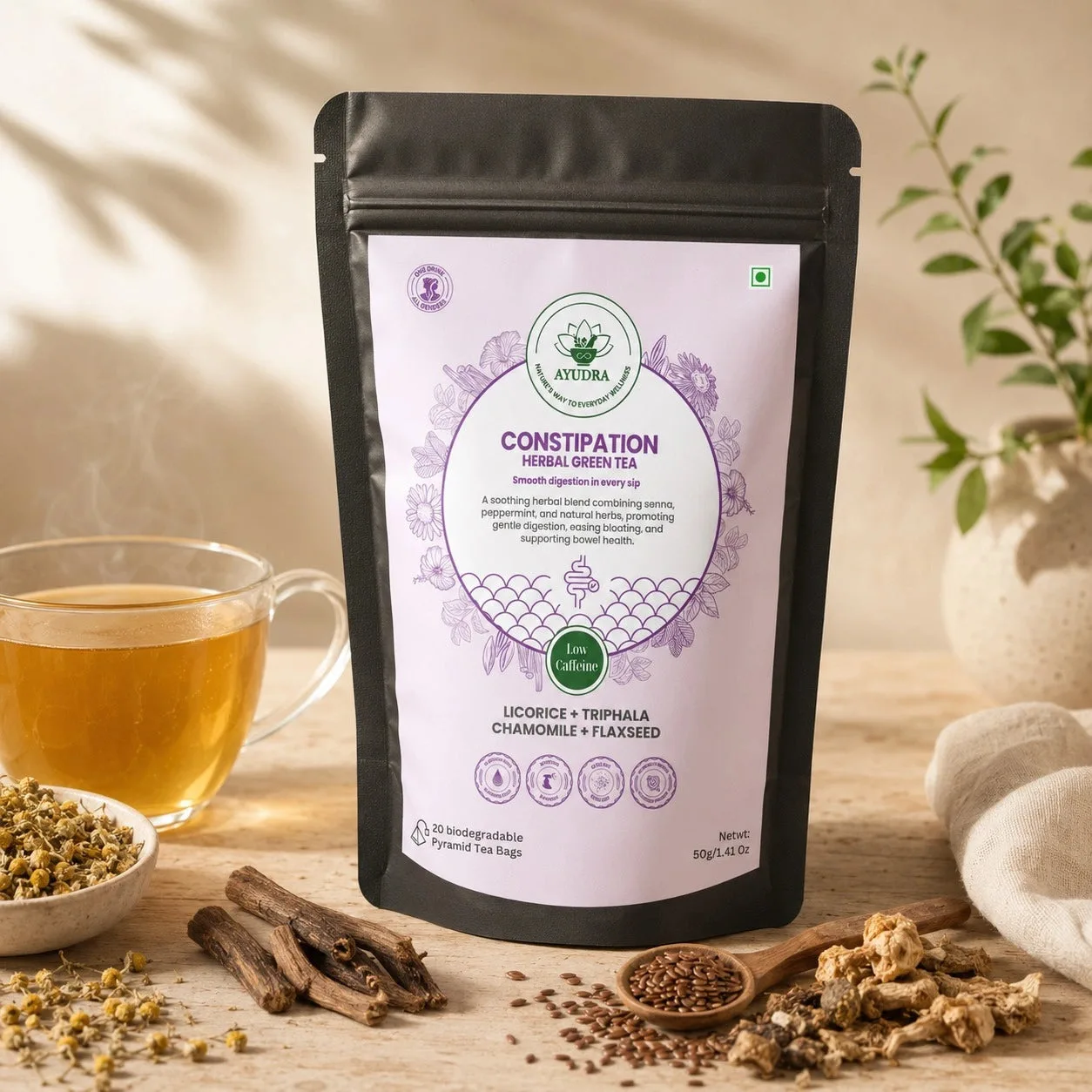
Constipation Tea
Digestion Tea vs Constipation Tea: key differences
- Primary purpose: Digestion Tea targets bloating, indigestion, and daily gut balance. Constipation Tea focuses on gentle bowel movement and cleansing.
- Key ingredients: Digestion Tea features green tea, triphala, mint, licorice, ajwain, bay leaf, cinnamon, senna leaves, rose petals, and lemongrass. Constipation Tea includes senna leaves, green tea, peppermint, licorice, triphala, chamomile, lemon balm, fennel, flaxseed, fenugreek, and hibiscus.
- Best for bloating caused by: Digestion Tea suits bloating after meals or general digestive sluggishness. Constipation Tea suits bloating linked to constipation or irregularity.
- Caffeine content: Both contain green tea, so they have some caffeine. If you're sensitive, consider timing your cup earlier in the day.
- Available sizes: Both teas come in 50gm, 100gm, 150gm, and 200gm packs, so you can choose based on how often you plan to drink them.
Which one should you choose for bloating?
If your bloating is a regular after-meal issue—feeling heavy, gassy, or uncomfortable shortly after eating—Digestion Tea is the more direct match. Its blend of mint, ajwain, and triphala is traditionally used to ease digestive discomfort and promote smoother digestion. The addition of senna leaves in this blend is mild and aimed at supporting bowel movement without being the primary focus.
If your bloating is accompanied by infrequent bowel movements or a sense of incomplete elimination, Constipation Tea may be more effective. The senna leaves and fennel work together to encourage regularity, which can relieve the pressure and bloating that come with constipation. The chamomile and lemon balm also add a calming effect that can soothe abdominal discomfort.
For those who experience both types of bloating, you might alternate based on your symptoms. Start with the tea that matches your primary complaint and see how your body responds. As with any herbal remedy, it's wise to listen to your body and adjust accordingly.
What the catalog does not settle
The supplied information does not include specific brewing instructions, recommended daily intake, or duration of use for either tea. It also does not confirm whether these teas are suitable for long-term daily use or if they have any contraindications. If you have a medical condition or are pregnant or nursing, consult a healthcare professional before adding these teas to your routine. The presence of senna in both blends means they should be used with awareness, especially for those with sensitive digestion.