Quick answer
If you get bloated or uncomfortable right after meals, digestive enzymes are usually the more targeted choice because they help break down food. If your digestion feels off more generally—irregularity, occasional discomfort, or you want broader gut support—probiotics are the better starting point. Some people benefit from both, but you do not need to take them at the same time. Pick based on your main symptom and timing.
What each one actually does
Digestive enzymes are proteins that help break down carbohydrates, fats, and proteins into smaller pieces your body can absorb. They work in the moment, during digestion, and are not designed to change your gut bacteria. If a meal leaves you feeling heavy or bloated, enzymes address the breakdown step.
Probiotics are live microorganisms that support the balance of bacteria in your gut. They do not digest your food directly. Instead, they contribute to a healthier gut environment over time, which can support regularity and overall digestive comfort. This is why probiotics for gut health are often described as a long-term play rather than a meal-time fix.
Timing and how to take them
When to take digestive enzymes vs probiotics comes down to what you are trying to influence. Digestive enzyme capsules benefits show up when taken with meals, because that is when food is present to break down. Probiotics are more flexible—many people take them once daily, often in the morning or before bed, and consistency matters more than exact timing.
If you choose both, you can take your enzyme with a meal and your probiotic at a different time of day. There is no strong reason to combine them in the same moment, and separating them makes it easier to tell which one is helping.
How to read a label without guessing
A digestive enzyme formula should list the enzymes or enzyme blends it contains. A probiotic should list the strains and the CFU count. If a label only says 'digestive support' without specifics, you cannot compare it meaningfully to another product.
For probiotics, strain diversity matters because different strains may support different aspects of gut health. For enzymes, the blend matters because different enzymes target different food components. Match the label to your main complaint rather than picking the product with the longest ingredient list.
Where prebiotics fit
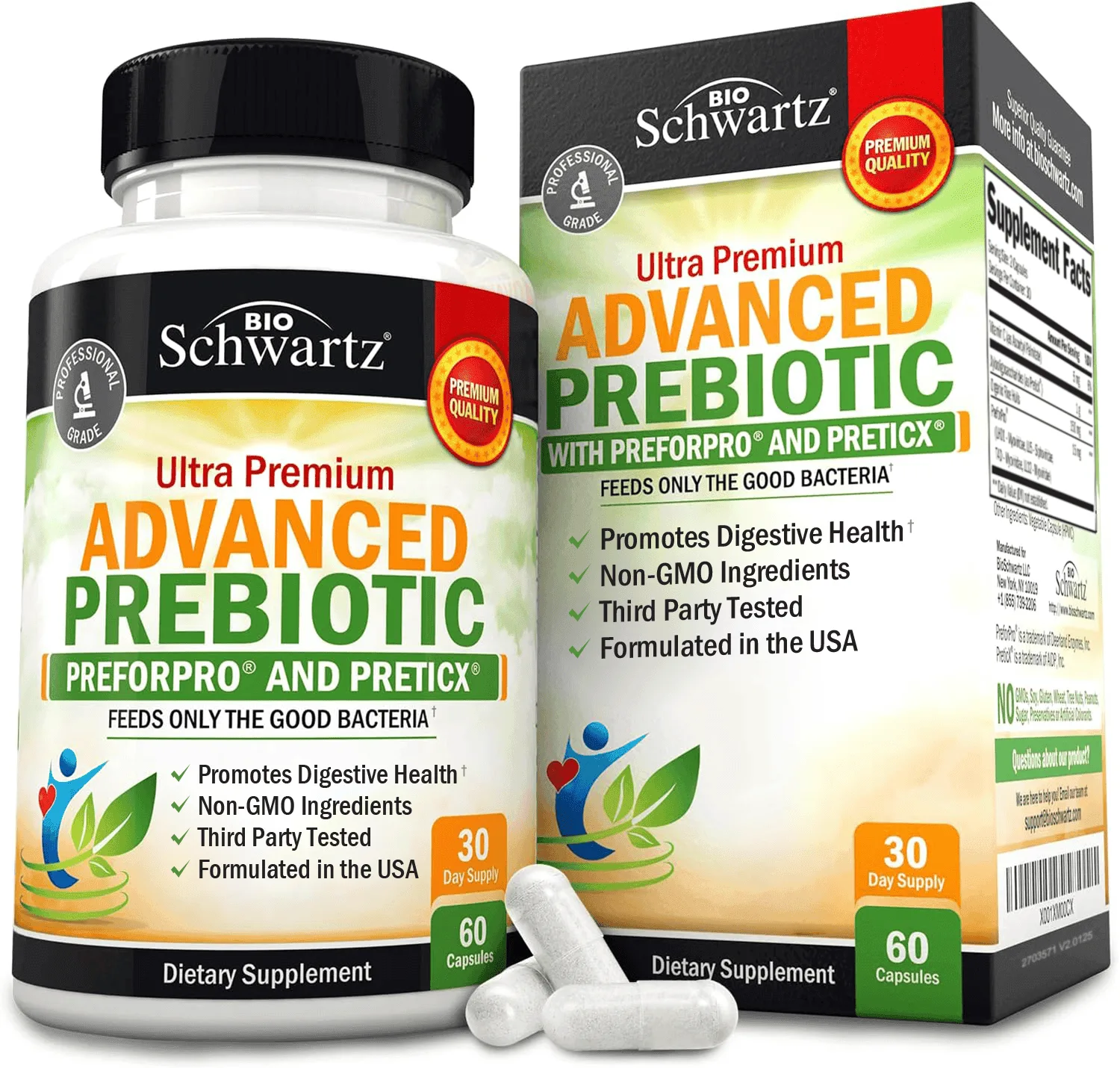
Prebiotics are fibers that feed the bacteria in your gut. They are not the same as probiotics, and they are not enzymes. Some probiotic products include prebiotic fiber so you get both in one capsule, which can simplify your routine if you already know you want bacterial support rather than meal-time enzyme help.
If you are comparing a probiotic with prebiotic fiber to a plain enzyme product, you are comparing two different jobs. The prebiotic does not replace the enzyme, and the enzyme does not replace the probiotic.
Trade-offs to weigh before you buy
- Enzymes act fast, probiotics build slowly: Digestive enzymes work during the meal in front of you. Probiotics need consistent daily use to support the gut environment over time. Choose enzymes for immediate meal-related bloating; choose probiotics for ongoing gut support.
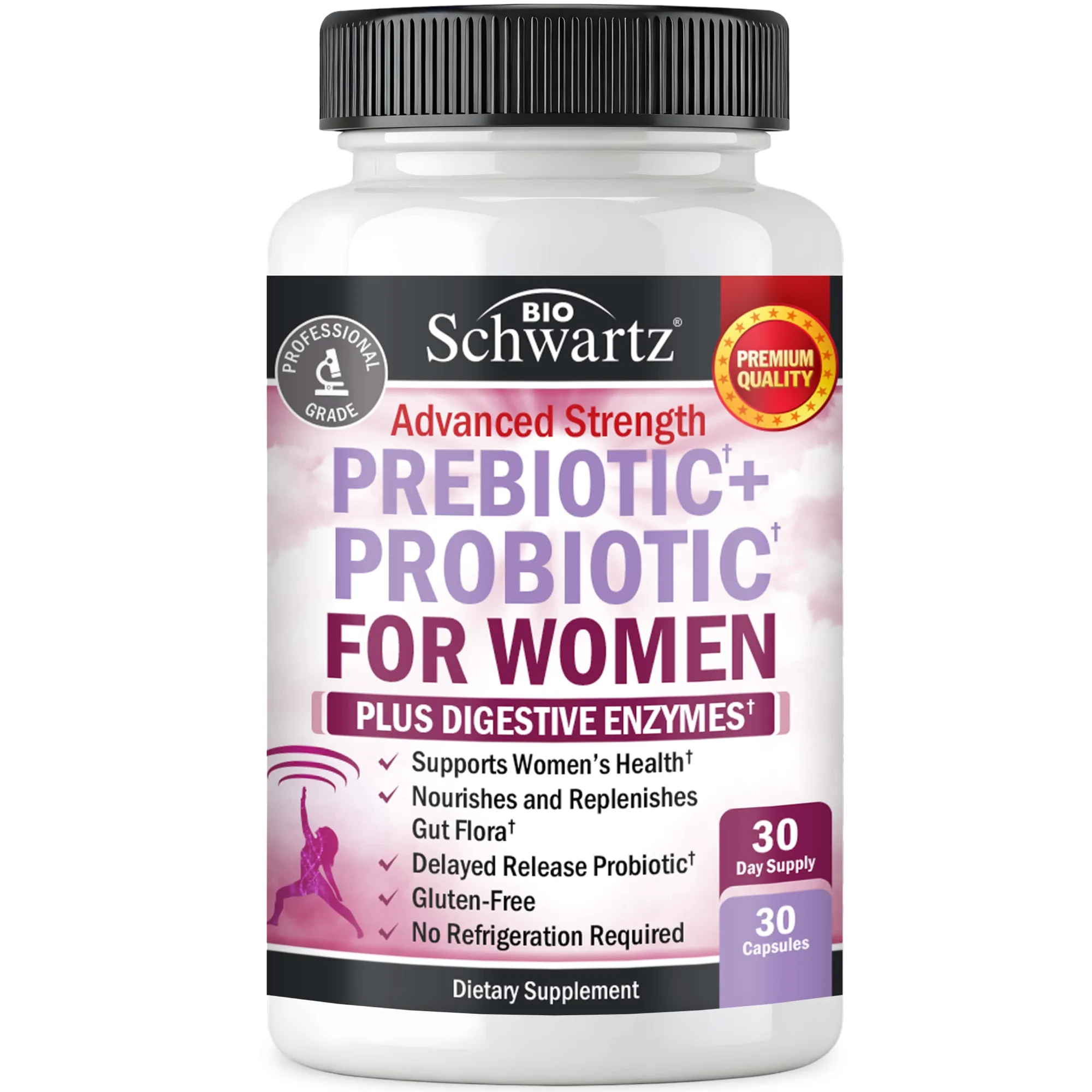
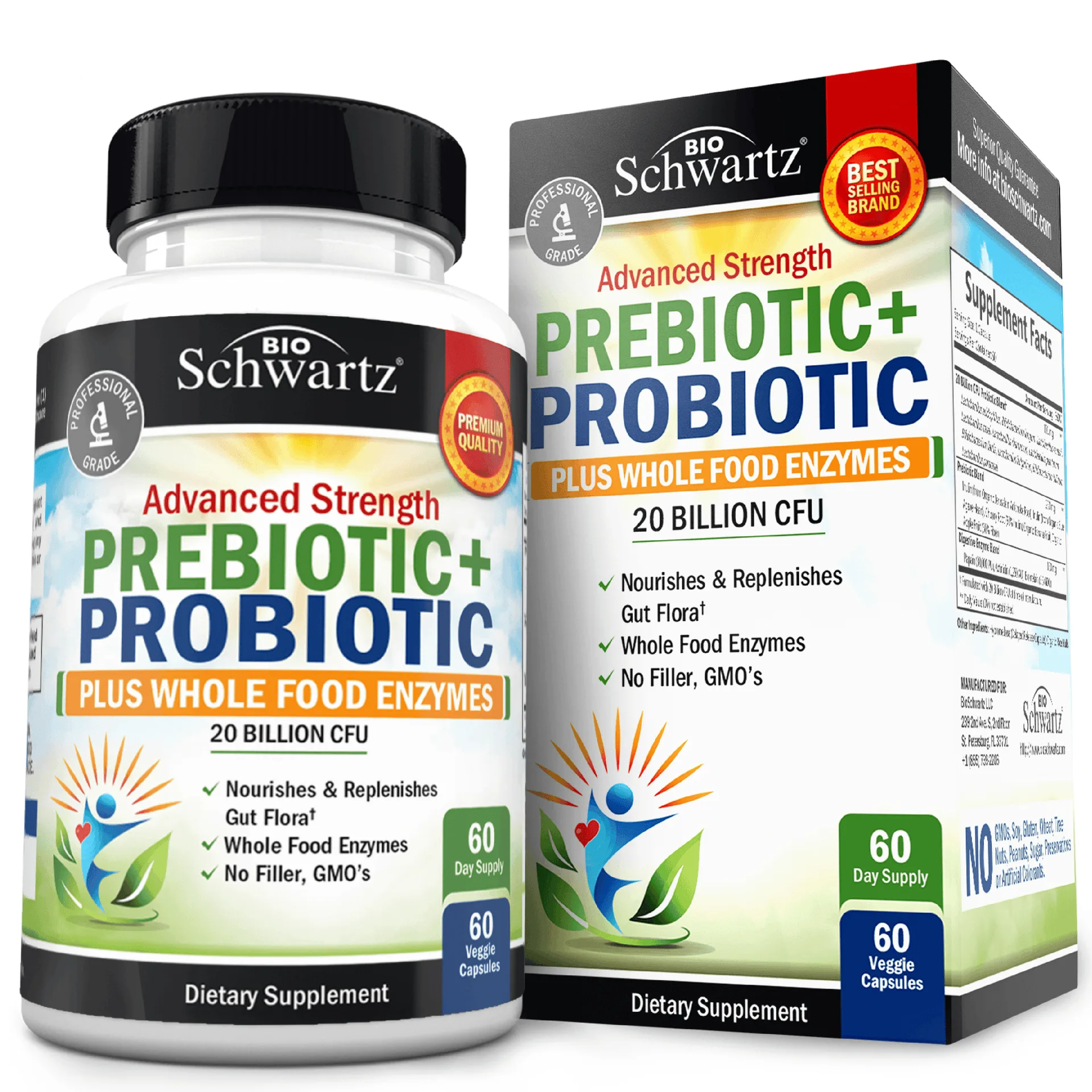
- Enzymes are specific, probiotics are broad: An enzyme blend targets food breakdown. A probiotic targets bacterial balance. Neither replaces the other, and a product that includes both is doing two jobs at once. If you want one capsule for both, look for a formula that lists probiotic strains and enzymes, like Women's Prebiotic + Probiotic Capsules.
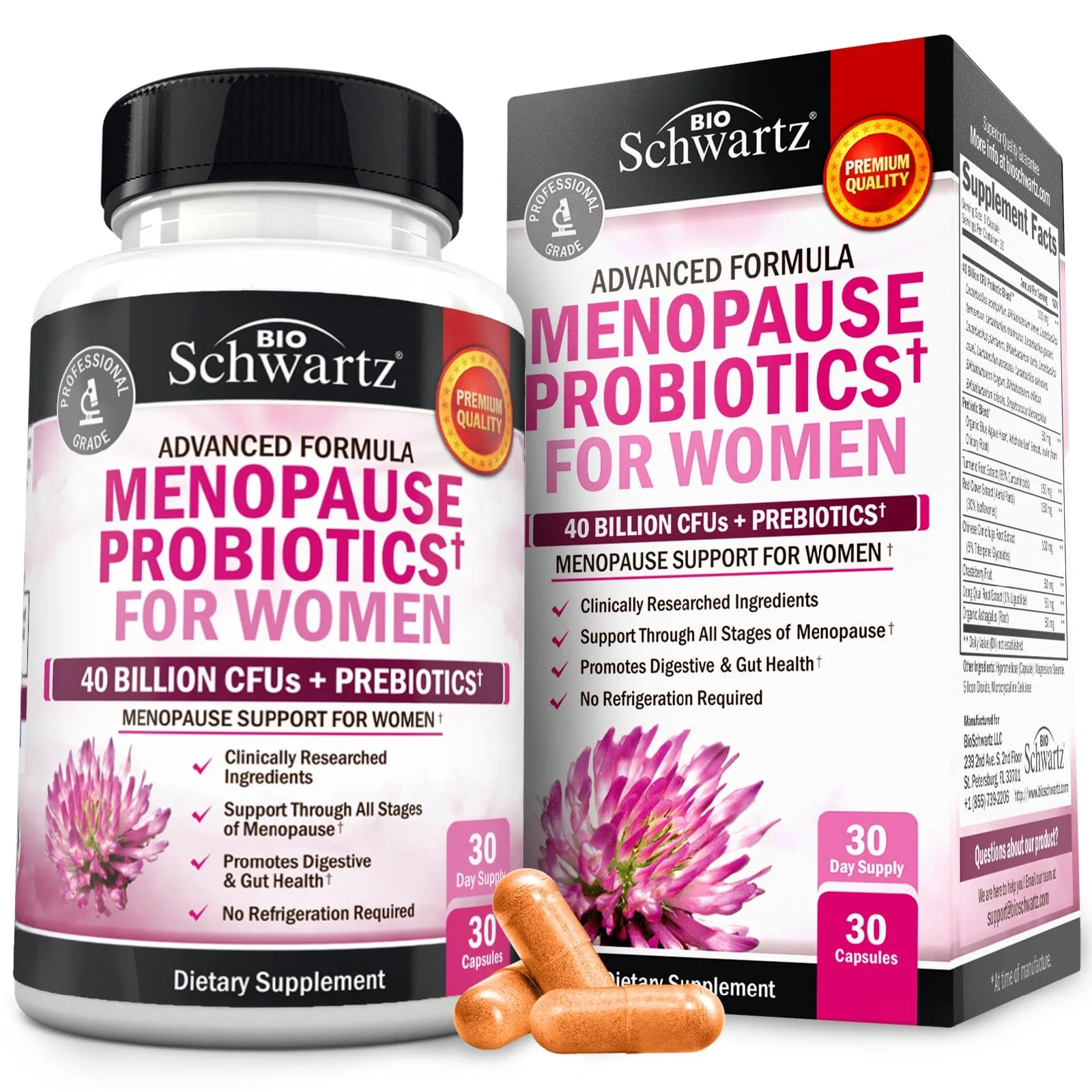
- More strains is not automatically better: Women's Menopause Probiotic Capsules lists 14 strains plus prebiotic fiber and herbs, which is a broad formula. A simpler probiotic may be easier to tolerate if you are sensitive. Start with one product, give it a few weeks, and change only one thing at a time.
Product facts for comparison
- Women's Menopause Probiotic Capsules, 60ct: Women's Menopause Probiotic Capsules, 60ct contains 14 diverse probiotic strains plus organic prebiotic fiber and a natural herbal blend including chasteberry, dong quai, turmeric, black cohosh, and red clover. This is a probiotic-first option with prebiotic fiber and herbs, so it fits someone who wants broad gut and hormone-related support rather than a meal-time enzyme.
- Women's Prebiotic + Probiotic Capsules, 60ct: Women's Prebiotic + Probiotic Capsules, 60ct combines prebiotics and probiotic strains plus digestive enzymes and natural herbs. This one overlaps both categories—probiotic strains plus enzymes—so it can suit someone who wants gut flora support and some digestive breakdown help in one capsule.
- Magnesium Bisglycinate Capsules, 180ct: Magnesium Bisglycinate Capsules, 180ct is a pure magnesium bisglycinate supplement in tiny, easy-to-swallow mini-caps, free of binders, fillers, and other chemical additives, and described as easy on the stomach with no laxative effect. Magnesium is not an enzyme or a probiotic, but it is a common add-on for people managing occasional constipation or muscle tension alongside gut support, and the bisglycinate form is chosen for tolerability.
Who should choose which
Best for
- People who feel bloated or heavy right after meals and want meal-time support
- Women who want a probiotic formula with prebiotic fiber and herbal ingredients for broader gut and hormone-related support
Not for
- Anyone expecting a probiotic to fix immediate meal-related bloating
- People who want a single ingredient and prefer to avoid herbal blends or multi-strain formulas