Quick Answer
Choose a round point shovel for general digging, edging, and breaking up soil; pick a transfer shovel when you need to move loose material like mulch, compost, or snow. Match the handle material to your grip comfort and durability needs.
Blade Shape Determines the Job
The round point shovel has a curved, pointed blade that penetrates compacted soil easily and is ideal for digging holes, transplanting, and edging. Its shape allows you to rock the blade to loosen soil and create a clean cut.
A transfer shovel, also called a scoop shovel, has a wider, flatter blade with a slightly curved edge. It is not meant for digging into hard ground; instead, it excels at scooping and moving loose materials such as soil, gravel, mulch, or snow. The flat edge lets you slide it under piles without catching on the surface.
Handle Material and Grip Trade-offs
Fiberglass handles are lightweight, resist weather, and often include textured grips to reduce slipping, even with gloves. They are a good choice if you want low maintenance and consistent performance in varying conditions.
Wooden handles offer a classic feel and natural shock absorption, but they require more care—such as occasional oiling—and can be more susceptible to splintering or cracking over time. If you prefer a traditional tool and don't mind the upkeep, wood is fine.
Look for handles with reinforced inserts or dual rivets at the connection point; these details indicate a stronger joint that can handle repeated stress without loosening.
Consider the handle length: longer handles (like 58 inches) provide more leverage and reduce bending, which is helpful for taller users or for tasks that require extended reach. Shorter handles are easier to control in tight spaces but require more stooping.
Steel Head Quality and Step Design
The blade's gauge (thickness) affects durability. A 14-gauge steel head is a standard choice for residential use—it's tough enough for most garden jobs without being excessively heavy. Thicker steel (lower gauge) is heavier but more resistant to bending in rocky soil.
Powder-coated heads resist rust and help soil slide off more easily, reducing friction and making each scoop more efficient.
If you often dig by stepping on the shovel, look for a head with oversized flange steps. These provide a larger surface for your foot, distributing pressure and making it more comfortable to drive the blade into the ground.
Decision Rules: Which Shovel Should You Pick?
- Primary task: digging vs. moving: If your main job is breaking ground, digging holes, or edging, choose a round point shovel. If you mostly move loose material like mulch, compost, or soil from a pile, a transfer shovel is the right tool. Match the blade shape to your dominant task—don't try to use one shovel for everything.
- Handle material: fiberglass vs. wood: Choose fiberglass for low maintenance, weather resistance, and a secure grip in all conditions. Choose wood if you prefer a classic feel and are willing to oil and care for the handle to prevent cracking. Consider how much upkeep you're willing to do; fiberglass is more set-and-forget.
- Handle length and leverage: If you are tall or want to reduce back strain, opt for a longer handle (around 58 inches). If you work in tight spaces or need precise control, a shorter handle may be easier to maneuver. Stand upright with the shovel on the ground; the handle should reach your waist or hip for comfortable use.
- Blade durability and step comfort: For rocky or tough soil, look for a 14-gauge steel head and oversized flange steps. These features provide durability and make it easier to push the blade in with your foot. Check the gauge and step design before buying; they affect both longevity and comfort.
Two Shovels to Consider
-
Radius Garden 58-in Long Handle Round Point Digging Shovel, Steel Shovel Head with Fiberglass Shaft: 58-inch long handle with upper and lower textured grips, fiberglass shaft with reinforced steel insert, powder-coated 14-gauge hardened steel head, dual riveted blade with stainless steel collar, and oversized flange steps. This round point shovel is built for heavy digging with extra leverage, a secure grip, and a durable blade that resists rust and bending.
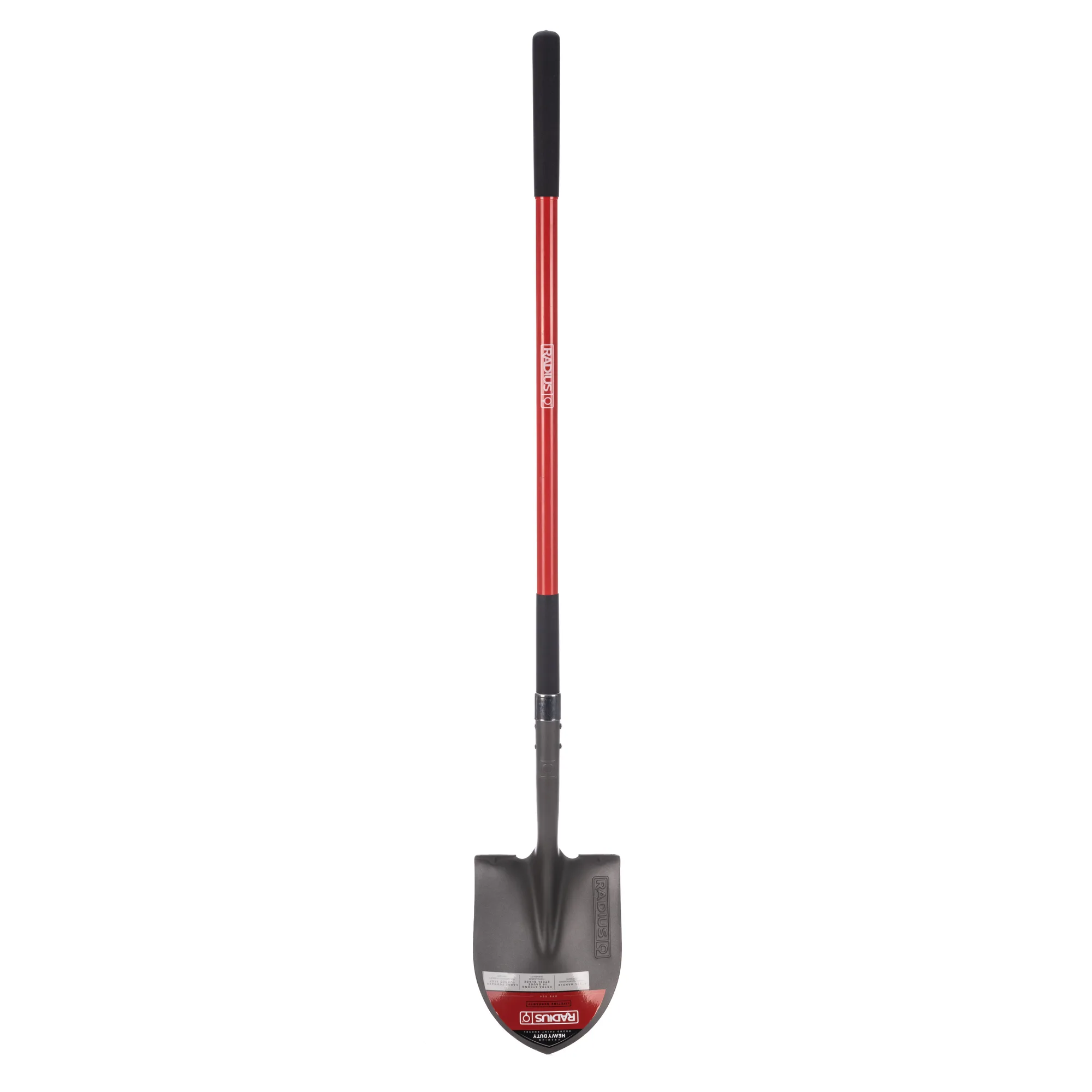
Radius Garden 58-in Long Handle Round Point Digging Shovel, Steel Shovel Head with Fiberglass Shaft
-
Transfer Shovel Wood Long Handle: Wooden long handle with a steel head, designed for versatile gardening tasks. This transfer shovel offers a classic feel and reliable performance for moving loose materials, though the wood handle needs more care than fiberglass.
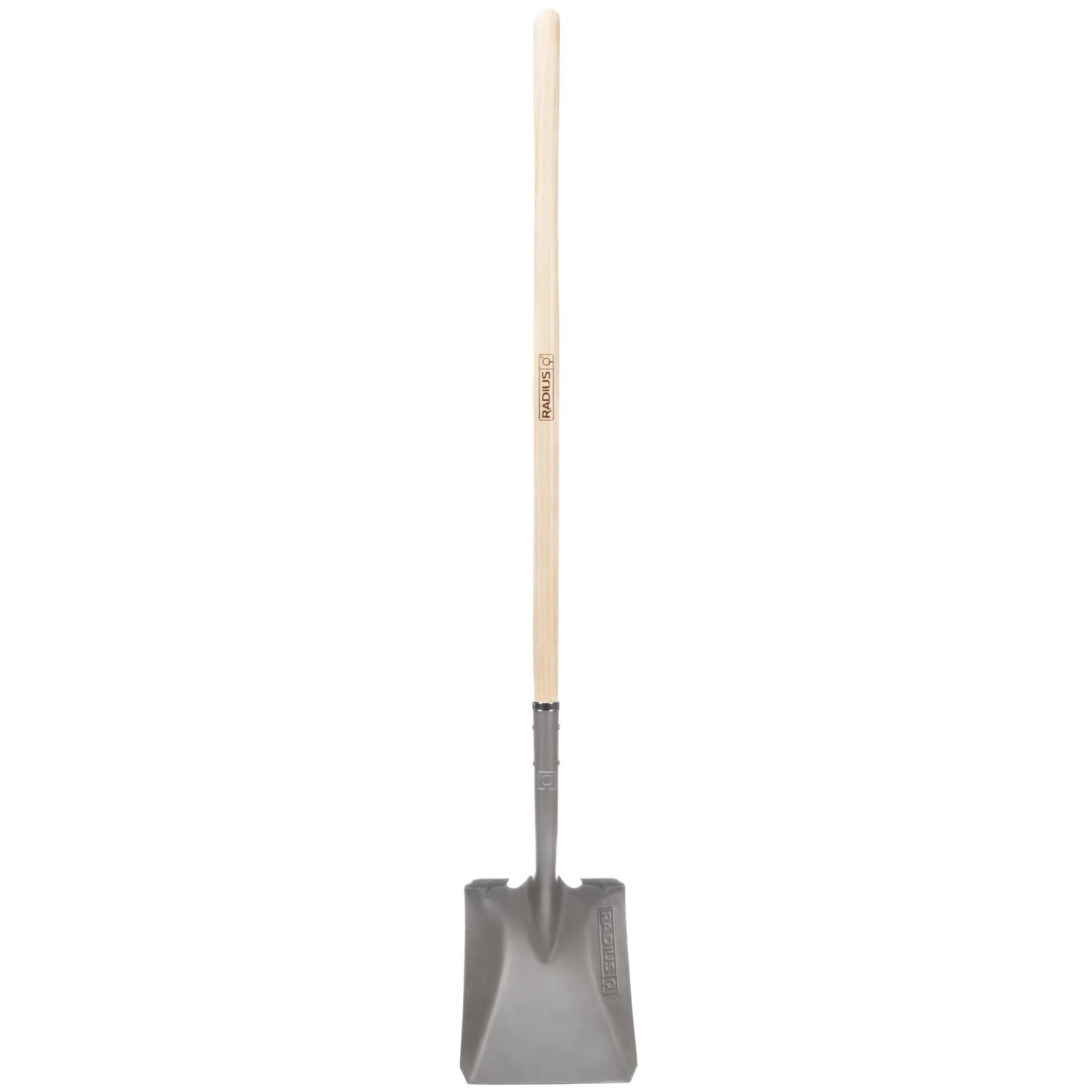
Transfer Shovel Wood Long Handle
Which Shovel Fits You?
Best for
- Gardeners who need a versatile digging tool for planting, edging, and breaking up soil—choose a round point shovel.
- People who frequently move mulch, compost, or loose soil and want a lightweight, easy-to-scoop tool—choose a transfer shovel.
Not for
- Digging into hard, compacted ground with a transfer shovel—you'll struggle and may damage the blade.
- Moving large volumes of loose material with a round point shovel—the pointed blade makes scooping inefficient.