Quick answer
Pick Dimension: The Brain Game To Go if you want a compact, low-setup puzzle you can play solo or pass back and forth, and pick Targi if you want a deeper two-player duel with a shared desert grid and more strategic decisions. Dimension is the quicker, lighter choice; Targi is the deeper, longer choice.
How each game actually plays
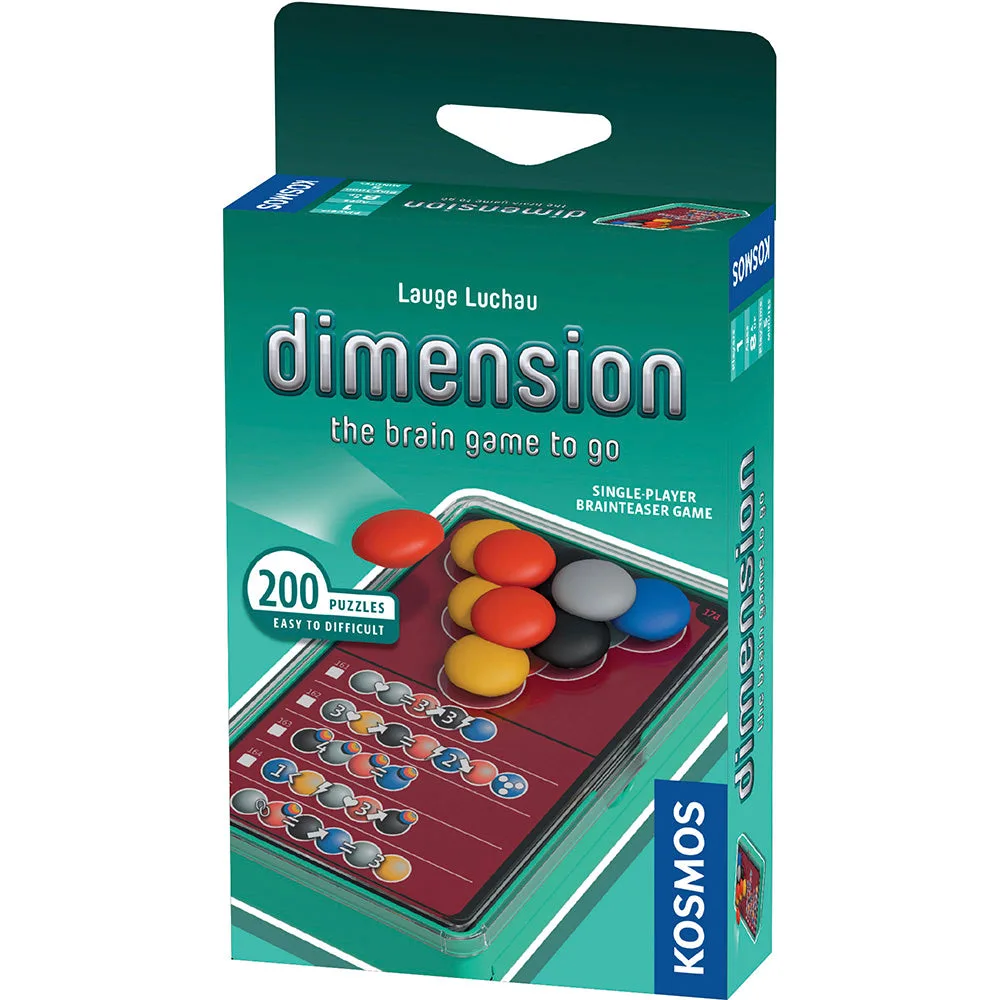
Dimension: The Brain Game To Go is a brain-bending puzzle game where you place stacking pieces on a board following placement rules, such as how many pieces of each color you must use and where a color must sit relative to another. It includes 200 challenges across four difficulty levels and comes in a compact case, so it works as a solo activity or a pass-the-game two-player option.
Targi casts you as a tribe leader in the Sahara, trading dates, salt, and pepper to earn gold coins and advantages. The desert is a five-by-five grid of cards, and you position your Targi figures on the cards bordering the desert, then carry out the actions of those cards plus the cards at the crossroads between them. That shared grid is what makes it a true two-player competition rather than a puzzle you solve side by side.
Setup, table space, and play rhythm
Dimension's compact case and self-contained challenges mean you can start a puzzle almost immediately and stop after one or two, which suits short windows, travel, or waiting rooms. Targi needs the full five-by-five card grid laid out, so it asks for a normal table and a longer, uninterrupted session to feel satisfying.
The practical difference is rhythm: Dimension is a series of quick attempts, while Targi is one continuous back-and-forth where each placement affects what your opponent can do next. If your two-player time is fragmented, Dimension fits better; if you can protect 30-60 minutes, Targi rewards that commitment.
Depth and replay style
Dimension's depth comes from the challenge rules themselves: four difficulty levels and 200 challenges give you a long ladder to climb, but the puzzle is the opponent, not the other player. Targi's depth comes from interaction, since you and your opponent compete for the same cards and crossroads actions.
That means Dimension is easier to teach and easier to play when one person is more experienced, while Targi tends to reward repeated plays against the same opponent as you both learn the card grid. Neither is strictly better; they simply solve different problems.
Cost and what you get
At catalog prices, Dimension: The Brain Game To Go is the lower-cost entry at USD 10.32, and Targi is USD 16.22. Dimension's value is in the 200 challenges and portable case; Targi's value is in the full card-grid game and its two-player interaction.
If you are unsure whether your partner will enjoy a head-to-head game, Dimension is the cheaper way to test the waters. If you already know you want a dedicated two-player strategy game, Targi is the more complete experience for the higher price.
Trade-offs at a glance
- Dimension: portability vs. interaction: The compact case and 200 challenges make it easy to play anywhere, but the puzzle is the challenge, not your opponent. Choose it when convenience and solo play matter more than head-to-head competition.
- Targi: depth vs. setup: The five-by-five card grid and crossroads actions create real strategic decisions, but you need table space and a longer session. Choose it when you can commit to a full two-player game.
- Price vs. replay style: Dimension is USD 10.32 and Targi is USD 16.22; Dimension replays through challenge levels, while Targi replays through opponent interaction. Spend less to test two-player interest, or spend more for a dedicated duel.
Product facts
- Dimension: The Brain Game To Go: Dimension: The Brain Game To Go is a puzzle game with 200 challenges in four difficulty levels and a compact case, played solo or passed between players. It gives you a long solo ladder and a portable two-player option without needing a full table setup.
- Targi: Targi uses a five-by-five grid of desert cards, with Targi figures placed on bordering cards and crossroads actions between them. The shared grid creates direct competition for the same cards, which is the core of its two-player depth.
- EXIT: The Sunken Treasure: EXIT: The Sunken Treasure is a difficulty level 2 of 5 escape-room-style game for ages 10 and up. If you want a cooperative two-player puzzle instead of a competitive one, this is a different format worth considering.
Which one should you get?
Best for
- Solo players who also want an occasional two-player puzzle
- Travel, waiting rooms, or short play windows
- Mixed-experience pairs where one player is much stronger
Not for
- Players who want direct competition over shared resources
- Groups that want a longer, deeper strategy session
- Anyone without a normal table for a five-by-five card grid