What the Discovery Scientific Workbench offers
The Discovery Scientific Workbench is an inventor's workspace designed to introduce children aged four and over to science through hands-on play. It contains materials for over 10 different experiments, each one producing a fun machine that demonstrates a scientific principle. This guide explains what the workbench includes, how to start using it, and what parents should know before their child begins experimenting.
What the catalog confirms
-
Discovery Scientific Workbench: Get started on the road to becoming a scientist with this cool inventor's workbench containing over 10 different experiments! This tells you the workbench is designed as a starting point for scientific exploration, not an advanced lab. The variety of experiments helps children discover different areas of science without needing additional materials.
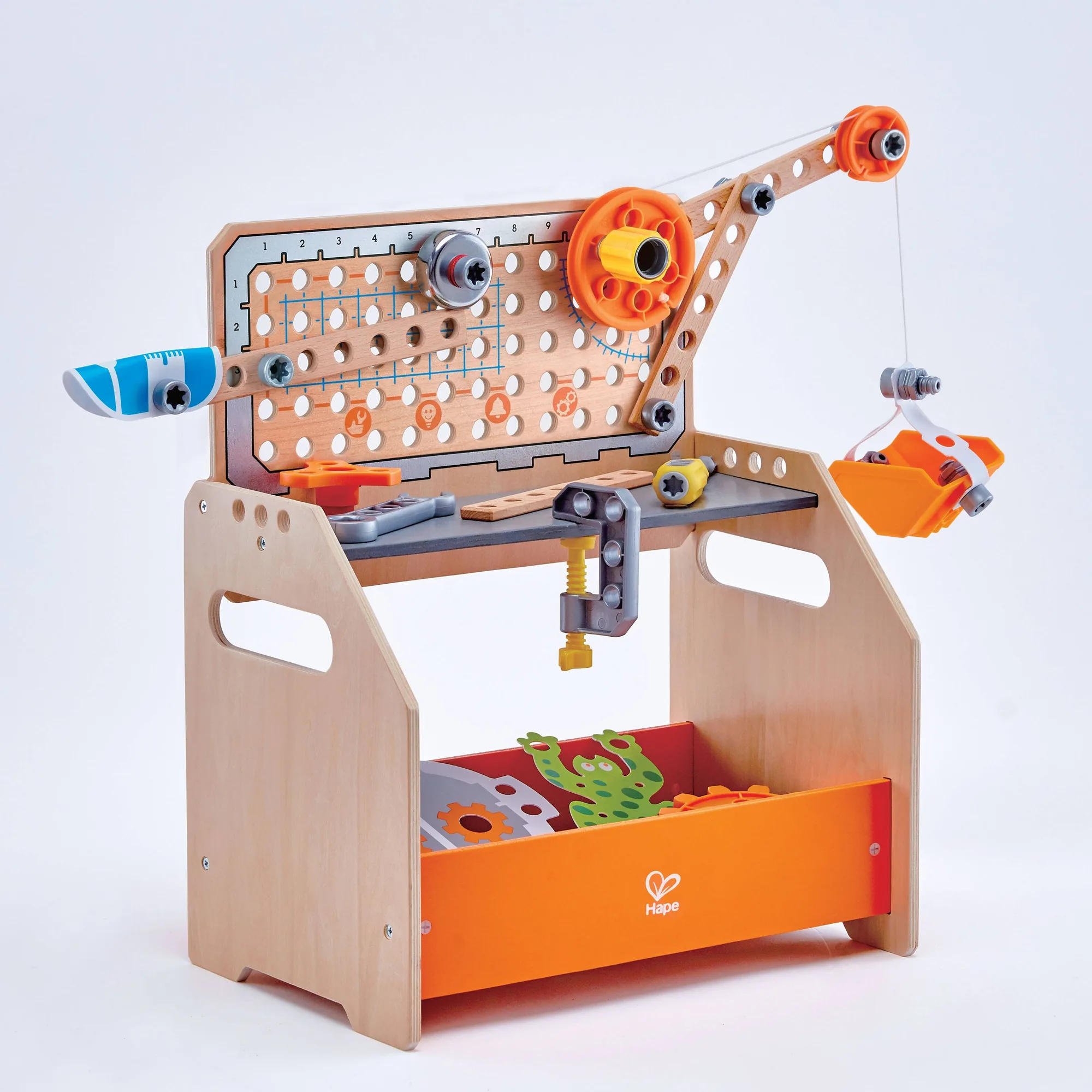
Discovery Scientific Workbench
-
Discovery Scientific Workbench: As children aged four and over complete each experiment, they will produce a fun new machine to teach them about science. The age recommendation of four and up is important for safety and engagement. Each experiment results in a tangible machine, which helps young children connect the activity to a real scientific outcome.
Getting started with the workbench
The workbench arrives ready for play. Follow these steps to set up a successful first science session.
- Unpack and organize the pieces: Open the box and lay out all components on a flat surface. Let your child help sort the items. This familiarizes them with the materials and builds anticipation for the experiments.
- Choose a first experiment together: The workbench includes over 10 experiments. Let your child pick one that looks interesting. Starting with a simple experiment builds confidence and curiosity.
- Follow the experiment steps: Guide your child through the instructions for that experiment. Encourage them to ask questions and make predictions about what will happen. The goal is the process, not perfection.
- Celebrate the machine they built: Once the experiment is complete, talk about how the machine works. Ask your child to explain it to you. This reinforces learning and makes science feel rewarding.
What the supplied information does not confirm
The catalog does not list the specific experiments included, so you won't know exactly which machines your child will build until you open the box. It also does not provide a list of materials or a detailed instruction manual. Parents should expect to supervise and assist, especially with younger children. The workbench is designed for ages four and up, but the complexity of individual experiments may vary.
How to extend play beyond the workbench
After your child completes several experiments, encourage them to modify a machine or combine ideas from different experiments. Ask open-ended questions like 'What would happen if we changed this part?' or 'Can you think of another way to make it move?' This keeps the learning going without needing new materials. The workbench is a starting point for a child's science journey, not a one-time activity.
Who this workbench fits best
The Discovery Scientific Workbench is ideal for children aged four to seven who are curious about how things work and enjoy building. It works well for both solo play and parent-child bonding time. If your child already shows a strong interest in science, this workbench provides a structured but open-ended way to explore. For older children or those who prefer free-form building without instructions, a more advanced kit might be a better fit.