Quick answer
For most people using natural https://koalaecoshop.com/products/dish-soap-93277dish soap, a traditional dish brush with replaceable heads is the better everyday tool: it keeps your hands out of hot water, rinses cleaner between uses, and avoids the trapped-food smell that sponges develop. A sponge still wins for wiping flat counters and gentle curved glass. If you want one tool that supports plastic-free dish cleaning, start with a brush and keep a sponge only for non-dish tasks.
How the two tools actually differ at the sink
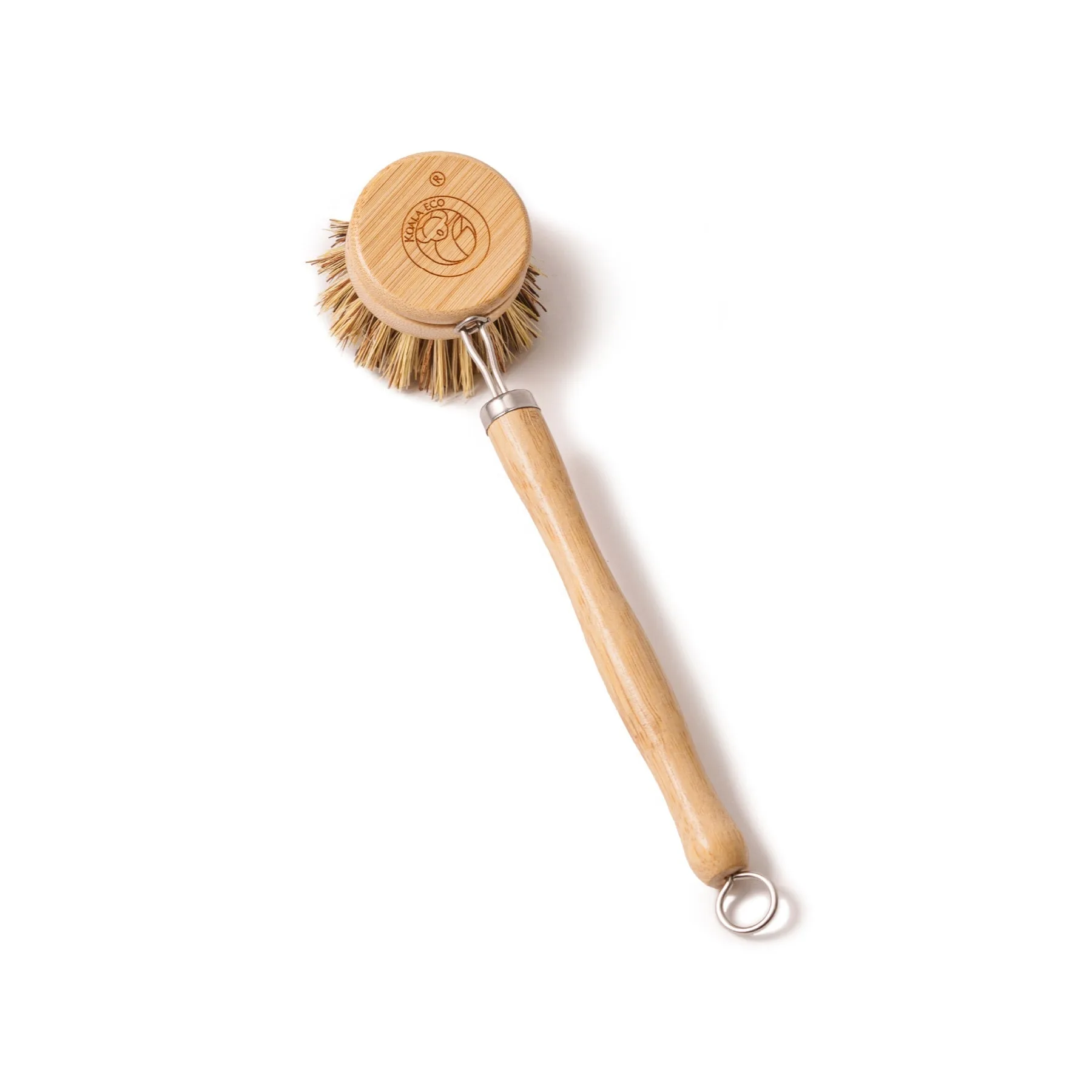
A dish brush has stiff bristles mounted on a handle. The Traditional Dish Brush from Koala Eco uses sustainable bamboo with agave-plant bristles and a wire spring-load attachment that lets you eject the old brush head and fit a replacement. That replaceable-head design is the main practical difference: when bristles splay or smell, you swap the head instead of the whole tool. A sponge, by contrast, is a block of open-cell foam that holds water, soap, and food particles inside its structure. Natural dish soap lifts grease the same way on both tools, but the sponge keeps a reservoir of dirty water against the surface you are cleaning, while the brush rinses far more completely under the tap.
Hygiene: why brush heads stay fresher
Sponges are the harder tool to keep clean because their cells trap moisture and debris. Even if you rinse a sponge thoroughly, the inner foam stays damp for hours, which is exactly the condition odor-causing bacteria prefer. A brush dries faster because bristles expose more surface area to air, and you can store it bristles-down in a rack so water drains away from the head. Neither tool is sterile, but the brush gives you a simpler daily routine: rinse, shake, and let it air-dry. With a sponge you are managing a wet object that never fully dries between meals.
Plastic-free dish cleaning and end-of-life
If plastic-free dish cleaning is your goal, the brush is the clearer choice. The Traditional Dish Brush is made from bamboo and agave bristles, and because the head is replaceable, you are not throwing away a whole handle every few weeks. Most kitchen sponges are synthetic foam and often contain added antimicrobial treatments; they go to landfill whole. That said, no tool is perfect. Bamboo can crack if left soaking in water, and agave bristles soften over time, so you still replace heads periodically. The trade-off is smaller waste volume and a handle that stays out of the bin.
Performance with natural dish soap
Natural dish soap relies on plant-based surfactants and essential oils rather than harsh solvents, so the tool matters for how well it builds lather and rinses. A brush works the soap into crevices on plates and cutlery without absorbing it, so you use less product per wash. A sponge soaks up soap and water, which means you often add more soap to keep suds going. For baked-on residue, the brush's stiff bristles give more scrubbing force with less hand pressure. For delicate items like wine glasses or non-stick pans, a soft sponge is gentler and less likely to scratch.
Trade-offs at a glance
- Traditional Dish Brush: Bamboo handle, agave bristles, replaceable head via wire spring-load attachment. Stiff bristles scrub better and dry faster, but can scratch delicate non-stick or thin glass if you press hard. Best all-rounder for everyday plates, cutlery, and pots with natural dish soap.
- Kitchen sponge: Soft, flexible, and good for wiping counters and curved surfaces. But it traps water and food inside the foam, stays damp, and is usually synthetic foam that goes to landfill whole. Keep one for non-dish wiping, not as your primary dish tool.
- Soap use: A brush releases soap onto the dish instead of absorbing it, so you tend to use less per wash. A sponge soaks up soap and water, so you often add more to keep suds. If you want to stretch natural dish soap, reach for the brush first.
Product facts
- Traditional Dish Brush: Traditional Dish Brush is made from sustainable bamboo with bristles of agave plant and a wire spring-load attachment that lets you eject the old brush head and fit a replacement. Replaceable heads mean you keep the handle and only swap the worn part, which reduces waste and keeps a fresh scrubbing surface for natural dish soap.
- Hand & Body Lotion: Hand & Body Lotion is a 16.9 oz formula with essential oils and no synthetic fragrance, combining rosalina and peppermint to soothe skin. Frequent dishwashing dries out hands; keeping a lotion by the sink makes it easier to stick with a brush-and-soap routine instead of reaching for a sponge.
Which should you choose?
Choose a dish brush if you
- Wash dishes daily and want a tool that dries fast and rinses clean
- Want plastic-free dish cleaning with replaceable heads instead of whole-tool waste
- Use natural dish soap and want to use less per wash
Choose a sponge instead if you
- Mainly wipe counters, tables, and curved non-dish surfaces
- Need a very soft touch for delicate glass or non-stick pans
- Prefer a disposable tool you replace often without maintaining a handle