Quick answer
A smelly dish cloth sponge usually means bacteria are thriving in trapped moisture and food residue. The fix is a quick daily rinse, squeeze, and air-dry—plus an occasional deep clean with boiling water or vinegar.
Why the smell happens
Dish cloth sponges are porous and hold onto moisture, bits of food, and soap scum. When left damp in a sink or on a counter, bacteria multiply rapidly, producing that sour, musty odor. The warmer your kitchen, the faster this happens.
When cleaning isn't enough
If your sponge smells even after a deep clean, or if it's starting to fall apart, it's time to replace it. A worn sponge can't be fully sanitized and may spread bacteria instead of removing it.
Diagnosis & fix steps
- Symptom: A sour, musty smell coming from the sponge, especially when wet.
- Likely cause: Bacteria and mold growing in trapped moisture and food particles inside the sponge's pores.
- Corrective action (daily): After each use, rinse the sponge thoroughly, squeeze out as much water as possible, and store it in a dry, well-ventilated spot—not in the sink or on a wet surface. A dry sponge is a fresh sponge.
- Corrective action (weekly deep clean): Microwave the damp sponge for 1 minute (only if it contains no metal) OR soak it in a 50/50 white vinegar and water solution for 5 minutes, then rinse and air-dry. Deep cleaning kills bacteria that daily rinsing misses.
- Stop or replace: If the sponge still smells after a deep clean, or if it's frayed or falling apart, replace it immediately. A compromised sponge cannot be fully sanitized. When in doubt, throw it out.
Product facts
-
DISH CLOTH SPONGE - ICONIC AUSTRALIAN LOLLIES: The DISH CLOTH SPONGE - ICONIC AUSTRALIAN LOLLIES is made from cellulose and cotton, which dries faster than conventional sponges. Faster drying means less time for bacteria to grow, so this sponge stays fresher longer between uses.
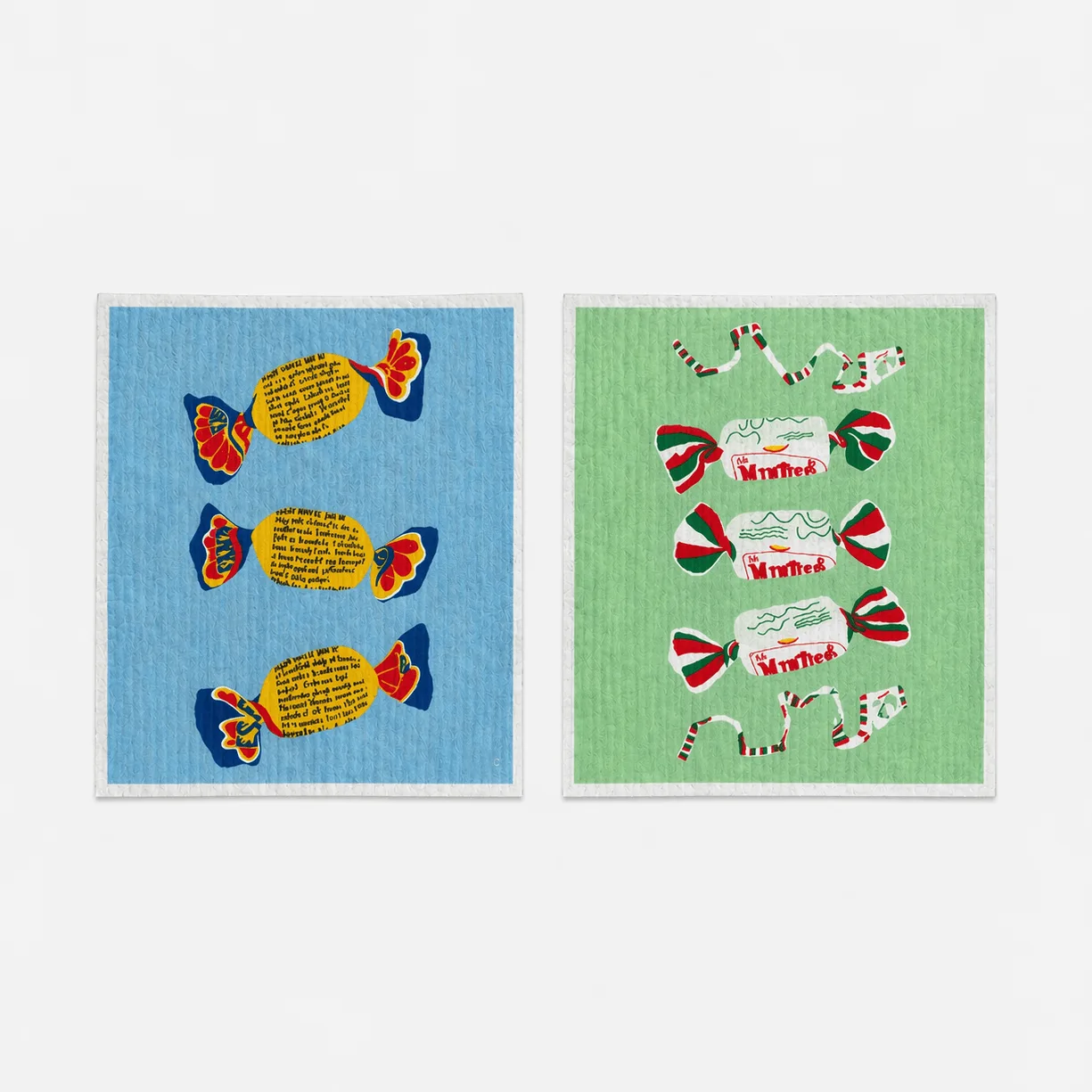
DISH CLOTH SPONGE - ICONIC AUSTRALIAN LOLLIES