Quick answer
A dish washing brush with a replaceable head generally lasts longer than a sponge because the handle stays in service while only the worn head is swapped. A sponge is cheaper up front and better for delicate, flexible cleaning, but it typically degrades faster and is thrown away whole.
Why a replaceable head changes the lifespan math
A sponge is a single unit: when it wears out, smells, or falls apart, the whole thing goes in the trash. A brush with an interchangeable head separates the durable part from the wear part. The handle and frame keep working, and you replace only the bristle head when it stops scrubbing well.
That design means the brush's useful life is really the life of its handle plus however many heads you use. The Package Free Dish Washing Brush uses a beechwood handle, stainless steel, and sisal fiber bristles, with replacement heads sold separately. You are not guessing about hidden plastic; the materials are listed.
Hygiene: different cleaning jobs, different weak points
Sponges hold water and food particles in an open, porous structure, which is why they can develop odors quickly and are hard to clean thoroughly. A brush's bristles shed water and food more readily, and the handle keeps your hand out of the mess. Neither tool is sterile, but a brush is easier to rinse and air-dry between uses.
The trade-off is reach and flexibility. A sponge conforms to curved bowls, glass rims, and nonstick surfaces. A brush with stiff plant-based bristles is better for scrubbing pots and plates but less gentle on delicate items. If you wash a lot of thin glass or coated pans, you may still want a soft sponge or cloth for those jobs.
Plastic-free dish washing is not automatic
A plastic-free dish brush avoids the molded plastic handle and foam body of a typical sponge, but only if you actually use the replacement heads instead of tossing the whole brush. The Package Free brush's sisal bristles are plant-based, and the head is described as compostable, so the worn part can go to compost rather than landfill in a suitable system.
A conventional sponge is usually made of synthetic foam and often wrapped in plastic film. Even a plant-based sponge may have a plastic scrub layer. If plastic reduction is your main goal, the brush has the clearer end-of-life story, provided you buy and use replacement heads.
Trade-offs at a glance
- Upfront cost: A sponge costs less to buy, while a brush costs more initially. The brush's cost is spread over replacement heads rather than whole new tools. If you replace sponges often, compare the cost per month, not the shelf price.
- Lifespan: A sponge is discarded whole when it degrades. A brush's handle and frame remain, and only the head is replaced. A long lasting dish brush depends on actually buying replacement heads before the bristles wear out.
- Hygiene and drying: Sponges trap water and food in pores and can smell quickly. A brush rinses cleaner and air-dries faster, but it cannot conform to curved or delicate surfaces the way a sponge can. Keep a soft cloth or sponge for delicate glass and nonstick if you switch to a brush for everyday scrubbing.
- Plastic and waste: A plastic-free dish brush with a compostable head reduces plastic compared with a synthetic foam sponge, but only if the replacement-head system is used. Check that replacement heads are available before you commit to the brush.
Product facts
-
Package Free Dish Washing Brush: The Package Free Dish Washing Brush has a reusable beechwood handle and a compostable, interchangeable sisal-bristle head. You replace only the head when it wears out, so the handle keeps working and the worn part can be composted instead of landfilled.
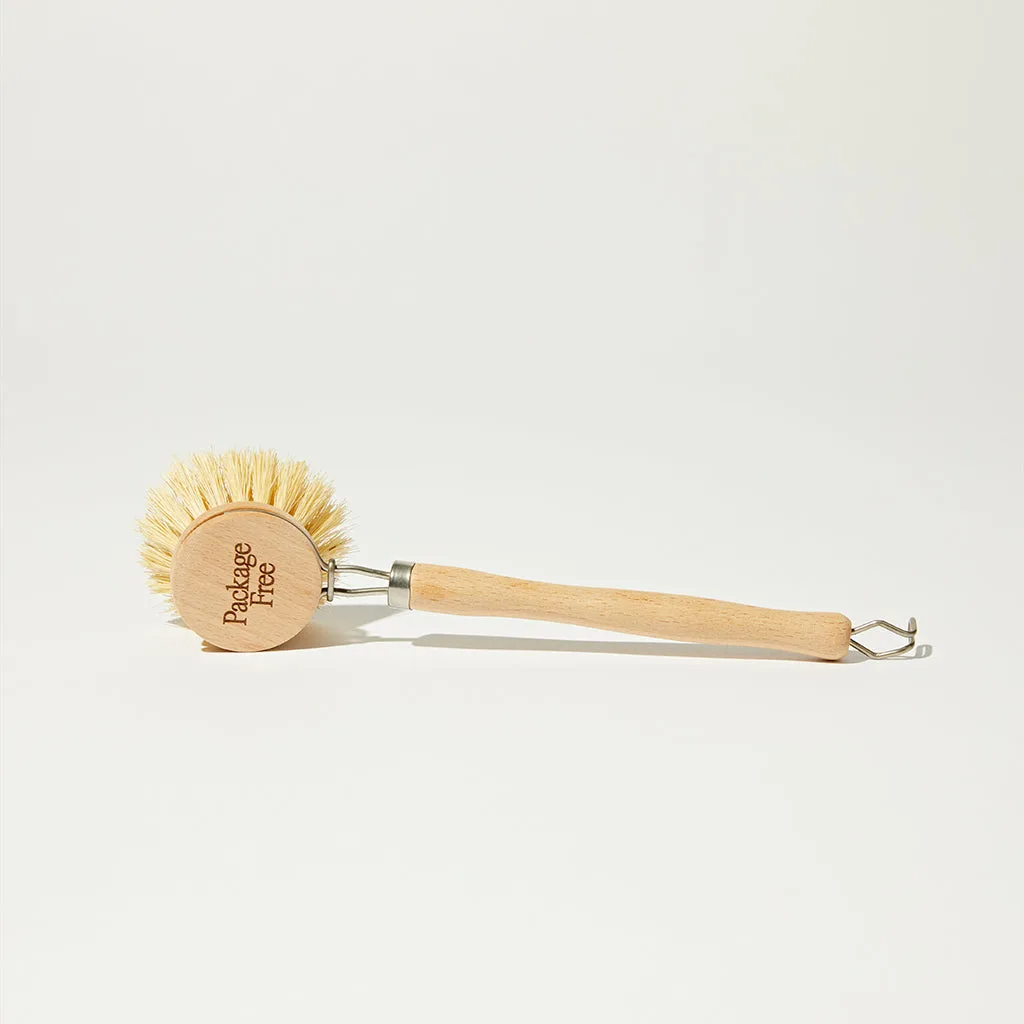
Package Free Dish Washing Brush
Which should you choose?
Choose the brush if
- You wash pots, plates, and sturdy dishes daily and want a tool that outlasts a sponge.
- You want to cut plastic waste and are willing to buy replacement heads.
- You prefer a handle that keeps your hand out of greasy water.
Choose a sponge or cloth instead if
- You mostly wash delicate glass, thin rims, or nonstick surfaces that need a soft, conforming tool.
- You want the lowest possible upfront cost and do not want to manage replacement parts.
- You rarely hand-wash dishes, so a long-life tool would sit unused.