Quick answer
Display your Devotion Red Uncut in a UV-filtering frame with acid-free matting, handle it only by the edges with clean cotton gloves, and store it flat in a cool, dry place away from direct sunlight.
Why the red foil and secret courts change your display plan
The Devotion Red Uncut is not a standard uncut sheet. Its metallic inks on the front and red foil on the back are sensitive to fingerprints, moisture, and prolonged light exposure. The back foil in particular can show smudges that are difficult to remove without risking damage.
Because only nine were made and the court cards are meant to stay secret, your display should keep the sheet face-up and fully covered by glazing. Avoid any setup that lets visitors handle the sheet or angle it toward a window.
When a frame is not the right choice
Framing is the default for display, but it is not always the best first step. If your room has high humidity, strong daily sunlight, or frequent temperature swings, a framed sheet can trap moisture or fade over time. In those cases, store the sheet flat in an archival box and display a high-quality print or photo instead.
Also skip framing if you plan to move the sheet often. Each handling adds risk, and a framed piece is heavier and more awkward to transport than a flat archival folder.
Step-by-step: display and protect your Devotion Red Uncut
- Set up a clean, flat workspace: Clear a table away from windows, vents, and food or drink. Lay down a clean, soft cloth or a sheet of acid-free paper larger than the uncut sheet. Wash and dry your hands, then put on clean cotton gloves. Never work over a hard floor or near the edge of a table; one slip can crease a corner.
- Inspect the sheet before framing: With gloves on, lift the sheet only by opposite edges and check both sides under bright, indirect light for existing creases, foil scuffs, or ink marks. Photograph any flaws for your records before proceeding. If you find active flaking or sticky residue, stop and consult a conservator before framing.
- Choose an archival frame and mat: Select a frame with UV-filtering glazing (acrylic or glass) and acid-free, lignin-free mat board. Make sure the frame interior is at least 1 inch larger than the sheet on each side so the mat overlaps only the blank border, not the printed area. Avoid pressure-mounted frames that clamp the sheet directly; they can leave permanent indentations.
- Mount the sheet without adhesives: Use photo corners made of acid-free paper or archival mounting strips attached to the back of the mat, not to the sheet. Position the sheet face-up so the red foil back rests against the mat board and the metallic front faces the glazing. Never use tape, glue, or dry-mount tissue on the sheet itself.
- Seal and position the frame: Close the frame backing and seal the edges with acid-free frame sealing tape to keep out dust and insects. Hang or stand the frame away from direct sunlight, radiators, and humid rooms such as bathrooms. Keep the front facing outward so the secret court cards stay hidden. Check the frame monthly for condensation or loosening; address any issue immediately.
- Store the sheet safely when not displayed: If you rotate your display, place the sheet flat in an acid-free archival box with a sheet of glassine or acid-free tissue between it and the lid. Store the box in a cool, dry closet away from light and heavy traffic. Do not store the sheet vertically or stack heavy objects on top of the box.
Product facts
-
Devotion Red Uncut: Only 9 Devotion Red Uncut sheets were made, and the court cards are meant to remain secret. With so few in existence, any handling mistake is costly, so treat every step as if it is the only chance to get it right.
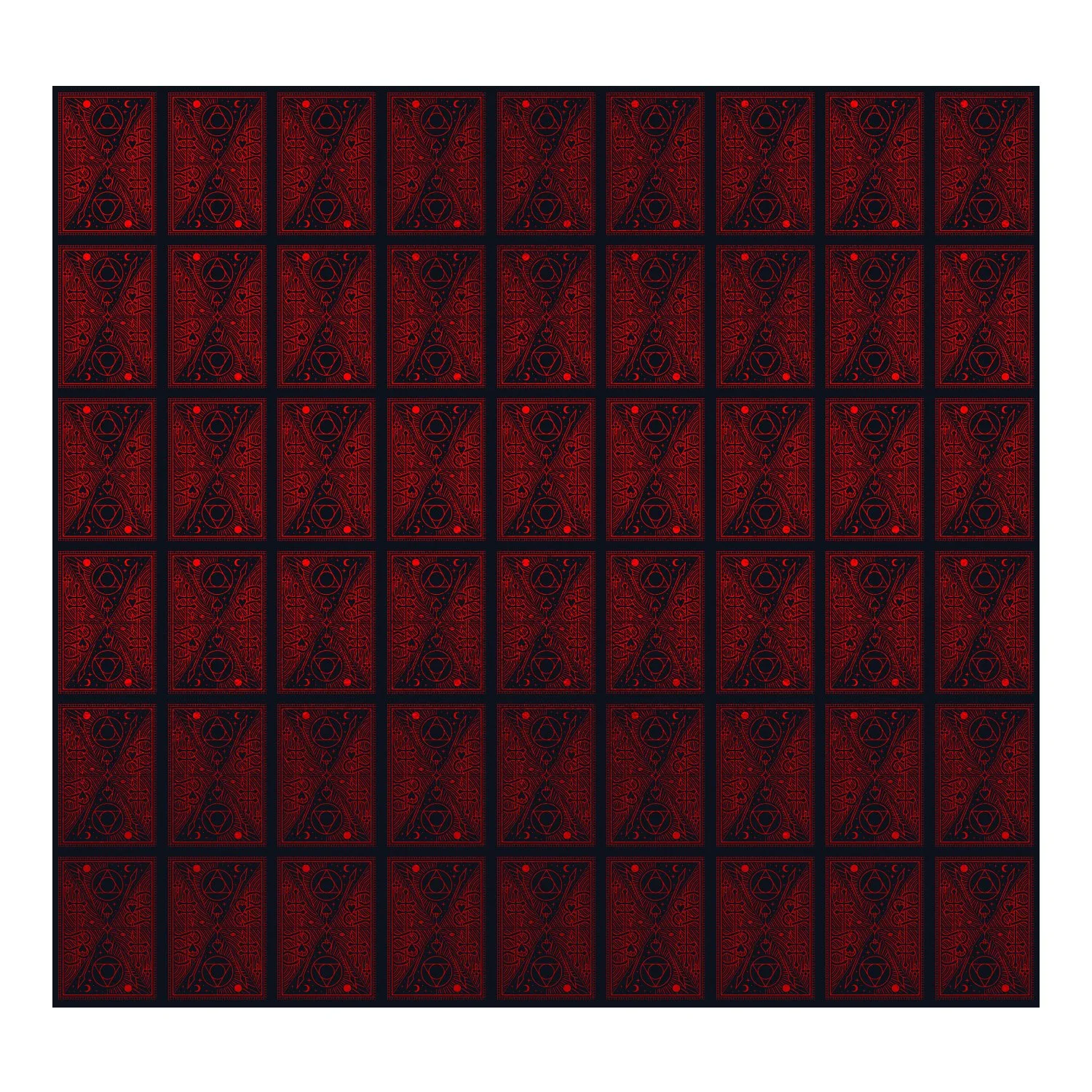
Devotion Red Uncut
-
Devotion Red Uncut: The sheet has red foil on the back and metallic inks on the front. These finishes are vulnerable to oils and abrasion, so gloves and edge-only handling are essential.
-
Devotion Red Uncut: It is a limited edition printed by LPCC and sold without a frame. You will need to source your own archival frame and materials, which gives you control over UV protection and fit.