Quick answer
Treat display as a three-part decision: keep dust off with a cover or closed shelf, keep direct sun off with a spot that never gets harsh light, and keep handling low by picking up models at the frame rather than by small parts. If you rotate builds often, choose open shelving plus a soft brush; if a model stays out for years, choose an enclosed case or a fitted cover and check fasteners once a season.
A finished eitech model is a small metal structure, and like any structure it ages according to where it stands. Dust settles into screw heads and hole edges, strong sunlight fades and stresses plastic and painted parts, and repeated grabbing bends the thin profiles that give a build its shape. None of that happens overnight, which is exactly why a few decisions now save a lot of repair later.
This guide gives you concrete rules for choosing a display spot, a shelf type, and a cover, plus how to clean and store builds without loosening what you assembled. You do not need a museum setup. You need to match the display method to how long the model stays out and how often people touch it.
Choose the spot before you choose the shelf
Light and traffic decide most of your display problems. A windowsill with direct afternoon sun is the worst common spot: heat cycles loosen press-fit connections and UV fades colored parts over months. A hallway shelf that people brush past is the second worst, because accidental contact bends long flat bars and knocks small parts loose. Aim for a wall that gets bright but indirect light, out of walkways, and away from radiators, vents, and kitchen steam.
Height matters too. Put models at eye level or above where possible. Low shelves invite handling by younger children and collect more floor dust. If a build is meant to be played with, that is a different decision than display, and it should live in a bin or on an open play shelf rather than a display spot.
- Test a spot for a week: if you see a bright sun patch move across it, it is a fading risk.
- Keep at least a hand-width of clearance in front of a shelf so nothing gets snagged.
- Avoid rooms with wide temperature swings, such as unheated attics or sunrooms.
Open shelf, closed case, or cover: pick by rotation
If you rebuild or swap models every few weeks, open shelving is the practical choice. Dust accumulates slowly, and a quick pass with a soft brush keeps things presentable. You trade some cleaning time for easy access and no storage cost. This suits hobbyists who treat builds as temporary and enjoy the assembly more than the display.
If a model stays assembled for months or years, an enclosed case or a fitted cover wins. A closed cabinet, acrylic case, or even a lightweight cover reduces dust dramatically and keeps curious hands off small parts. The trade-off is cost, space, and the fact that enclosed spaces can trap moisture if you seal a damp model inside. Let a newly handled model dry fully before covering it.
A middle option is a cover that rests on the model only at the base, not on the structure itself. That protects from dust without putting weight on thin profiles. Whatever you choose, the cover should not press down on the build.
- Open shelf: best for frequent rebuilding, accepts more dusting.
- Closed case: best for long-term display, costs more and needs dry conditions.
- Fitted cover: best compromise, but never let it rest on the model.
How to clean an eitech build without loosening it
Start dry. A soft brush, such as a clean makeup brush or a soft paintbrush, lifts dust from flat bars and hole edges without pushing it deeper. Work top to bottom so dust falls away rather than onto lower parts. For tight corners around screws and plates, a gentle puff of air from a camera blower works better than a cloth, which can catch on exposed edges.
Avoid wet wipes and household sprays on assembled models. Moisture can sit in joints and around plated surfaces, and some cleaners leave residue that attracts more dust. If a part truly needs more than dry brushing, remove it from the model first, clean it separately, dry it completely, and reattach it. That keeps cleaning from becoming a rebuild.
Check fasteners after cleaning. A brush can nudge a loose screw, and a screw that backs out on a display shelf is easy to miss until a part drops.
- Brush top to bottom, never in circles over screw heads.
- Use air for crevices, not cloth, to avoid snagging edges.
- Re-tighten any fastener that moved during cleaning.
Long-term storage that protects the build
If a model comes off display, store it partly disassembled rather than fully assembled. Large flat structures are the easiest things to bend in a box, and a bent long bar is hard to straighten cleanly. Breaking a build into two or three sub-assemblies keeps the shape recognizable while reducing the span that can flex. Keep small parts in a labeled bag or compartment so you can rebuild without hunting.
Use a rigid box, not a soft bag, and fill empty space so parts cannot slide. A layer of acid-free tissue or clean cloth between sub-assemblies prevents metal-on-metal scuffing. Store the box flat, not on its side, and keep it in a dry, stable place. Humidity is the real enemy here: it encourages corrosion on bare or scratched surfaces over long periods.
Label the box with the model name and the date you stored it. When you reopen it a year later, you will know what is inside and whether anything needs attention before rebuilding.
- Disassemble into sub-assemblies instead of storing one large frame.
- Use a rigid box with filler so nothing slides.
- Store flat, dry, and labeled with model name and date.
When small parts and accessories help your display
Display care sometimes comes down to a single part. A missing cladding plate or a bent flat bar can make a model look unfinished on the shelf, and replacing one component is far cheaper than retiring the build. Keeping a few common parts on hand means you can repair a display model the same day you notice the problem instead of storing it away.
The same logic applies to builds that share a shelf. If two models use similar plates or bars, a small spare stock lets you swap a damaged part between them and keep both presentable. Check the part number and dimensions before ordering so the replacement matches the original profile.
- Keep one or two spare flat bars and plates for quick display repairs.
- Match SKU and dimensions before replacing a part.
- Repair small damage early; it rarely fixes itself on a shelf.
Display decision rules
- Model stays out under a month: Use open shelving in indirect light and dust with a soft brush before putting it away. Do not buy a case for a build you will rebuild soon. Access beats protection at this rotation speed.
- Model stays out for years: Choose an enclosed case or a fitted cover that does not rest on the structure, and keep the spot out of direct sun. Check fasteners once a season. Protection beats access here; accept the cost and space.
- Children are in the room: Place models above reach or behind closed doors, and give children their own making space instead of the display shelf. Separation prevents most accidental damage.
- Model is going into storage: Disassemble into two or three sub-assemblies, pad a rigid box, store flat in a dry spot, and label it with the model name and date. Flat and rigid protects thin profiles.
Parts and pieces that support display care
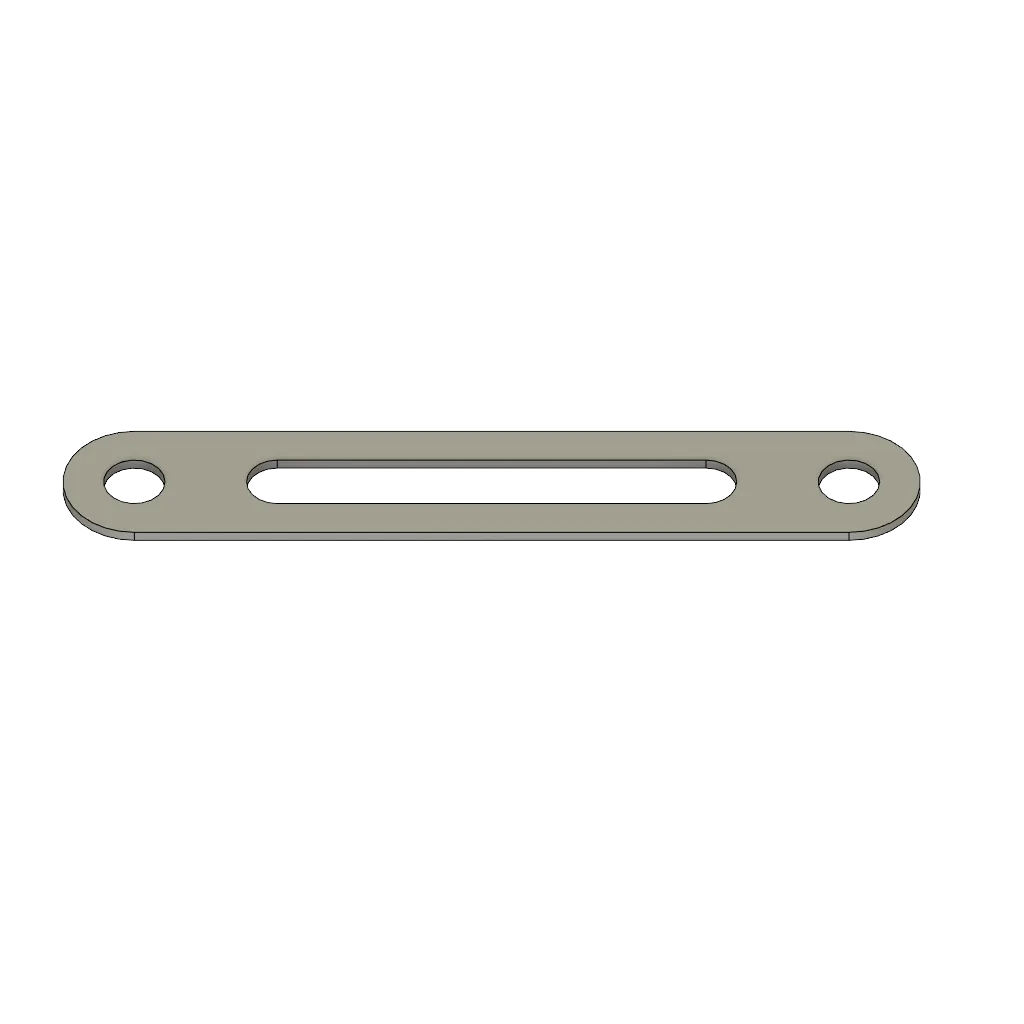
- Flat bar 6-hole (long hole): The eitech Flat bar 6-hole (long hole) is a Manufaktur component, SKU 01005, measuring 60 mm long and 10 mm wide, with six holes including a long hole. Its slim 10 mm width makes it one of the easier parts to bend during handling or storage, so it is a sensible spare to keep for display repairs and a good reason to store models disassembled rather than as one large frame.
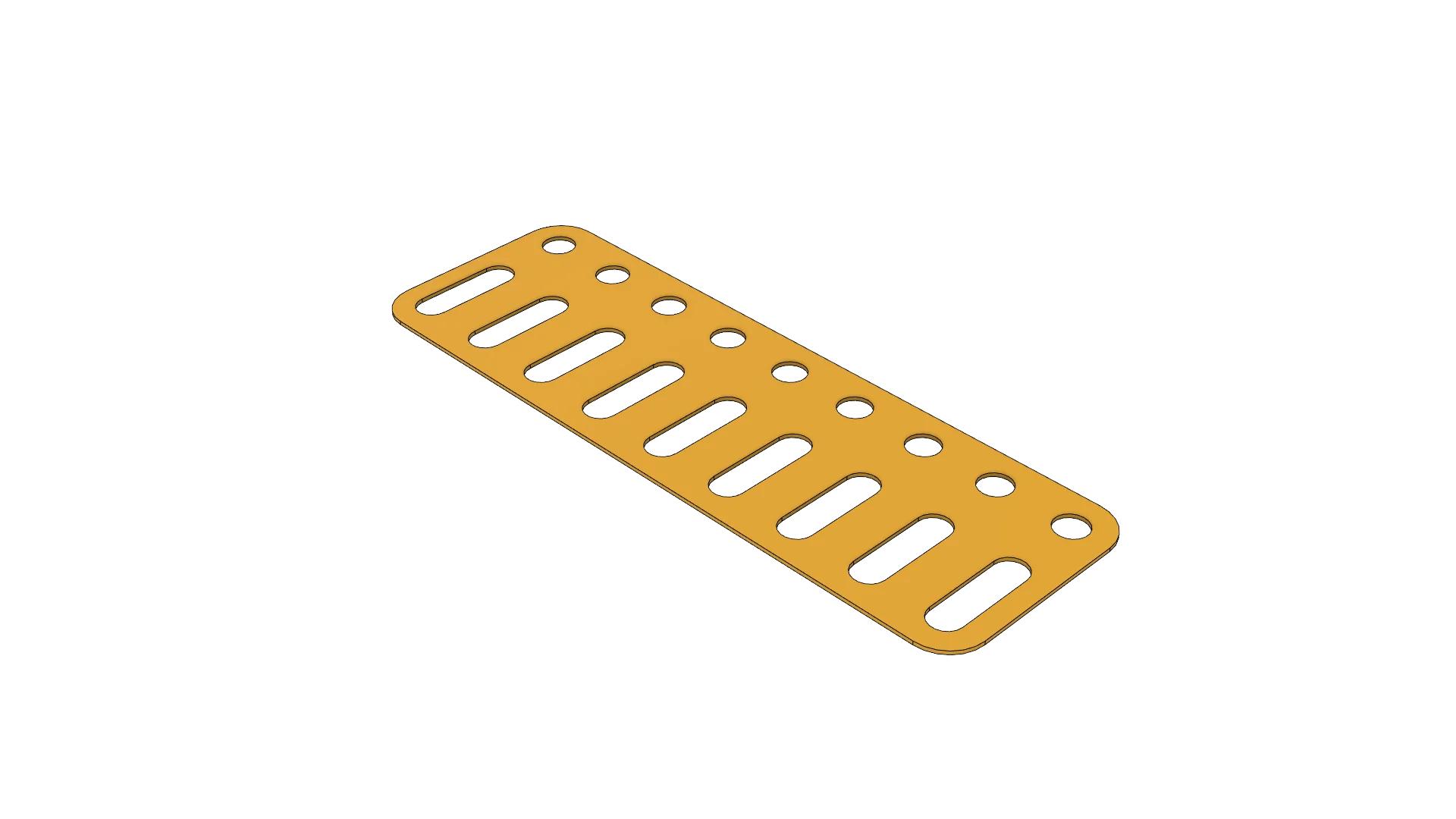
- Cladding plate 9x3-hole, yellow: The eitech Cladding Plate 9x3-hole is a yellow Manufaktur component supplied under SKU 01132 GELB as a Standard option. Colored plates are the parts most likely to show fading from direct sunlight, so if a build stays on open display, keep it out of harsh light or plan to replace faded plates rather than the whole model.
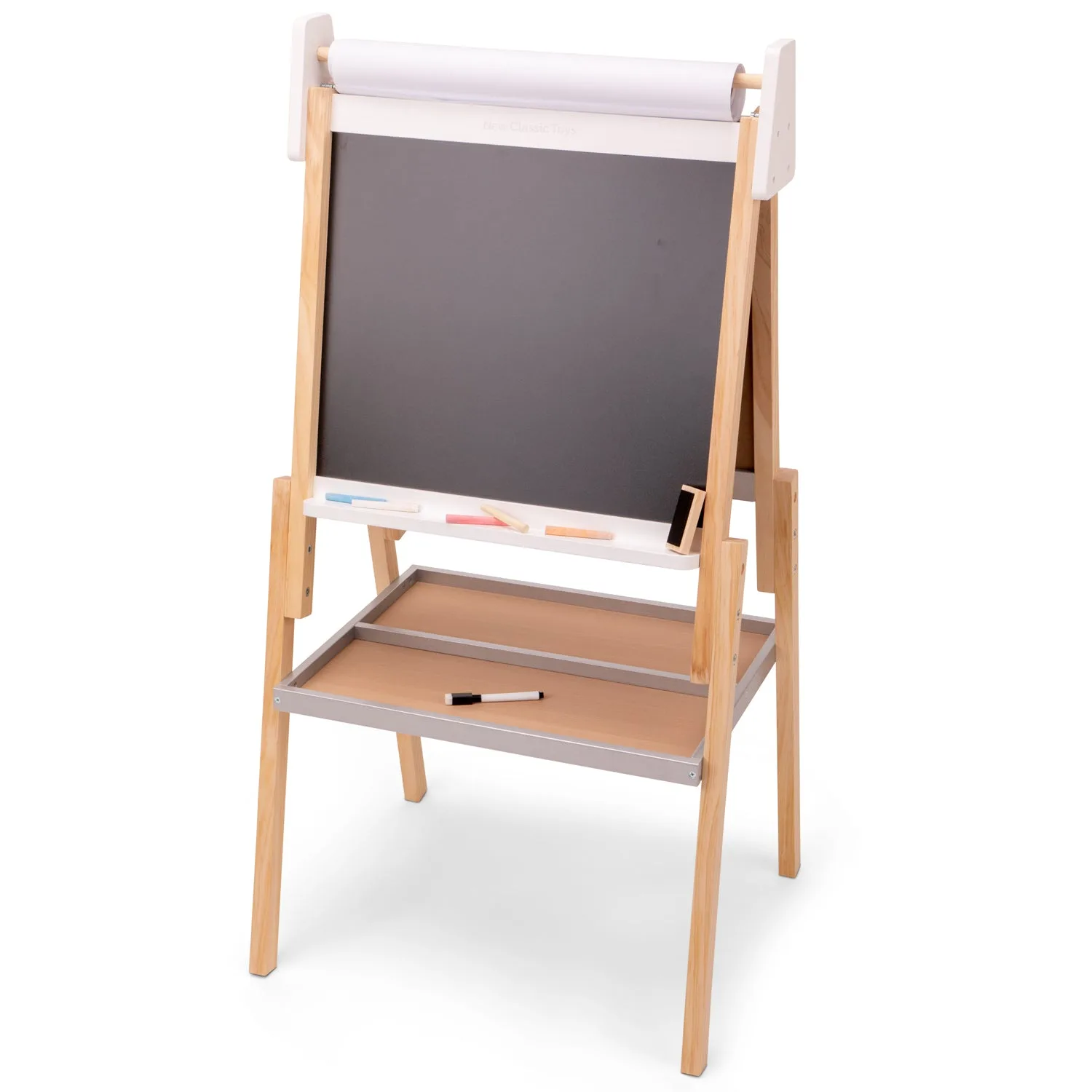
- All-in-1 board - white: This New Classic Toys art and drawing table is height-adjustable and includes a blackboard, a magnetic whiteboard, and a paper roll, with five crayons, an eraser, and a marker. If children share the room where models are displayed, a dedicated activity table gives them a place to create that is not the display shelf, which reduces accidental contact with builds.
Is this display approach right for you?
Best for
- Hobbyists who keep finished eitech builds on show and want them to stay straight and clean
- Households where models share a room with children and need a low-contact display spot
- Anyone storing a build for months and wanting it to survive the box
Not for
- Builders who take models apart within days and only care about the assembly process
- Collectors who need museum-grade climate control and archival materials
- Anyone expecting a display method to fix an already bent or corroded model
Display care for eitech models is mostly about matching protection to rotation: open shelves for builds that change often, covers or cases for builds that stay out, and flat, padded storage for everything in between. Pick the spot first, keep direct sun and busy hands away, clean dry, and keep a couple of spare parts on hand so a small problem never ends a build's time on the shelf.