Creating a stimulating environment for your baby doesn't always require expensive store-bought equipment. With a few common household items, you can build a DIY baby play gym that encourages sensory exploration, tummy time, and early motor development. This budget-friendly approach allows you to customize the gym to your baby's interests and your home's aesthetic.
A play gym provides a safe space for your baby to reach, grasp, and kick, which are crucial for building strength and coordination. By using materials you already have, you can repurpose items like blankets, wooden spoons, and fabric scraps into engaging toys. Plus, making your own gym gives you control over colors, textures, and sounds, tailoring the experience to your baby's developmental stage.
Why Choose a DIY Baby Play Gym?
A DIY baby play gym offers several advantages over store-bought models. First, it's cost-effective—you can use items you already own, saving money for other essentials. Second, it's customizable: you can choose high-contrast patterns, soft fabrics, or dangling objects that match your baby's preferences. Third, it's sustainable, reducing plastic waste by using natural or recycled materials.
From a developmental perspective, a homemade gym can be just as effective as a commercial one. The key is to include elements that stimulate your baby's senses: visual (black and white patterns or bright colors), auditory (crinkly fabrics or gentle bells), and tactile (different textures like silk, cotton, or felt). This multisensory approach supports brain development and encourages curiosity.
- Use a sturdy blanket or yoga mat as the base for the gym.
- Hang lightweight objects from a wooden frame or tension rod.
- Rotate toys every few days to maintain your baby's interest.
Materials You'll Need for Your DIY Play Gym
To build a simple DIY play gym, gather the following household items: a large blanket or play mat (a fleece throw or quilt works well), two sturdy chairs or a table, a wooden dowel or broomstick, and string or ribbon. For hanging toys, you can use items like wooden spoons, measuring cups, fabric scraps, or even a small rattle. Make sure all items are lightweight and securely fastened.
For added visual stimulation, consider incorporating black and white patterns, which are especially effective for newborns. You can print or draw high-contrast shapes on paper and hang them. Soft fabrics like velvet or fleece add tactile variety. Always supervise your baby during use and ensure that all hanging elements are out of reach to prevent entanglement.
- Check that the frame is stable and won't tip over.
- Avoid small parts that could be a choking hazard.
- Use non-toxic paints or markers if decorating items.
Step-by-Step Instructions to Assemble Your Gym
Start by placing your blanket or mat on the floor in a clear area. Position two sturdy chairs facing each other, about 3-4 feet apart. Place a broomstick or dowel across the chair backs to create a horizontal bar. Secure the dowel with tape or rubber bands to prevent slipping. Alternatively, you can use a tension rod between two walls or a table edge.
Next, cut lengths of ribbon or string and tie them to the dowel, leaving enough slack for objects to dangle just above your baby's reach when lying down. Attach your chosen household items to the strings—for example, tie a wooden spoon horizontally so it spins, or clip a fabric square with a clothespin. Test each item to ensure it moves easily and is securely attached.
- Hang objects at varying heights to encourage reaching.
- Include a crinkly item by stuffing a fabric square with a plastic bag.
- Add a small mirror (shatterproof) at the base for self-discovery.
Developmental Benefits of a Homemade Play Gym
A DIY play gym supports several key areas of infant development. During tummy time, your baby will practice lifting their head and chest, strengthening neck and shoulder muscles. Reaching for dangling objects improves hand-eye coordination and fine motor skills. The variety of textures and sounds encourages sensory integration, which is foundational for learning.
You can also use the gym to introduce cause-and-effect concepts. For example, tie a bell to a string so that when your baby bats at it, it rings. This simple feedback loop delights babies and teaches them that their actions have consequences. Over time, you can add new objects to challenge their growing abilities, such as a soft block or a rattle.
- Rotate objects to target different senses each week.
- Use high-contrast patterns for newborns, then add colors as they grow.
- Include a familiar object like a teether for comfort.
Safety Tips for Your DIY Baby Play Gym
Safety is paramount when creating a DIY play gym. Always supervise your baby during use. Ensure that the frame is stable and cannot collapse. Check that all hanging objects are securely attached and cannot be pulled loose. Use ribbons shorter than 12 inches to avoid strangulation risks. Remove any items with sharp edges or small parts that could break off.
Regularly inspect the gym for wear and tear. Replace any frayed ribbons or loose knots. If you use a blanket as the base, make sure it is non-slip or place a yoga mat underneath to prevent sliding. Avoid using heavy objects that could fall and injure your baby. When your baby starts to sit up or pull to stand, discontinue use of the gym to prevent tipping.
- Never leave your baby unattended with the DIY gym.
- Use only lightweight, baby-safe materials.
- Disassemble the gym when not in use to avoid accidents.
When to Transition to a Store-Bought Play Gym
While a DIY play gym is a great starting point, you may eventually want to invest in a commercial option for added features and durability. Store-bought gyms often include built-in toys, music, and adjustable arches that can grow with your baby. For example, the Tiny Mariners Developmental Gymini offers a nautical theme with multiple hanging toys and a soft mat, perfect for extended play.
Another excellent option is the Luxe Developmental Gymini, which features a modern design and a variety of sensory elements. These products are rigorously tested for safety and can be used from birth through the crawling stage. If you find that your baby outgrows the DIY version, consider upgrading to a commercial gym that provides more stimulation and longevity.
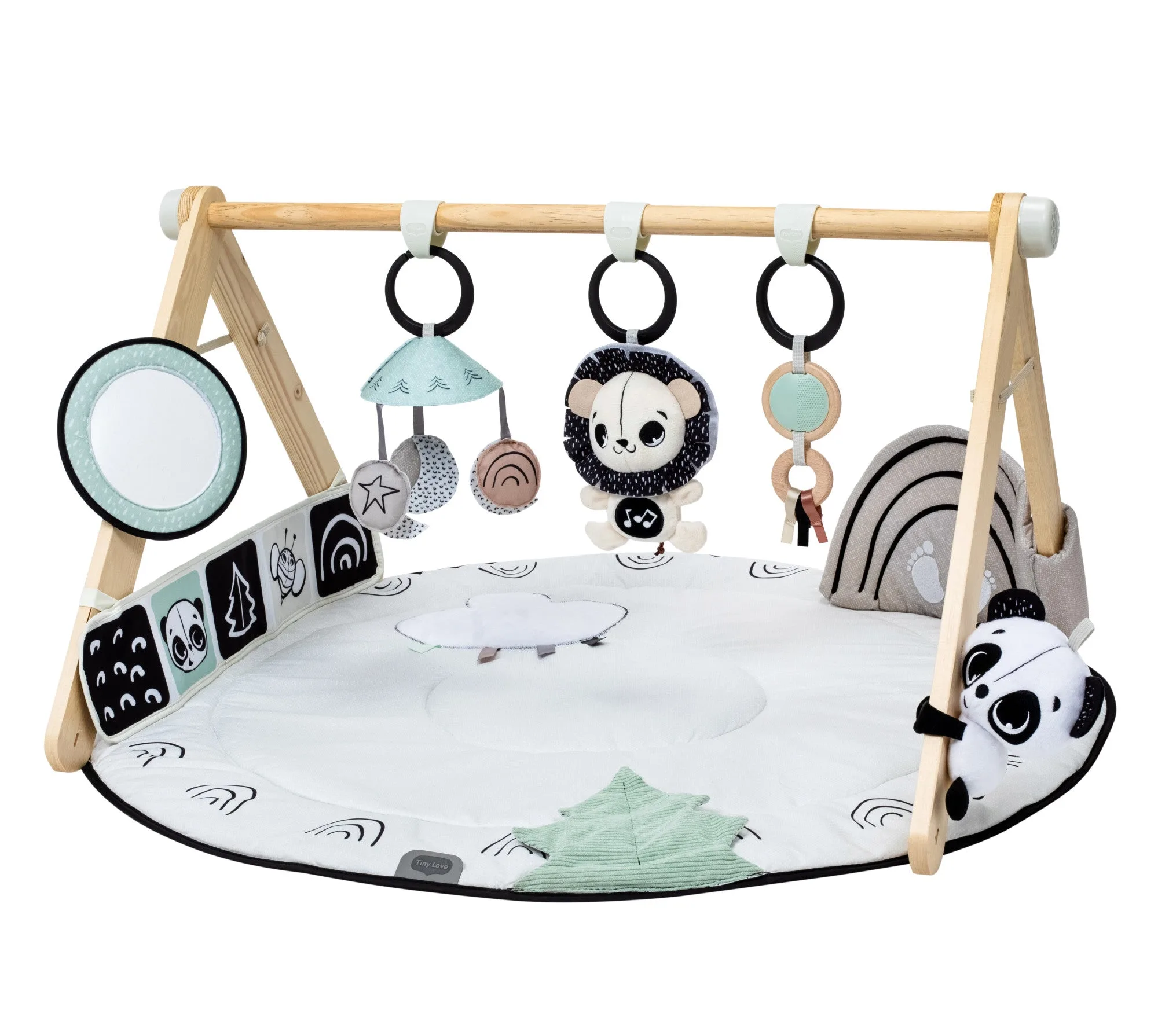
Luxe Developmental Gymini
- Look for gyms with machine-washable mats for easy cleaning.
- Choose a gym with detachable toys for on-the-go play.
- Consider a gym that converts into a play tunnel or tent.
Creating a DIY baby play gym is a rewarding project that supports your baby's development without breaking the bank. By using everyday household items, you can craft a personalized sensory experience that evolves with your child. When you're ready for a more permanent solution, explore our selection of developmental play gyms, such as the Tiny Mariners Developmental Gymini, to continue the fun and learning.