The Short Answer: Yes, With Limits
Blemish patches can work for what they are designed to do: cover a pimple, help it look smaller, and keep you from picking at it. They are not a treatment for the underlying causes of acne, and they will not clear a whole breakout on their own.
The confusion comes from mixing up cosmetic results with medical claims. A hydrocolloid patch is a non-medicated dressing. It can visibly absorb fluid from a mature pimple and protect the area, but it does not contain active acne ingredients unless the label says so. That distinction matters when you are deciding whether a patch belongs in your routine.
Four Hydrocolloid Patch Myths Worth Retiring
- Myth: A patch treats the cause of acne: Hydrocolloid patches are non-medicated. They can help a pimple look smaller and protect it from picking, but they do not address the factors that cause breakouts. If your goal is acne treatment, a patch alone is not enough.
- Myth: You can apply it over your whole skincare routine: For the patch to adhere, apply it to clean, dry skin and avoid using other skincare products before application. Moisturizer and other products go on after the patch is applied.
- Myth: Any pimple is the right candidate: The supplied product information describes these patches as ideal for mature pimples on the cheeks, chin, nose, and forehead. A patch is not a universal fix for every blemish type.
- Myth: You can peel it off whenever you like: The instructions say to use each patch for at least six hours or overnight, and to remove it slowly and carefully by stretching the patch along the skin.
What Overnight Pimple Patch Results Actually Look Like
Overnight use is built into the product instructions: each patch is meant to stay on for at least six hours or overnight. The realistic result is a pimple that looks smaller and a blemish that was protected from picking while you slept. That is a visible cosmetic change, not a guarantee that the pimple will disappear.
If you are expecting a patch to flatten a deep, painful bump or prevent future breakouts, you are asking it to do a job it was not designed for. Judge it on the claims it actually makes: visibly absorbing fluid, helping pimples look smaller, and shielding the area from your fingers.
One Option Built for Sensitive Skin
-
Neutrogena Sensitive Skin Blemish Patches, Acne Patches for Sensitive Skin, Hydrocolloid Treatment Visibly Shrinks Pimples Overnight, 2 Sizes, 30 Count: Neutrogena Sensitive Skin Blemish Patches are non-medicated hydrocolloid patches designed for sensitive skin, and they come in two sizes with 30 patches per pack. The non-medicated, sensitive-skin design is the key detail: it tells you these patches are for cosmetic blemish coverage and protection, not active acne treatment.
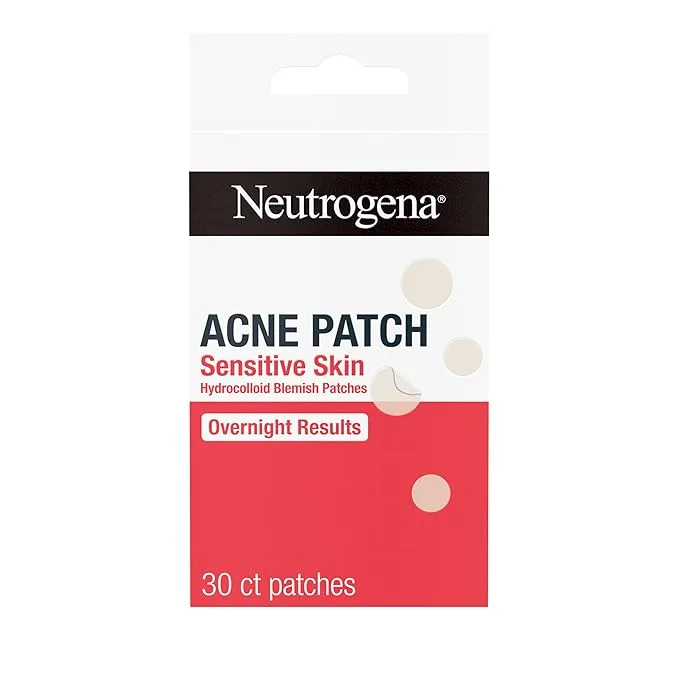
Neutrogena Sensitive Skin Blemish Patches, Acne Patches for Sensitive Skin, Hydrocolloid Treatment Visibly Shrinks Pimples Overnight, 2 Sizes, 30 Count
-
Neutrogena Sensitive Skin Blemish Patches, Acne Patches for Sensitive Skin, Hydrocolloid Treatment Visibly Shrinks Pimples Overnight, 2 Sizes, 30 Count: The clear patches are intended for mature pimples on the cheeks, chin, nose, and forehead, and they peel off gently after use. Knowing the intended placement and gentle removal helps you avoid using the patch on the wrong kind of blemish or tearing the skin when you take it off.
Blemish Patches vs. Spot Treatments: Different Jobs
A spot treatment and a hydrocolloid patch are not competitors. A spot treatment is typically formulated with active ingredients to treat acne, while a hydrocolloid patch is a non-medicated dressing that covers and protects a blemish. If your goal is to treat acne, a patch is not a substitute for an acne treatment product.
That said, the two can coexist in a routine. The patch instructions say to avoid using other skincare products before application, so the practical order is: cleanse, dry the skin, apply the patch, then use moisturizer and other products after the patch is in place. If you are using a spot treatment, check its directions and give it time to absorb before layering anything else, or use the patch on a different occasion.
How to Use a Blemish Patch So It Actually Stays On
Most patch complaints come down to application, not the patch itself. These steps follow the supplied product instructions.
- Start with clean, dry skin: Apply the patch directly to the blemish on clean, dry skin, avoiding the eyes.
- Skip products underneath: Avoid using other skincare products before application so the patch can adhere.
- Leave it on long enough: Use each patch for at least six hours or overnight.
- Remove it gently: Slowly and carefully stretch the patch along the skin to remove it.
- Apply the rest of your routine after: Use moisturizer and other skincare products after the patch is applied.
Where the Evidence Stops
The supplied product information does not include patch-test results, suitability for every skin type, or a recommended usage frequency beyond the six-hour or overnight wear time. It also does not confirm how the patch performs on different pimple types beyond mature pimples on the cheeks, chin, nose, and forehead.
That absence is not a reason to avoid the product, but it is a reason to be honest about what you can expect. If you have sensitive skin, the product is described as suitable for sensitive skin and designed to peel off gently, but you should still watch how your skin responds and stop using it if irritation occurs. For persistent or severe acne, a cosmetic patch is not the right tool; talk to a dermatologist about treatment options.