Quick answer
Chew pendants are a safe redirect for kids who chew fingers, nails, hair, or pencils, and they give children an independent oral sensory tool they can wear. They are not a cure for sensory processing issues or a replacement for therapy. Choose a food-grade silicone pendant your child likes and can use safely, and treat it as one helpful tool in a bigger plan.
Why the "chew pendant" conversation gets confusing
Parents hear strong claims from both sides: that a chew necklace will fix every chewing habit, or that it is just a trendy accessory. The truth sits in the middle, and it helps to separate what a pendant is designed to do from what it cannot do. A chew pendant is a wearable piece of food-grade silicone that gives your child a safe, consistent place to direct chewing urges. That is a practical, everyday job, not a medical treatment.
This matters because chewing is often a sensory-seeking behavior. When a child chews a sleeve, a pencil, or their own hair, they are usually trying to get input that helps them feel organized or calm. A pendant gives them a cleaner, safer option that is always within reach.
What a chew pendant can realistically do
A chew pendant can redirect chewing away from fingers, nails, hair, and pencils. It can also give your child a tool they control independently, which matters for kids who need a discreet way to self-regulate during school, car rides, or transitions. Because the pendant is worn on a necklace, it stays with your child instead of being lost in a backpack or on the floor.
Occupational therapists recommend this kind of tool as one option a child can use on their own to develop effective control, according to the product information for the Strike Energy Pendant and the Dino Pendant. That recommendation is about supporting self-regulation, not about diagnosing or curing anything.
What a chew pendant cannot do
A chew pendant cannot replace therapy, medication, or a formal sensory plan. It also cannot guarantee your child will stop chewing their shirt if the pendant is not the right shape, texture, or color for them. If your child rejects the pendant, that is information, not failure. Some kids prefer a round bead, some prefer a longer pendant, and some need to try a few options before they find one they reach for automatically.
It also cannot be used as an unsupervised toy. A chew necklace is worn and chewed, not shared with siblings or pets, and it should be checked regularly for wear.
How to choose a chew pendant that actually gets used
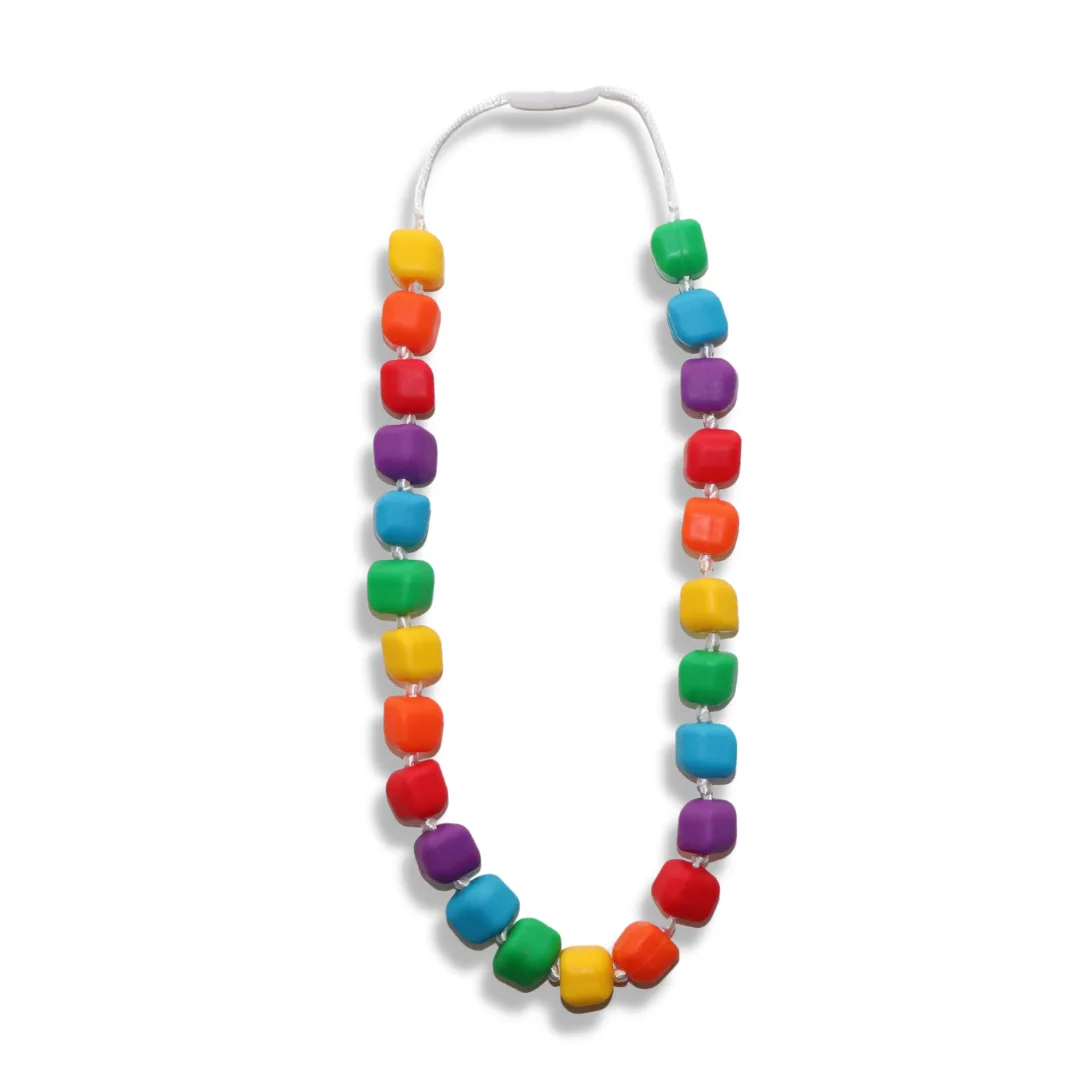
Start with your child's preference. The Strike Energy Pendant and the Dino Pendant both come in a range of colors, and letting your child pick the one they like increases the odds they will actually wear it. The Princess & the Pea Necklace takes a different approach: it is made of silicone beads in different colors, so it looks like a cute accessory while doubling as a mobile sensory tool. That design can be a better fit for a child who wants something that does not look like a therapy tool.
Next, think about how your child chews. If they tend to chew hard and fast, a pendant with a dedicated chew shape may hold up better. If they chew lightly and mostly need something to mouth during focus time, a beaded necklace can work well. Either way, confirm the material is food-grade silicone, which is what makes these pendants safe to chew.
Chew pendant myths: verdicts
- Myth: A chew pendant will stop my child from chewing their shirt.: A pendant gives a safer place to chew, but it does not remove the urge. It works best when your child likes the pendant and it is available at the moment the urge hits. Verdict: Partly true. It can redirect, not erase, the habit.
- Myth: Chew pendants are just jewelry for kids.: The Princess & the Pea Necklace is designed to look like an accessory, but its beads are food-grade silicone meant for chewing. The Strike Energy Pendant and Dino Pendant are dedicated chew shapes recommended by Occupational Therapists. Verdict: False. They are sensory tools that happen to look good.
- Myth: Any silicone necklace is safe to chew.: Material matters. These pendants use food-grade silicone, which is what makes them appropriate for chewing. A random fashion necklace is not a chew tool. Verdict: False. Check that the pendant is made for chewing.
- Myth: If my child chews a pendant, they will need it forever.: A chew pendant is a support, not a life sentence. Many kids use one during a season when they need extra oral input, then rely on it less as their self-regulation skills grow. Verdict: False. It can be a temporary tool.
Chew pendant facts from our catalog
- Princess & the Pea Necklace: Princess & the Pea Necklace is made of silicone beads in different colors and doubles as a mobile sensory tool, with each bead made from food-grade silicone safe for kids to chew on and redirect attention from chewing fingers, nails, hair, or pencils. A good choice when your child wants a necklace that looks like a normal accessory and can be chewed bead by bead.
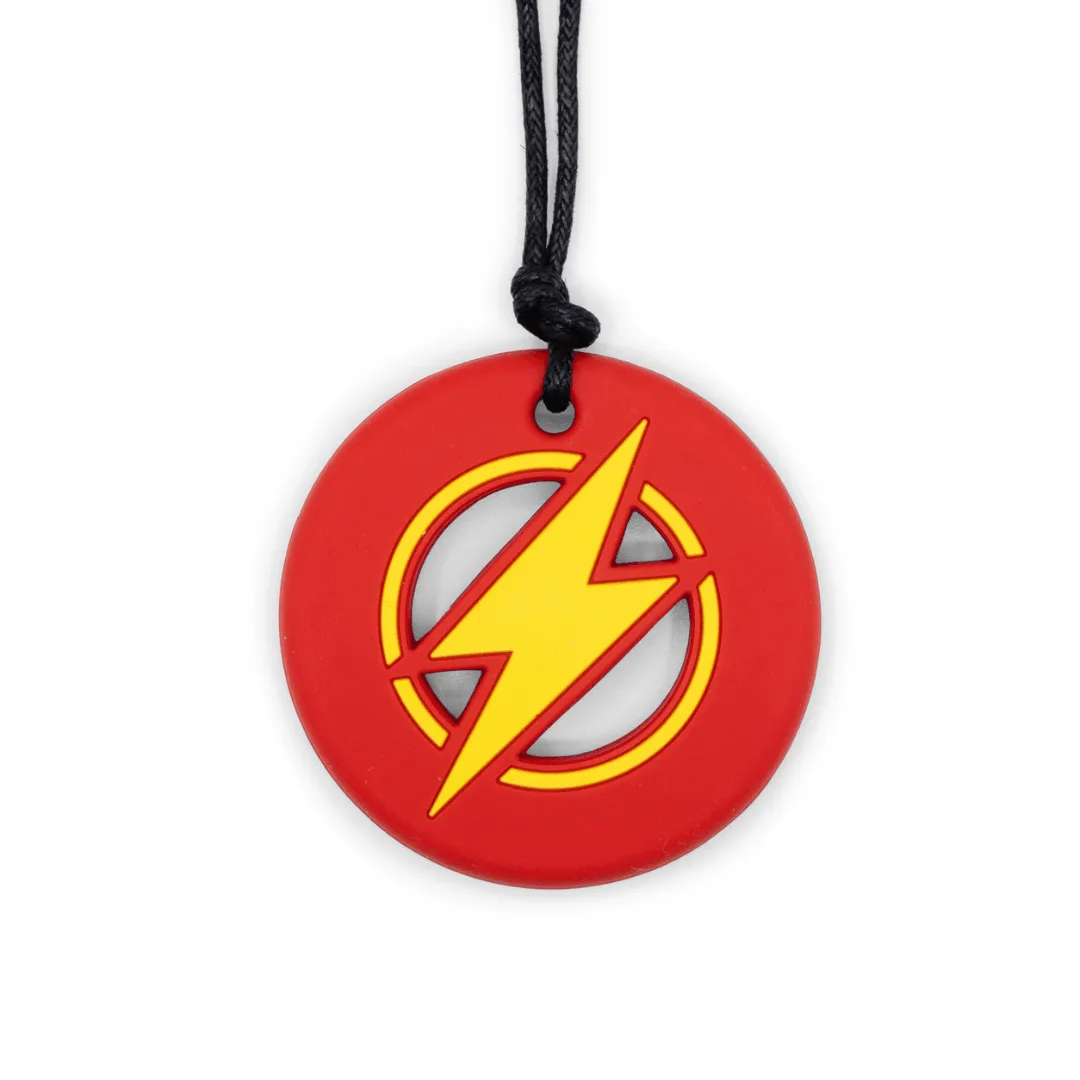
- Strike Energy Pendant: Strike Energy Pendant is a silicone chew pendant recommended by Occupational Therapists as a tool a child can use independently to develop effective control, and it is available in a range of favorite colors. A strong option if you want a single dedicated chew shape and your child responds well to choosing their own color.
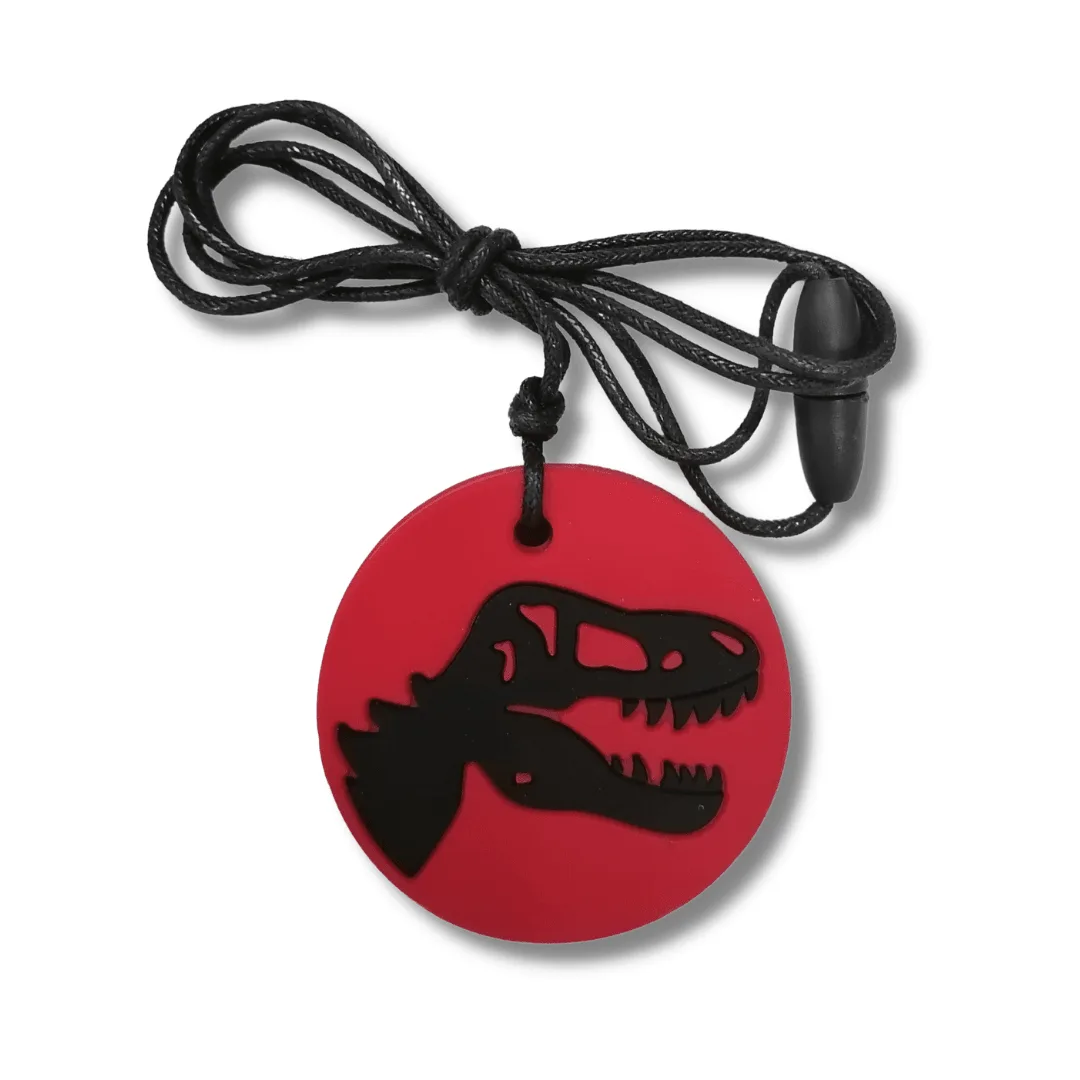
- Dino Pendant: Dino Pendant is a silicone chew pendant for dinosaur fans, recommended by Occupational Therapists as a tool a child can use independently, and it is available in a range of favorite colors. The dinosaur shape can make the pendant feel like a personal accessory rather than a sensory tool, which helps with buy-in.